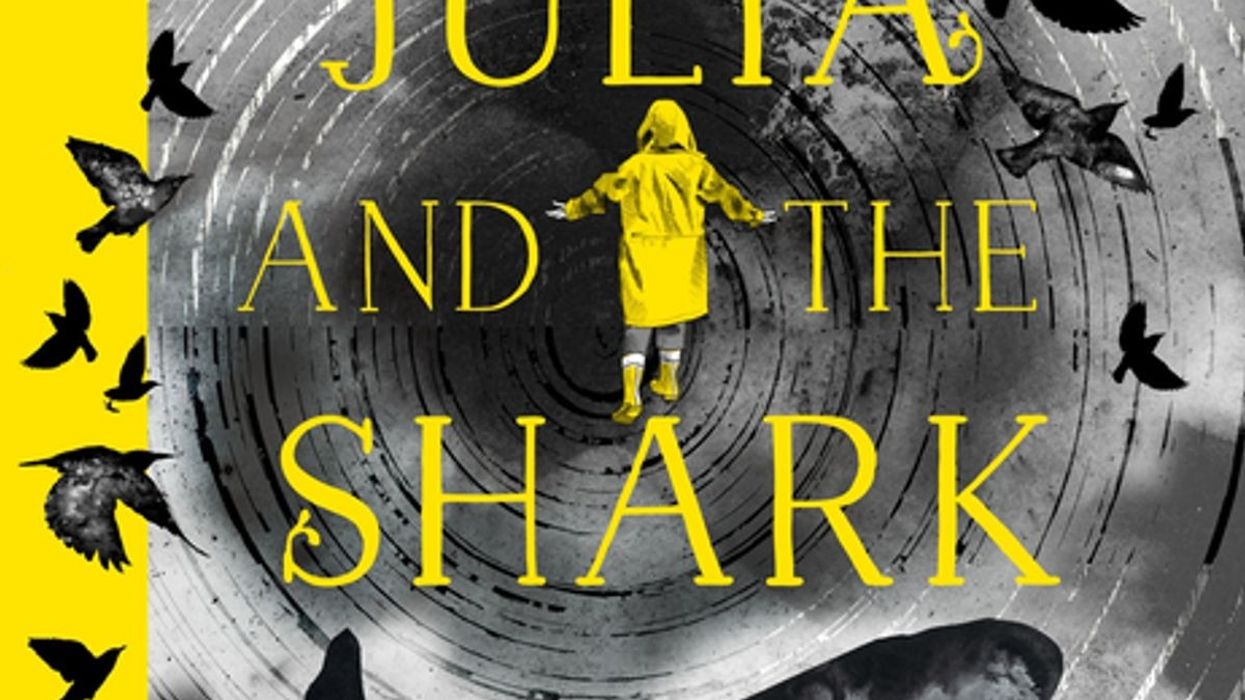

WITH critical acclaim, nominations and awards, Kiran Millwood Hargrave has shown us quite comprehensively that she knows how to write an engrossing book for younger readers.
But what has made her books extra special is that they have that cross-generational appeal to reach out to older readers and that is certainly the case for her latest offering Julia and the Shark.
A collaboration with her artist husband Tom de Freston, the newly released book combines a captivating narrative with eye-catching illustrations.
The story revolves around a young girl, who is forced to accompany her parents to a remote island off the coast of Scotland during the holidays and live there.
While she gets used to her new surroundings, her father submerges himself in work and her mother goes on a quest to find a rare shark that is only seen in those waters. Her mother’s obsession soon threatens the family and what follows is a unique journey.
The book keeps the reader engaged because it is wonderfully written, visually striking and offers up plenty of surprises. The simple story has depth and soon becomes multi-layered, with important themes combining well with human emotions and family bonding.
Detailed descriptions submerge the reader in a new world that on the surface looks dull but is actually filled with wonder. The well-defined characters are believable and that makes them wholly relatable to the reader.
What makes this book particularly special is the way it tackles mental health in a sensitive way, which is especially great for younger readers. That writing style makes this wholly accessible book a relatively quick read and great for those who don’t like novels that are too heavy. Overall, this is another triumph for a British author very much in touch with younger audiences and able to engage older readers as well.






 Catarina and the beauty of killing fascists Photo credit: Carlos Fernandes
 Photo credit: Carlos Fernandes