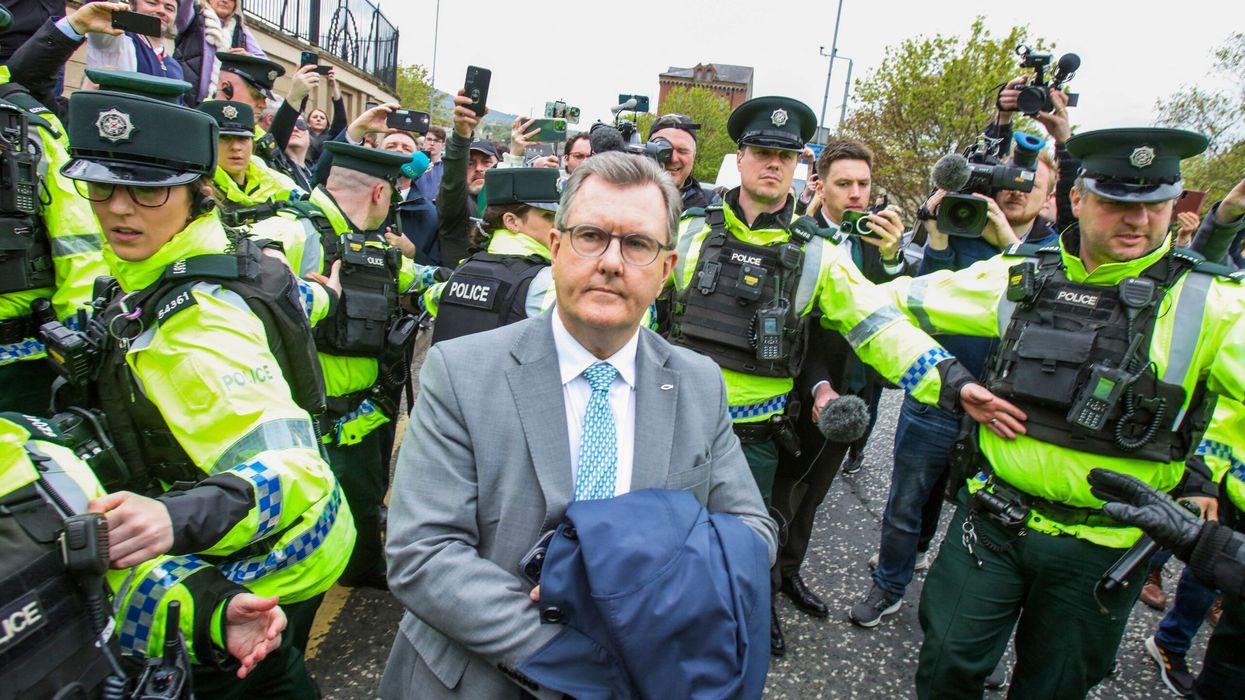

Northern Ireland's former Democratic Unionist Party (DUP) leader, Jeffrey Donaldson, 61, is facing 11 historical sex offence charges, including one count of rape, as prosecutors revealed in court on Wednesday.
Donaldson stepped down abruptly from his leadership position in the DUP last month after the party disclosed he was facing charges of an historical nature. He is widely recognised as one of Northern Ireland's prominent political figures.
Appearing in court for the first time, Donaldson was confronted with the allegations, which also included one count of gross indecency towards a child and nine counts of indecent assault on a female.
The charges spanned from 1985 to 2006 and involved two complainants.
Judge Eamonn King asked Donaldson if he understood the charges, which Donaldson confirmed. No pleas were entered during the hearing.
Donaldson's wife, Eleanor, also faced charges, accused of aiding and abetting rape, aiding and abetting indecent assault, and two counts of cruelty to a person under 16-years-old. She, too, confirmed understood the charges.
The court scheduled a follow-up hearing for 22 May to establish a timetable for proceedings.
Both Donaldson and his wife were released on bail, with the court lifting a condition that restricted contact between them.
Donaldson, who has served as Northern Ireland's longest-standing lawmaker in the British parliament since 1997, has played pivotal roles in various political negotiations, including brokering a recent deal with the British government on post-Brexit trade rules.
Despite the charges, political parties in Northern Ireland, including the major Irish nationalist party Sinn Fein, expressed confidence that the region's fragile political stability would remain intact.