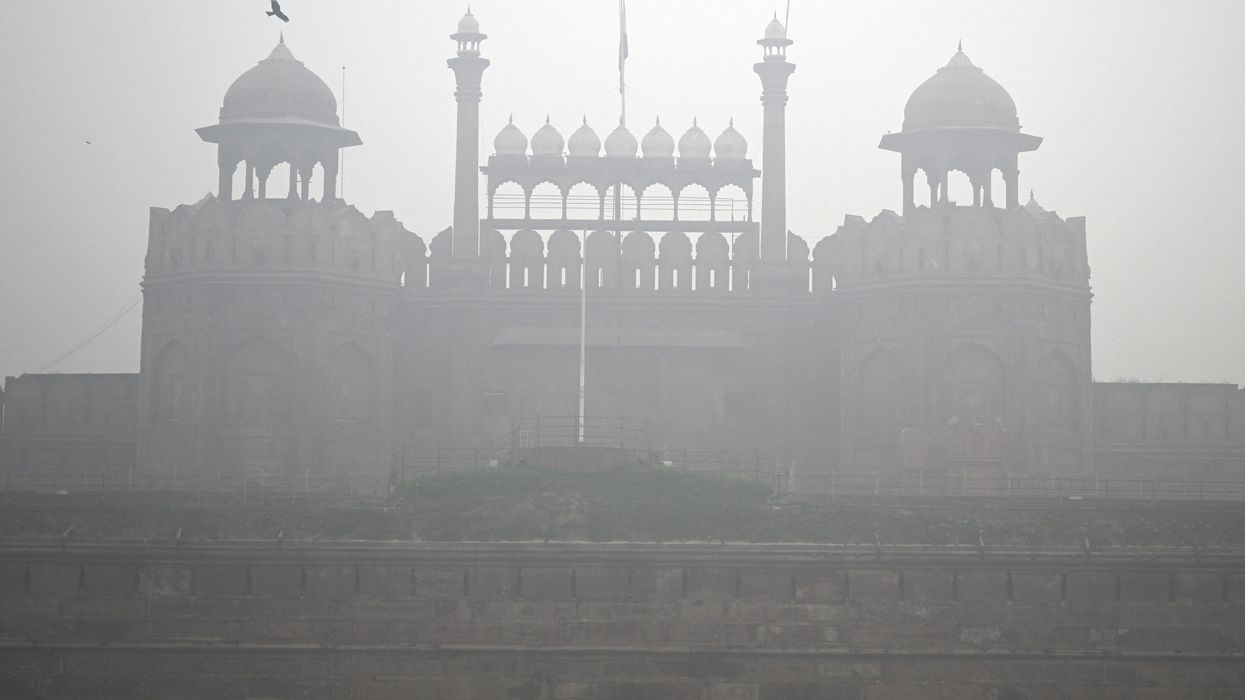

INDIA has introduced stricter measures to address worsening air pollution in Delhi and surrounding areas, issuing two sets of restrictions within 24 hours.
The action follows a significant decline in air quality, with the Air Quality Index (AQI) crossing 400 on a scale of 0 to 500, categorising it as 'severe'.
The latest directives, announced late on Monday, included extending hybrid classes—both online and offline—to all grades except for 10 and 12.
Earlier in the day, hybrid learning was limited to classes up to grade 5.
The government also expanded an earlier order for staggered office hours to allow 50 per cent of employees to work from home across all offices.
As of Tuesday morning, New Delhi’s AQI stood at 424, while temperatures dropped to 5.9 degrees Celsius. The city was engulfed in a thick toxic haze, prompting the airport to initiate "low visibility procedures."
The Commission for Air Quality Management cited "highly unfavourable meteorological conditions and absolute calm wind" as the reason for the sharp rise in pollution levels.
It also imposed a ban on most construction activities and advised vulnerable groups, including children, the elderly, and those with chronic health conditions, to avoid outdoor activities.
Every winter, northern India experiences severe pollution as emissions, construction dust, and smoke from farm fires get trapped due to falling temperatures and stagnant air.
The states of Punjab, Haryana, and Uttar Pradesh contribute significantly to the issue through illegal crop burning.
Last month, Delhi recorded its worst air quality of the season, with the AQI reaching 494.
The Supreme Court of India, in a recent ruling, affirmed that living in a pollution-free environment is a "fundamental right," urging the government to take action.
(With inputs from Reuters)