

CYCLONE BIPARJOY tore down power poles and uprooted trees on Friday (16) after pummelling the Indian coastline, though the storm was weaker than feared and there were no immediate reports of casualties.
More than 180,000 people in the Indian state of Gujarat and Pakistan's Sindh province fled the path of Biparjoy - which means "disaster" in Bengali - before it made landfall on Thursday (15) evening.
The storm packed sustained winds of up to 125 kilometres (78 miles) per hour as it struck - but weakened overnight, with Indian forecasters expecting it to calm into a moderate low-pressure system by late Friday.
Hundreds of electricity poles were uprooted along the coast, cutting power to most of the area, a spokesperson for Gujarat's government said.
Several hundred trees were also uprooted and emergency teams were struggling to access villages cut off by roadside debris.
No casualties were reported overnight, the office of the state's relief commissioner said.
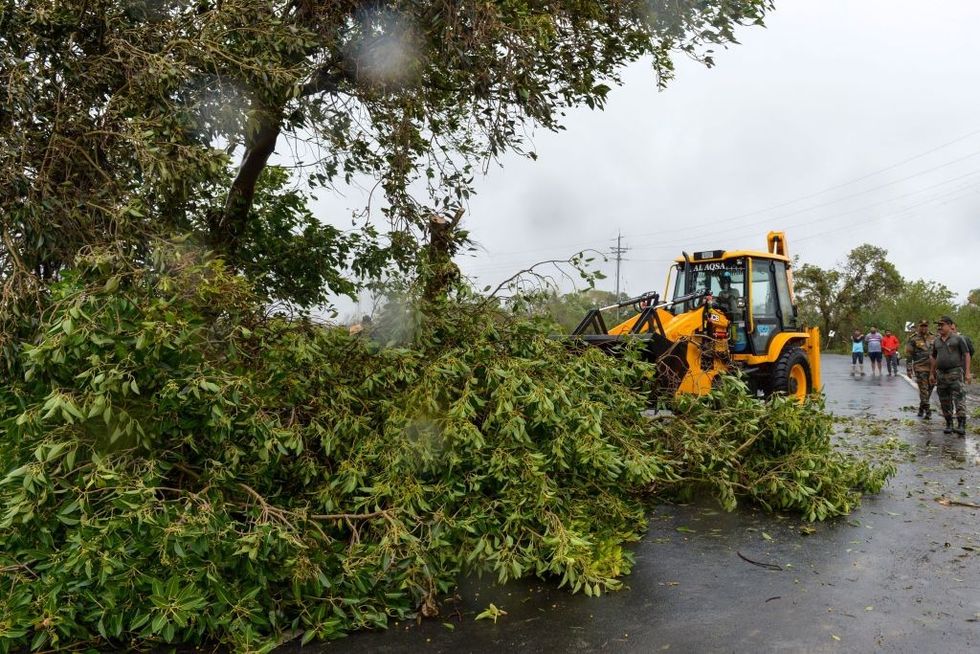 Indian Army personnel assist local authorities to clear a fallen tree from a road on the outskirts of Mandvi town, some 100km southeast of Jakhau Port, on June 16, 2023, after cyclone Biparjoy made landfall. (Photo by SAM PANTHAKY/AFP via Getty Images)
In Gujarat, more than 100,000 people had been moved from the storm's path before it struck, the state government said, as well as 82,000 others in Pakistan.
Biparjoy was expected to slow to maximum sustained winds of 60 kilometres per hour, India's weather bureau said.
Pakistan climate change minister Sherry Rehman tweeted on Friday morning that her country had been "largely spared the full force" of the storm.
But residents stayed bunkered down as more than 30 centimetres (12 inches) of rainfall was forecast for some coastal areas of Pakistan on Friday and Saturday, with storm surges of up to 2.5 metres (8 feet).
Shops were closed early on Thursday evening in Pakistan's city of Badin and the usually bustling streets emptied as night fell.
"Everybody is immensely fearful," 30-year-old government clerk Iqbal Mallah said on Friday.
'It's chaos everywhere'
In the early morning, heavy winds were gusting and puddles blotched the roads, as concerns remained despite the storm proving less severe than forecast.
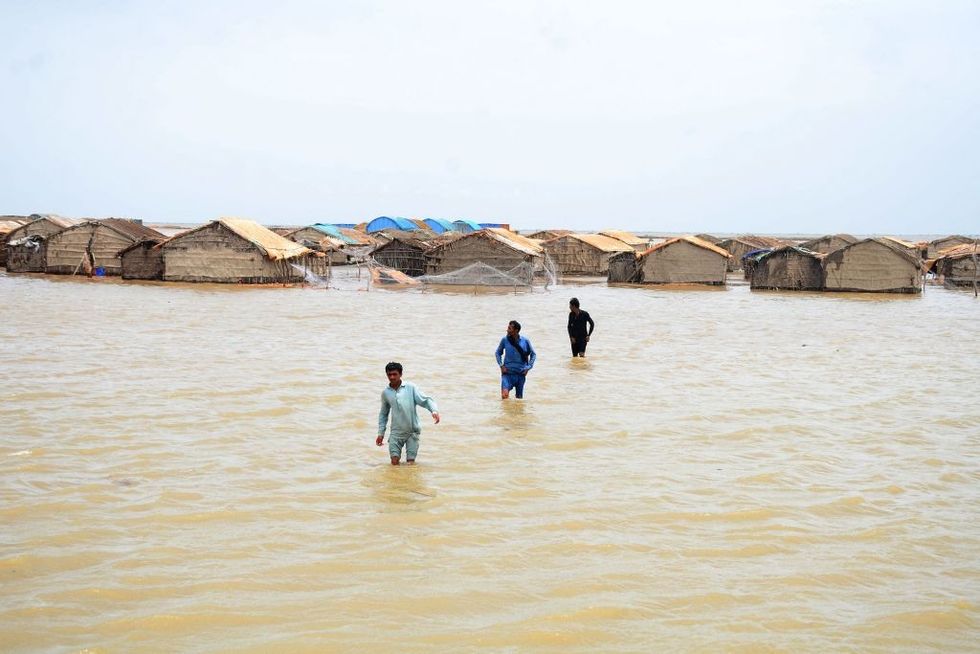 Cyclone-affected people wade through water in Sujawal of Pakistan's Sindh province on June 15, 2023. (Photo by HUSNAIN ALI/AFP via Getty Images)
"Shops are closed down early, people prefer to stay at home... it's chaos everywhere," said Abdullah Soomro, a hotel manager in Badin.
Cyclones - the equivalent of hurricanes in the North Atlantic or typhoons in the Northwest Pacific - are a regular and deadly menace on the coast of the northern Indian Ocean, where tens of millions of people live.
Scientists have warned that storms are becoming more powerful as the world gets warmer with climate change.
Roxy Mathew Koll, a climate researcher at the Indian Institute of Tropical Meteorology, said cyclones derive their energy from warm waters, and that surface temperatures in the Arabian Sea were 1.2 to 1.4 degrees Celsius warmer than four decades ago.
(AFP)