
A SENIOR Indian lawyer has written a handbook as a guide to help overseas businesses invest in India.
Som Mandal, managing partner at FoxMandal – this is one of India’s oldest British-Indian legal firms, having been founded in 1896 by JK Cox and GC Mandal – spoke to Eastern Eye last week about his 224-page book, Investing in India: Regulations and Incentives (2025).
He said a number of Indian embassies in Europe had asked for copies of the book, telling him that “we have nothing like this”.
The book is aimed at all overseas investors, but it is especially useful for British businesses following the signing of the UK-India Free Trade Agreement (FTA).
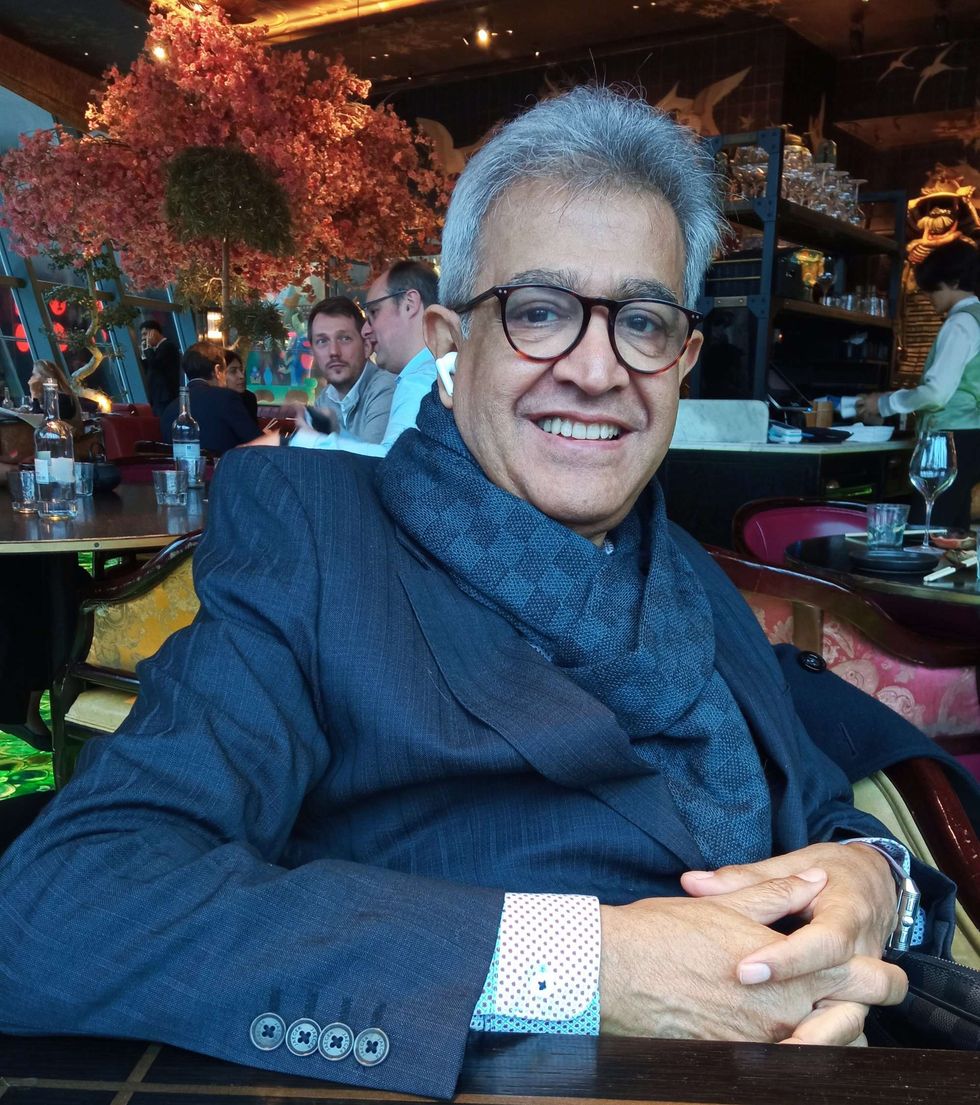 Som Mandal.
This was formally done in July last year at Chequers by Sir Keir Starmer and Narendra Modi, the British and Indian prime ministers, respectively.
Mandal, who is based in Delhi but was visiting London and other European capitals, explained to Eastern Eye: “Basically, this book was written by me, taking into consideration what investors want to know about investing in India. All investors who come to India have a lot of questions in their mind – where they can invest, how they can invest, which are the sectors in which they can invest, whether there is a capital market way for them, and what is the labour law?”
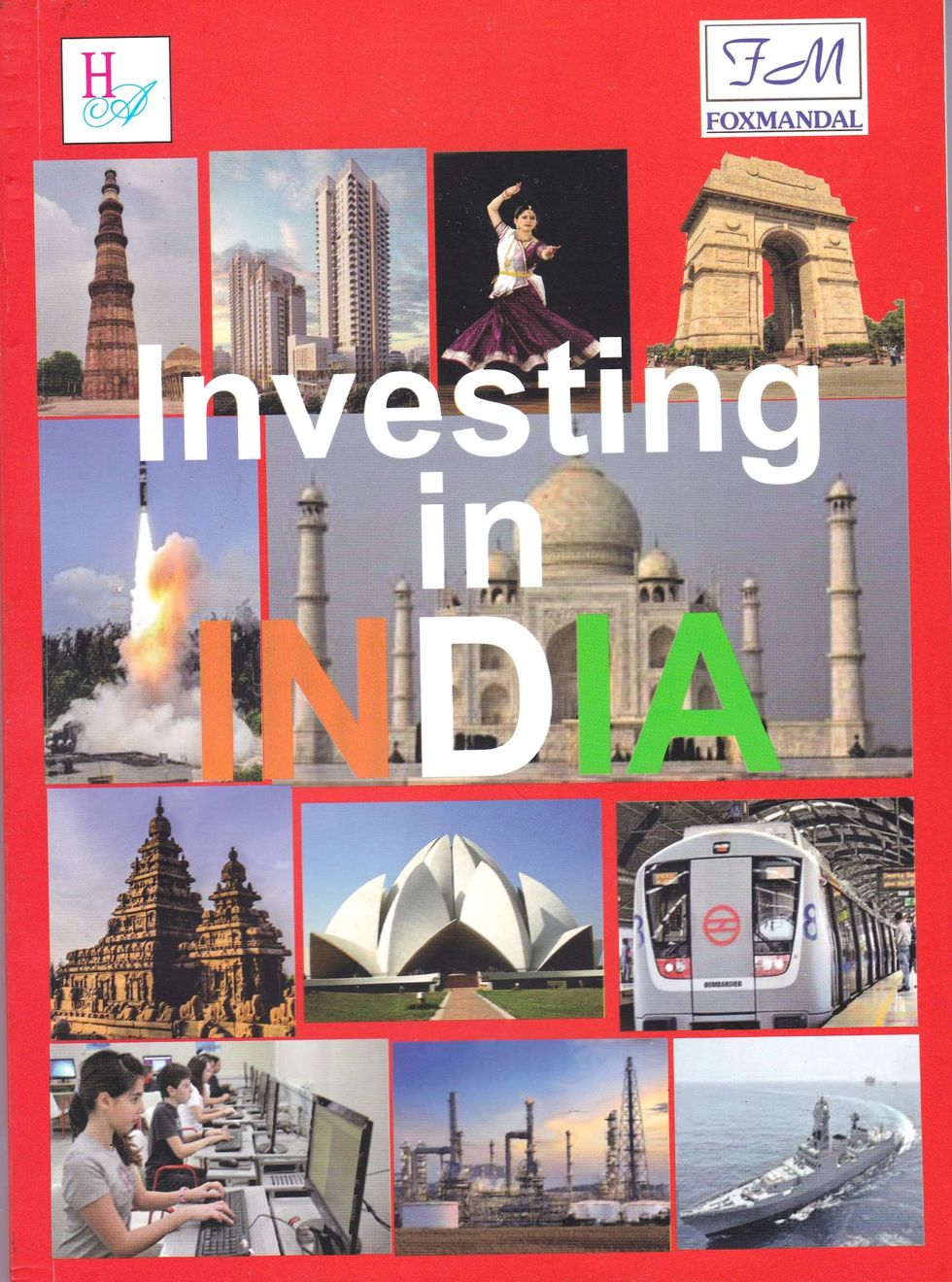 The cover of his book.
“It’s absolutely a practical guide book,” he said. “We are helping investors from any country, especially the UK, to come to India.”
Asked about sectors suitable for investment, Mandal replied: “All sectors are promising, but manufacturing is one of the biggest, whether it is defence, electronic goods or smart chips. All the big auto part manufacturers are already in India. There is a lot of scope in food processing. Other main areas are power, pharmaceuticals, oil and gas.”
He referred to the government’s overall “Make in India” policy, which encourages overseas firms to manufacture in India, either for the vast domestic market of 1.4 billion or for export to third countries. “Investment of 100 per cent is possible except in agriculture.”
His book does warn: “No investment is permitted in a few sensitive sectors.”
These include “manufacturing of cigars, cheroots, cigarillos and cigarettes (tobacco or tobacco substitutes)”, “gambling and betting including casinos”, and “real estate business or construction of farm houses”.
Mandal emphasised “healthcare is very big” and also spoke about the growth in medical tourism. “In India, there are really good hospitals,” he pointed out. “There is a lot of medial tourism from Africa, Afghanistan, and from neighbouring countries such as Bangladesh and Sri Lanka. If you look at the Max and Fortis hospitals in India, you find a lot of foreigners, including Russians, wandering around.
“There is a Singapore-based government fund, Temasek, which has bought a lot of hospitals in India. All the profits are repatriated to Singapore.”
Mandal said there was growing awareness among British Indians of the advantages of going to India for treatment. “My daughter’s father-in-law has been in England for ages, for more than 50 years. Here in the UK, you have to wait three to four weeks just for an appointment. He went to India recently, got his tests done cheaply and efficiently, got the results instantly and could fix up his appointments straightaway. Other Britishers don’t have that kind of knowledge. At the moment, there is no organisation which can facilitate medical tourism. There is business opportunity for a good organisation which can market the hospitals in India. ‘I will send you the patients, I’ll make some money like educational consultants’. British universities have tie ups with these consultants who get paid for students they send to the UK. It would be the other way round.”
Mandal’s book sets out the many sectors where overseas firms are allowed up to 100 per cent investment. India offers a distinct advantage over China “which only allows joint ventures. The workforce in India is also slightly more educated.” As an Indian lawyer, Mandal is not allowed to practise in the UK. “But we can help UK companies having issues in India, or Indians living in the UK who have issues in India. If they want to will property in India, for example, we advise them to get witnesses in India.”
Acting as a go between, Mandal is also able to tell Indian clients about investment opportunities in the UK.
“I’m currently working on three or four deals,” he said.
One was a whisky distillery under construction in Devon, which was 85 per cent complete and would be the biggest in the UK when finished. It was looking for investment of £4m. “We have shown this to two Indian distillery owners who are considering it.”
He said under the FTA, the import duty on whisky and other spirits had been halved from 150 per cent to 75 per cent. “And India is the biggest whisky drinking market in the world.”
His firm was also helping a Liverpool company which had developed a way of cleaning water and stopping bad odour through the use of bacteria.
“We are helping to promote them in India. They can clean up sewerage very easily and effectively and also kill mosquitoes. All the smell in drains will be gone. They can clean bathrooms in an organic way. The product can be used to help crops to grow organically without chemicals. They are trying very hard to raise money to expand their business. They are currently doing a project with IIT Kanpur to certify it’s a useful product. Once they get that certification from IIT Kanpur, it would be more acceptable to the Indian government. It can be a mega company and the profit levels could be huge.”
Mandal’s assessment of the Indian economy is that “the capital share market is going up hugely. A lot of companies are listed, which shows the economy is doing well. The share market is doing well because the economy is doing well.”
India has been notorious over the decades for its infuriating bureaucracy, but Modi has tried to simplify the rules.
Handholding is probably still essential even though Mandal’s book says: “The current business climate in India is liberal, appealing, and hospitable to financial backers.”
The book, published by FoxMandal, states: “India’s growth story is driven by its young workforce, burgeoning digital economy, strategic investments in infrastructure, and expanding manufacturing base. However, it faces challenges such as poverty, inequality, and the need for infrastructure improvements. With the right reforms and investments, India is poised to become a major global power in the coming decades.”
For would be investors who would want to know what would happen in case things do not go according to plan – and in India there are always last-minute hitches – Mandal has included a chapter on dispute resolution.
“In India, the most significant legal principle is the rule of the law which is vital to the maintenance of the country’s democracy. The judiciary which is independent of the legislature and executive is entrusted with the duty of ensuring that no constitutional or legal authority acts beyond the limits of its power or indeed abuses or misuses it. Hence, the Indian judicial system (the higher courts) commonly addresses the failings of the legislature and the executive to the extent that the courts often strike down state and central government legislations, which are unjustified or violative of the fundamental rights of Indian citizens.
“However, the judiciary is severely overburdened with rising backlog. Generally, litigation in India is a cumbersome, time-consuming process and consequently, an expensive process. Often, the parties agree to resolve any dispute, outside the judicial system of the host country in order to benefit from a level playing field.