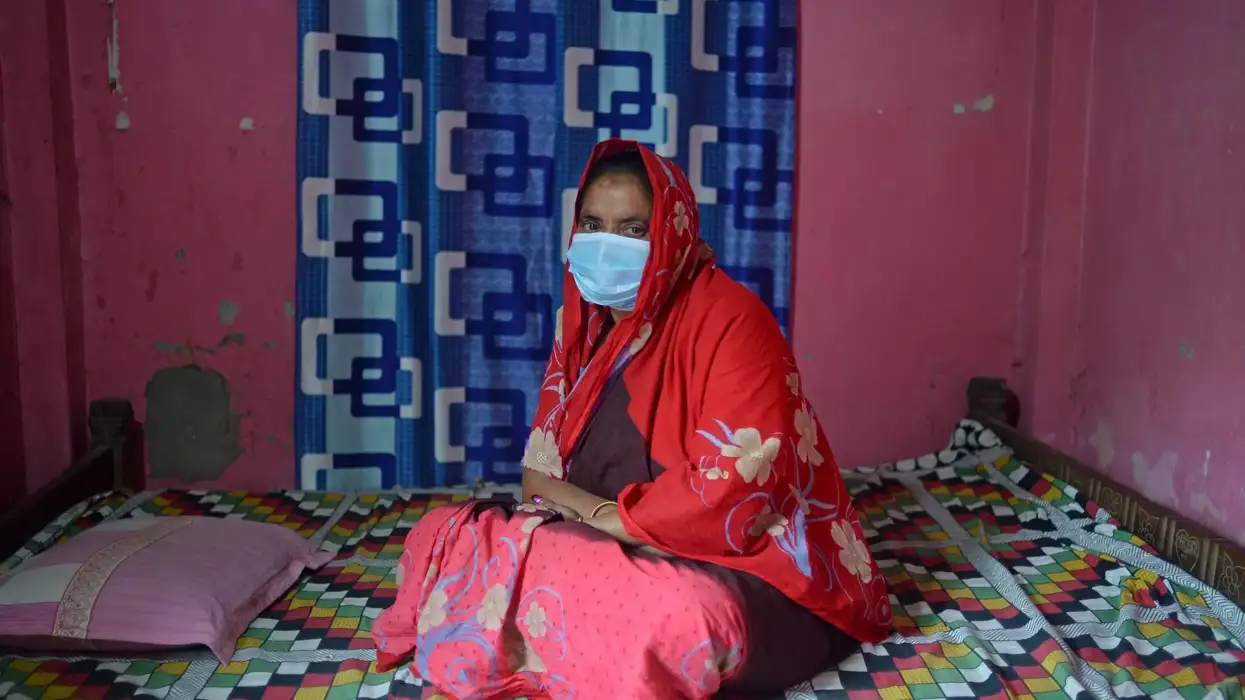

Meherun Nisa walks along the narrow lanes of Bangladesh's largest brothel every day, knocking on the doors of small shacks where sex workers live to persuade them to get vaccinated for Covid-19.
Nisa feels protective of the 1,900 current and former sex workers -- most aged between 15 to 40 -- in the town of Daulatdia where she has lived for most of her life.
The 50-year-old, a semi-retired sex worker, takes time to talk to each woman she meets, and then accompanies them to a nearby hospital where they receive their jabs.
At least 38 whom Nisa spoke with have been inoculated since she joined the charity she volunteers at in February.
"Most are scared of needles. Fake news spread about deaths after inoculation has created fear," Nisa told AFP as she sat on her bed in a small, windowless room.
"Sometimes I feel tired as many girls simply ignore me, believing instead the internet videos they watched... I tell them the vaccine is the best way to protect themselves and they are slowly responding."
The South Asian nation has opened up vaccinations for people aged 40 and above. But officials removed the age restrictions for Daulatdia recently.
Officials say they plan to vaccinate everyone living in the brothel town.
Asif Mahmud, the doctor leading the vaccination drive at Daulatdia, said nearly 150 sex workers have received their first shot of the AstraZeneca/Oxford vaccine.
"People from every corner of the country come here," Mahmud said of the town located near a busy ferry terminal and railway station in the west of the country.
"If the sex workers here are not inoculated properly, Daulatdia could be a potential hub for the coronavirus."
- 'Fewer clients, less money' -
Bangladesh is one of the few Muslim nations where prostitution is legal for women aged over 18, and at least 11 brothels -- including Daulatdia -- operate in the country of 168 million.
Sex workers suffered in particular during last year's months-long coronavirus lockdown.
While local officials and police gave them rice and lentils, their inability to earn money meant they could not buy medicine or send cash to villages where their families live.
The restrictions eased after five months but men are continuing to stay away from Daulatdia.
Only a few clients, mostly lorry drivers using the ferry terminal, are turning up with many saying they can not pay as much as they used to.
Jhumur Begum, who leads a sex worker association in Daulatdia, said the girls and women also had to grapple with clients preferring that they not wear masks.
"When the girls from the brothel go out of this neighbourhood, they use masks," she told AFP during a door-knocking session with Nisa.
"But if they keep using masks inside the brothel then it will hamper their business."
Like many of the workers who live in Daulatdia, Nisa was a victim of sex trafficking.
She first came to live in the town aged 13 and was sold to a madam, she said, after running away from an arranged marriage.
Although human trafficking is illegal in Bangladesh, commercial sexual exploitation of children in the impoverished nation still takes place, including at Daulatdia.
Volunteering for the charity gives Nisa a chance to give back to the girls and women living in the town who have supported her over many years.
"I must do whatever I can for all my sisters and daughters," she said.
"Social distancing isn't an option for us. Only vaccination can help us get back on our feet. If we take the vaccines, the clients won't be scared."