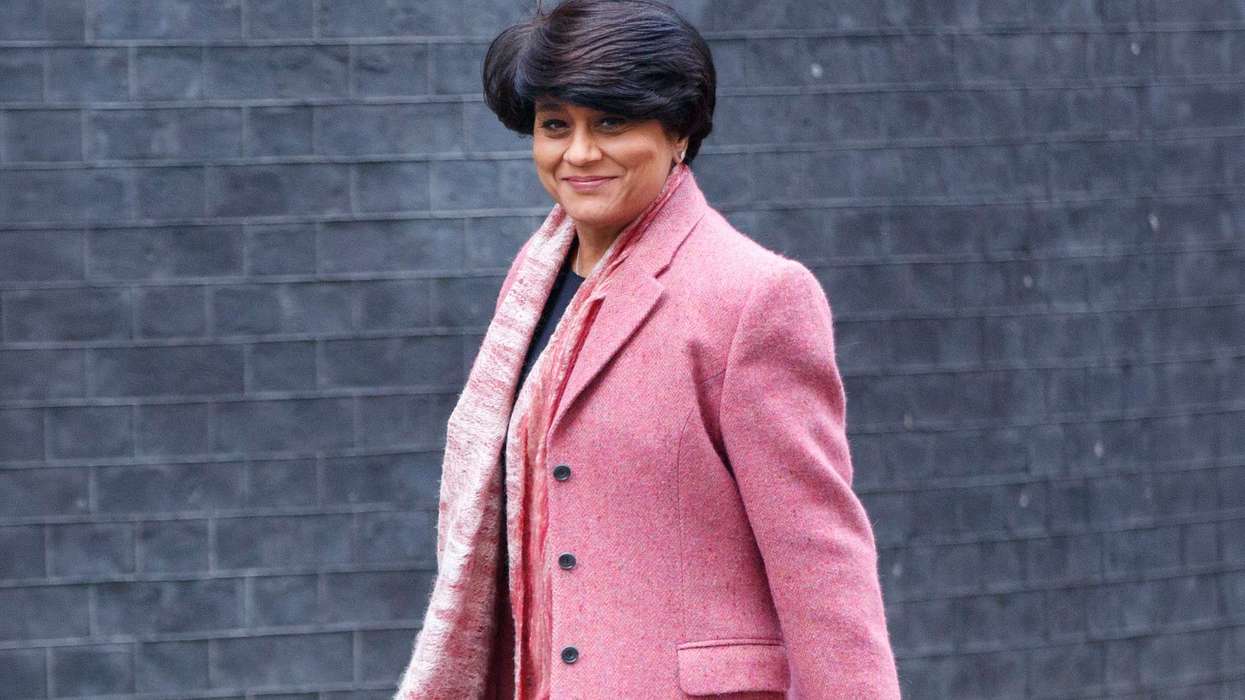

THIS May, Baroness Shriti Vadera will step down as chair of Prudential plc, closing a six-year chapter at one of Britain’s most globally exposed financial institutions.
The timing is precise. Under her leadership, the Asia-focused insurer has been reshaped, stabilised and strategically repositioned. Capital discipline has been restored. The demerger has been delivered. Shareholder confidence has returned.
Jeremy Anderson, Prudential’s senior independent director, noted that she led the company through a “complex transition” that created a “fast-growing diversified business with improving performance.”
What makes her departure notable is not that she is leaving a FTSE heavyweight, but that she is simultaneously deepening her influence elsewhere. While stepping away from Prudential, Baroness Vadera is expanding her reach across the creative sector, increasingly seen as one of the most strategically important arenas shaping Britain’s next decade.
Vadera has chaired the Royal Shakespeare Company since 2021, becoming the first woman and the first person of colour to hold the role.
In November 2024 she was appointed co-chair of the Creative Industries Council. Following a government refresh of the body in December 2025, she remains an industry co-chair alongside Sir Peter Bazalgette, working with government co-chairs Lisa Nandy, culture secretary, and Peter Kyle, business secretary.
In that role, she is helping to align policy, investment and export ambition across sectors ranging from film and fashion to gaming and design. One of her key priorities is implementing the Creative Industries Sector Plan, which aims to increase business investment in UK creative organisations from £17 billion to £31 billion by 2035.
Her chairmanship of the Royal Shakespeare Company reflects the same logic. The RSC is not simply a theatre company but a major cultural institution with global reach – one that requires governance, long-term planning and capital discipline as much as artistic vision.
Vadera brings boardroom rigour to an organisation that shapes how Britain understands itself, and how it is understood by others.
She is also serving as the chair of the World Bank’s Private Sector Investment Lab, which develops solutions that address existing barriers to private sector investment in emerging markets and developing economies. The role places her at the centre of efforts to mobilise private capital to tackle the world's most pressing development challenges.
Meanwhile, her recent tenure on the government’s Industrial Strategy Advisory Council suggests the appetite for direct government advisory work remains.
To the casual observer, this might look like an eclectic portfolio. In reality, it is a carefully assembled platform for systemic influence.
That instinct was forged long before boardrooms and peerages. Born in Uganda in 1962 to Gujarati parents, Baroness Vadera’s early life was shaped by displacement.
In 1972, Idi Amin’s expulsion of Uganda’s Asian population forced her family to flee – first to India and then to Britain. The upheaval left a lasting imprint, sharpening an understanding of political power and economic vulnerability that would echo throughout her career.
At Somerville College, Oxford, where she read Philosophy, Politics and Economics, she acquired the intellectual grounding that would underpin her career. But it was investment banking that taught her how power actually moves.
Her first job was as a trainee investment banker at SG Warburg (which later became UBS Warburg) – a role she partly took to avoid an arranged marriage being organised by her family.
What began as an act of personal defiance became a formative professional apprenticeship. She spent more than a decade at the firm advising governments across Asia, Africa and Latin America on debt restructuring and development finance.
Her move into public service in 1999, when she joined the Treasury’s Council of Economic Advisers, placed her at the heart of British economic policymaking. For eight years she worked on competition policy, productivity and international finance – the often invisible architecture beneath headline economics.
When Gordon Brown became prime minister in 2007, he elevated her to the House of Lords and appointed her as a minister. The move unsettled parts of Whitehall unused to such directness from outside the traditional civil service pipeline.
The label ‘Shriti the Shriek’, coined by sections of the press during the financial crisis, revealed far more about Britain’s discomfort with assertive women of colour than it did about her working style.
Unfazed, she continued to focus on the task at hand. During the 2008 financial crisis, Vadera played a central role in the UK’s response, helping to shape the bank recapitalisation programme that stabilised the financial system.
By late 2009 her task was complete, and she stepped away from ministerial office to take on an advisory role with the G20. Once again, the exit came immediately after delivery.
Her post-government career has been defined by scale and seriousness.
As the first woman to chair a major UK bank at Santander UK, she navigated post-crisis regulation and digital transformation at an institution serving millions of customers. She left the bank digitally stronger and regulatorily settled.
Her nine-year tenure on AstraZeneca’s board concluded just before the company entered its most intense phase of global visibility. Her five years as senior independent director at BHP ended without drift or dilution.
At Prudential, meanwhile, she oversaw a business operating across Asia and Africa, where regulatory complexity, demographic change and long-term capital commitments intersect.
What distinguishes her current phase is a deliberate pivot towards what might be described as national infrastructure beyond balance sheets.
The creative industries, which contribute more than £125bn annually to the UK economy, are one of Britain’s few globally competitive growth engines. It is easy to see why she was appointed co-chair of the Creative Industries Council. The government has identified the sector as one of eight key drivers of economic growth, and there is little doubt about her personal commitment to the arts.
As she steps away from Prudential, Vadera is entering a phase that will be less about corporate turnaround and more about the frameworks that enable growth, investment and resilience.
In other words, she is moving from rebuilding institutions to shaping the systems that sustain them.