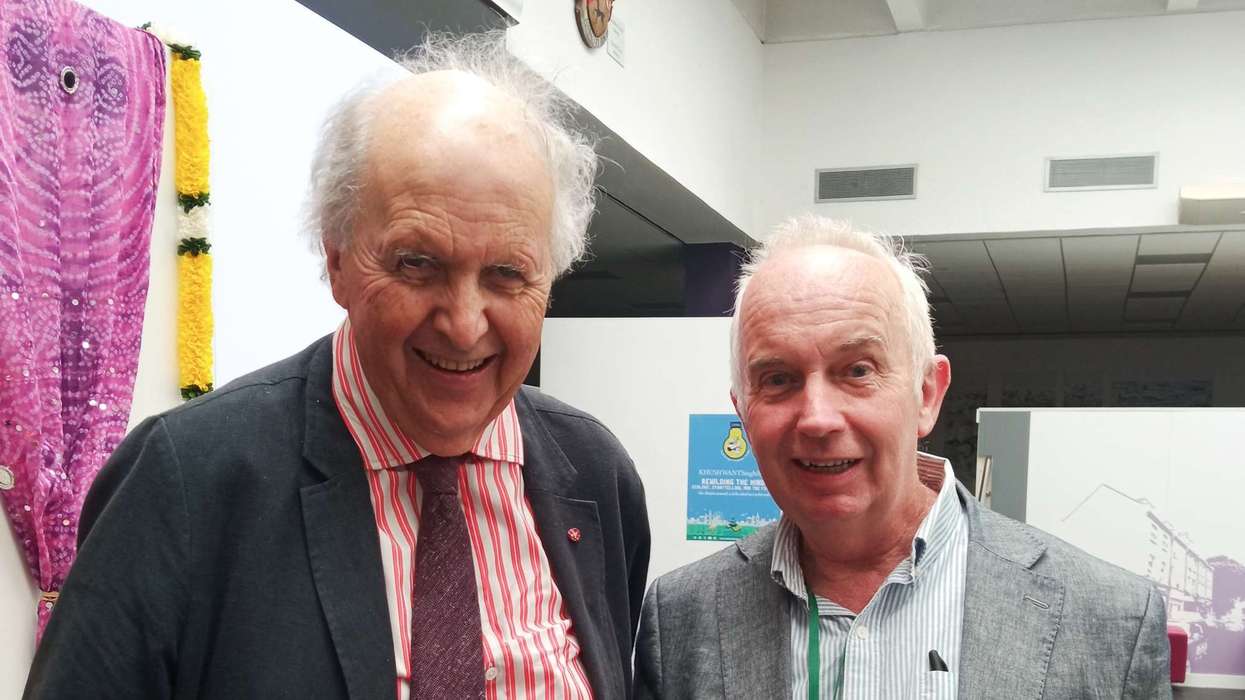

THE importance of reading to children was emphasised by the novelist, Sir Alexander McCall Smith, whose session at the Khushwant Singh Literary Festival last Saturday (6) in Sutton was the highlight of the day.
McCall Smith, creator of The No. 1 Ladies’ Detective Agency series, said: “One of the main aspects of the role of fiction is it develops our moral imagination. Certainly, children’s fiction is terribly important from that point of view.”
He added: “It’s really important that children should be read to, because that’s the way in which they develop a moral understanding of the other, and can see themselves in the shoes of other people. It’s the way in which we develop our moral faculties.”
After London and Oxford, KSLF came to Sutton, thanks to an initiative undertaken by Kelly Saini Badwal, who oversees libraries, heritage and arts for the council and happens to be of Sikh origin herself.
Sutton is now a very diverse place, where 43 per cent of the population is non-white.
As I arrived for the start of KSLF at Sutton’s Central Library, I saw a small boy being taken in by his mother.
Barry Lewis, leader of the Lib Dem controlled council, pointed out that 2026 had been decreed as “the national year of reading” by the government and the National Literacy Trust.
At a time when many councils were trying to cut costs by trimming back on library services, Sutton had commendably increased opportunities for reading.
“I’m really proud that over the last three or four years we have kept all our libraries open,” said Lewis. “We’ve got eight libraries in the borough, and what we’ve been able to do is extend the opening hours, so the libraries are now all open from 8am until 9pm, Monday to Saturday. They close at 8pm on a Sunday.”
He explained: “We’ve done that by allowing self-access, so during normal working hours the main libraries are staffed, but outside of the main working hours, in the evening and in the early morning, they’re unstaffed. People have to register, but once they’re registered, they can come in and out of the library and use the space to borrow books, to use the computers, to use the facilities that are there. What it’s meant is 10,000 more members have joined Sutton libraries.”
He said: “I am passionate about libraries, I’m passionate about reading, I’m passionate about allowing people of all ages, of all communities, to have access to literature, and that’s what we do in Sutton. The other thing that is really great is we’re the lead member for the libraries’ consortium. That’s a consortium of all the libraries across London, plus some others, including Essex. That means our residents in Sutton have access to over seven million titles. So, if there’s a title you want, and if it happens to be sitting in an Essex library or a Barnet library, it can be pulled for you into Sutton. Absolutely brilliant, really works. In this day and age, it’s so important to keep our libraries open, and available and accessible for everybody.”
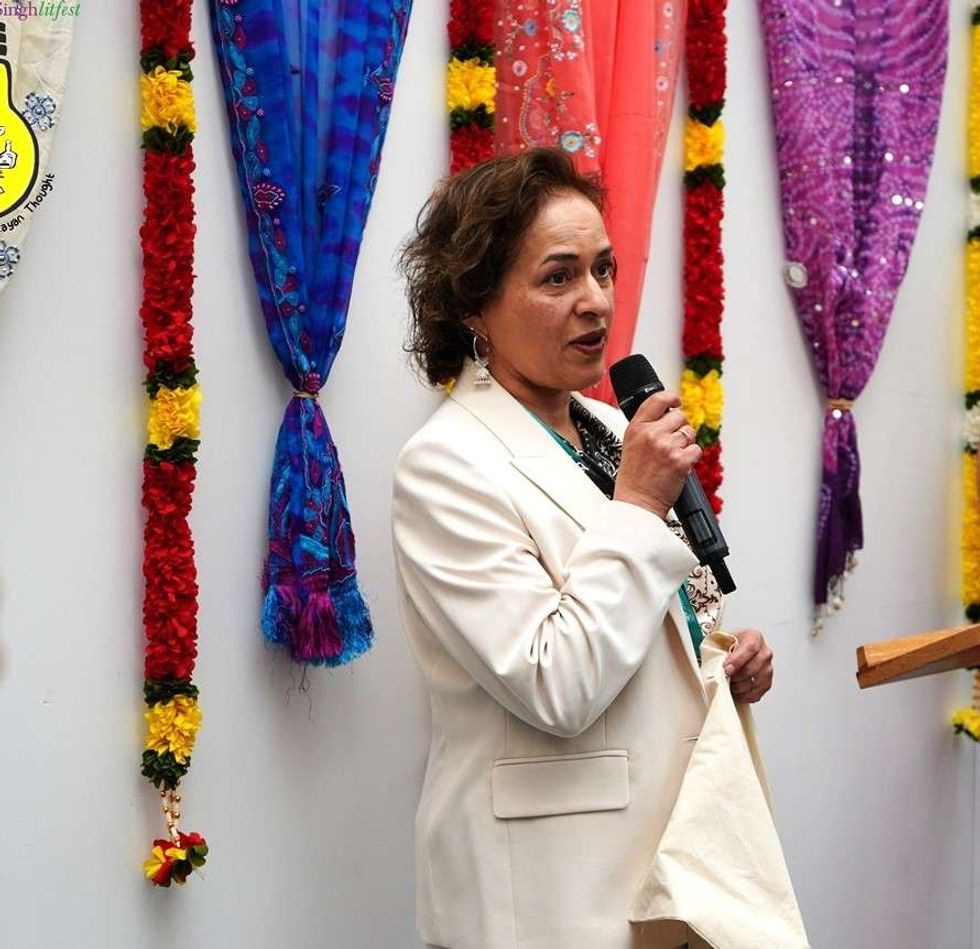 Kelly Saini BadwalAmit Roy
Perhaps the good folk of Sutton will ask for the novels of the Indian author, RK Narayan, who set his tales in the mythical town of Malgudi. They include Swami and Friends (1935), The English Teacher (1945), The Financial Expert (1952), The Guide (1958) and The ManEater of Malgudi (1961).
Narayan was first published in Britain, thanks to the support he received from Graham Greene. Though they wrote to each other for 55 years, they met only once briefly (I met Narayan once in London and, in fact, paid for his bus fare to Broadcasting House).
During his session at KSLF, McCall Smith was asked about his Indian links during his conversation with Paul Waters, author of Murder in Moonlit Square, a crime novel set in Delhi (he is proofreading a sequel, Death at the Elephant House).
“I understand that RK Narayan and his Malgudi adventures was a bit of an inspiration for you,” observed Waters.
“Absolutely,” enthused McCall Smith. “I think RK Narayan was a very, very great writer. I think he should have got the Nobel Prize. I don’t know whether he was ever nominated (he was), but his books are absolutely lovely.”
He went on: “The Malgudi novels are beautiful, beautiful novels of life in a small town, with all the issues that go with life in a small town, beautifully written. Graham Greene was a great fan of RK Narayan. In fact, Graham Greene helped him to get published initially in the 1930s. And RK Narayan was the precursor of a wonderful tradition of Indian novelists writing in English, writing these gorgeous novels which continue.”
McCall Smith said: “There’s a wonderful humanity in the way in which he observes his characters. He has that quality, as the great novelists like him have, of being very sympathetic towards his characters, and getting across the essence and the humanity of the characters. He conveys people’s yearning for something in their lives, and that’s a very poignant thing.




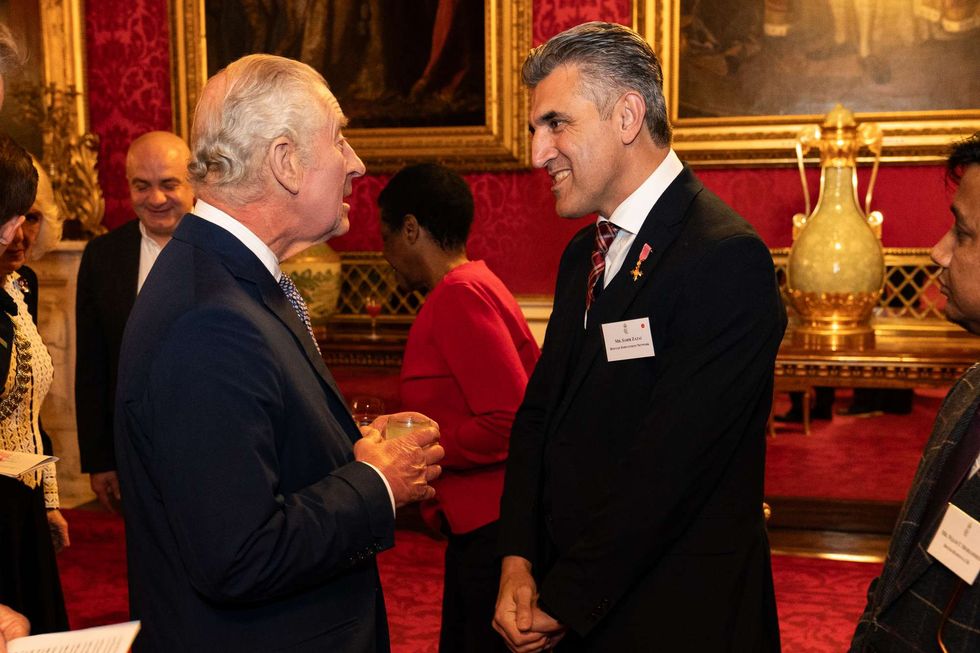 Sabir Zazai (right) speaks with King Charles III during a reception at Buckingham Palace to recognise the UK's contribution to humanitarian efforts across the world and to mark 60 years of the Disasters Emergency Committee on November 8, 2023 in London, England.Getty Images