AS THE King and prime minister lead the 80th anniversary commemorations of VJ Day on Friday (15), this may be the last poignant major wartime anniversary where the last few who fought that war can be present.
Everybody knows we won the second world war against Hitler. But how many could confidently explain the complex jigsaw across different theatres of the wider global conflict? The anniversary is a chance too for the rest of us to learn a little more about a history that most people wish they knew better.
Those three short months from May to August between VE Day and VJ Day in 1945 reshaped our modern world. The Potsdam conference rewrote the map of Europe. Britain’s voters dismissed Churchill with a Labour landslide. Atom bombs were dropped, killing 70,000 people instantly in Hiroshima. Historians still debate whether it was a terrible crime or a defensible choice to avoid a land invasion of Japan. Yet the second bomb on Nagasaki, killing 50,000 more, is harder to try to rationalise in utilitarian terms. The shadow of the mushroom clouds add to the solemnity of the VJ Day commemoration. Eight decades on, the focus is on commemorating service and mourning all who suffered from war and dictatorship.
The vast Commonwealth contribution to the war in the east will be one focus of the 80th anniversary commemorations. General Slim’s Fourteenth Army has been called the “forgotten army” which won a “forgotten war” in Burma. It was an enormous multi-national force. Old war movies of the Burma campaign rarely reflected that only a tenth of its soldiers were from Britain, with nine-tenths from India or Africa.
The Indian Army of the second world was the largest volunteer army in history, growing from 195,000 men in 1939 to 2.5 million by 1945, its fledgling air force expanding a hundred-fold from 285 men to 29,000.
The battle of Kohima in May and June 1944 was the turning point of the war in the East. It blocked the Japanese invasion of India from advancing to seize Dimapur, while creating the route into Burma. Kohima even won a surprise victory over D-Day as Britain’s greatest battle at a National Army Museum event a decade ago. The audience found historian Robert Lyman’s argument persuasive that “great things were at stake in a war with the toughest enemy any British army has had to fight”.
It sounds strange, to our modern ears, that Indian soldiers would volunteer for the army of the British imperial power. Yet, the British Indian army’s successful defence of Kohima illustrates why many Indian officers saw the Japanese regime as the more imminent existential threat than a faraway Hitler. So the Indian Army outnumbered – by a 50:1 ratio – the 43,000 rebels who heeded Subhas Chandas Bose’s effort to raise a rebel army for the Germans and Japanese. Indian soldiers won 22 of the 34 Victoria and George Crosses of the Burma campaign. Commonwealth service was honoured despite and alongside the Empire’s entrenched racial hierarchies. General Sir Claude Auchinleck, commander-in-chief of the Indian Army, said in 1945 that ‘every Indian officer worth his salt today is a nationalist’. Their crucial role in defeating Japan was one final proof that India was as ready for self-government as Canada or Australia.
 And ,the plaque honouring those who fought in the Battle of Kohima
On the second anniversary of VJ Day, Jawaharlal Nehru was already declaring India’s independence. The speed with which the British finally quit India left veterans forming the new armies of India and Pakistan struggling to mitigate the bloody tragedy of Partition.
So this shared endeavour in defeating Japan is a crucial bridge in the arc of both British and Indian history, but rarely recognised in either country’s national narrative in the decades after 1945.
As the world wars slip beyond living memory, many anticipate that the meanings of 1945 will fade. Yet we should be ever more proactive – between now and the 2039-2045 centenary of the second world war – in ensuring everybody understands its foundational part in our national story.
It matters that the next generation understand that the armies that fought and won two world wars resemble the Britain of 2025 much more than that of 1945 or 1915 in their ethnic and faith demographics. The scale of the Hindu, Sikh and Muslim contribution to the Commonwealth effort, and joining the dots between wartime service and the post-war arrival of the Windrush are keys to understanding the making of modern Britain. British Future, Eastern Eye and the Royal British Legion will launch an exciting new project this autumn to honour and raise awareness of south Asian service in the world wars.
Let us never duck the controversies of the complex and contested history of empire. But understanding how it shaped the society that we are today should include recognising all of those who contributed to protecting the democratic freedoms that we share today.
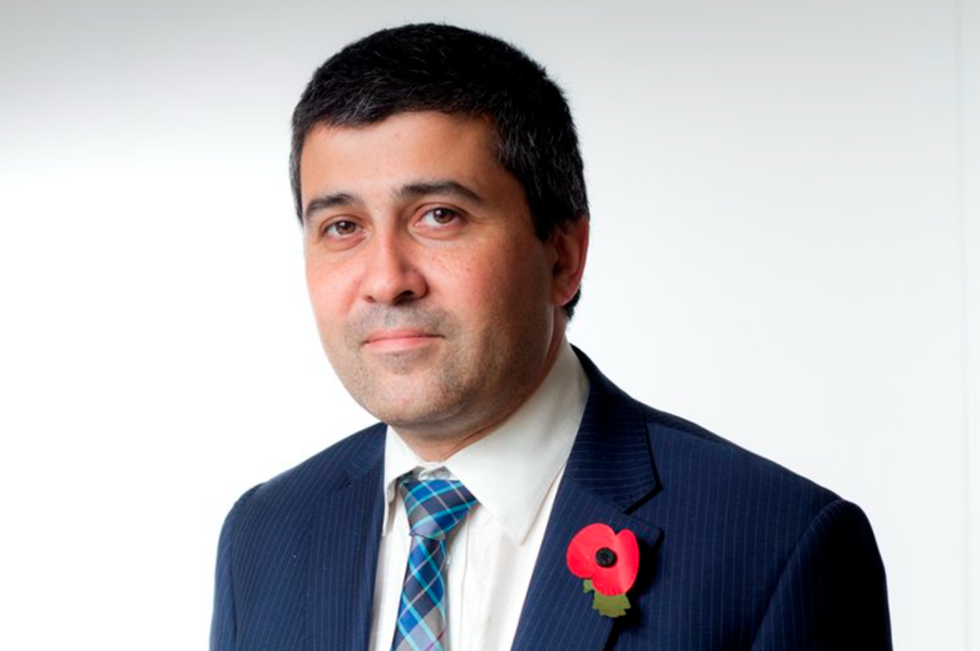
Sunder Katwala is the director of thinktank British Future and the author of the book How to Be a Patriot: The must-read book on British national identity and immigration.

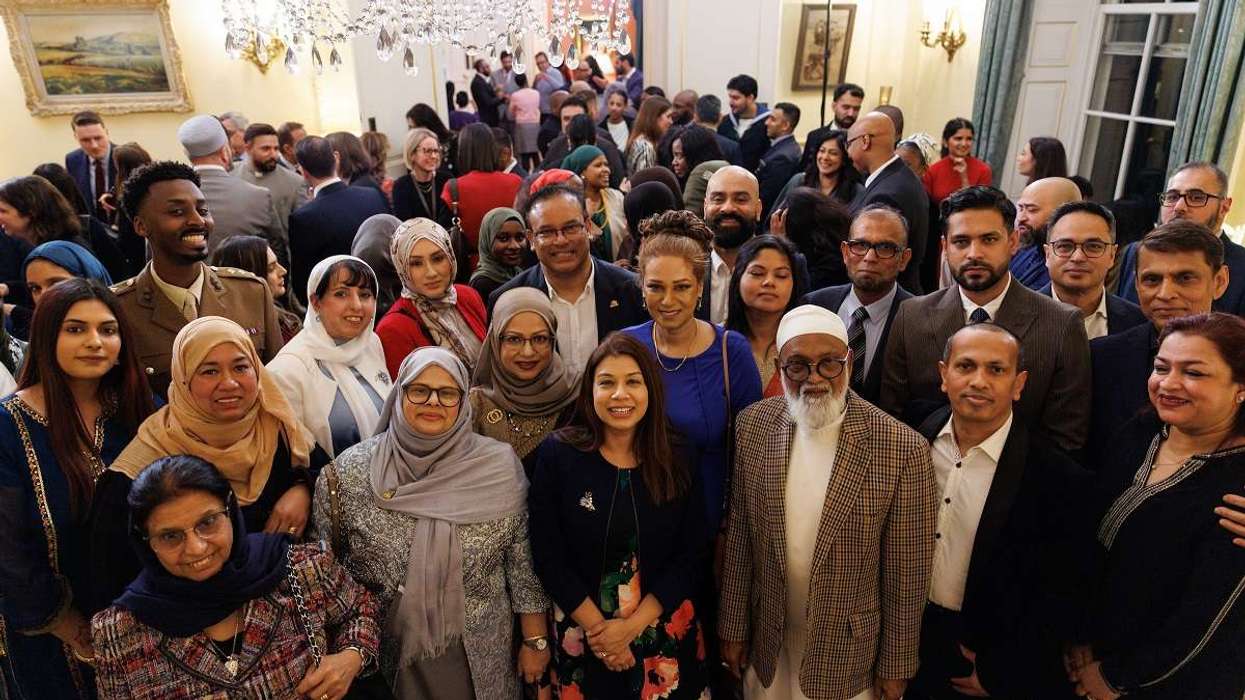
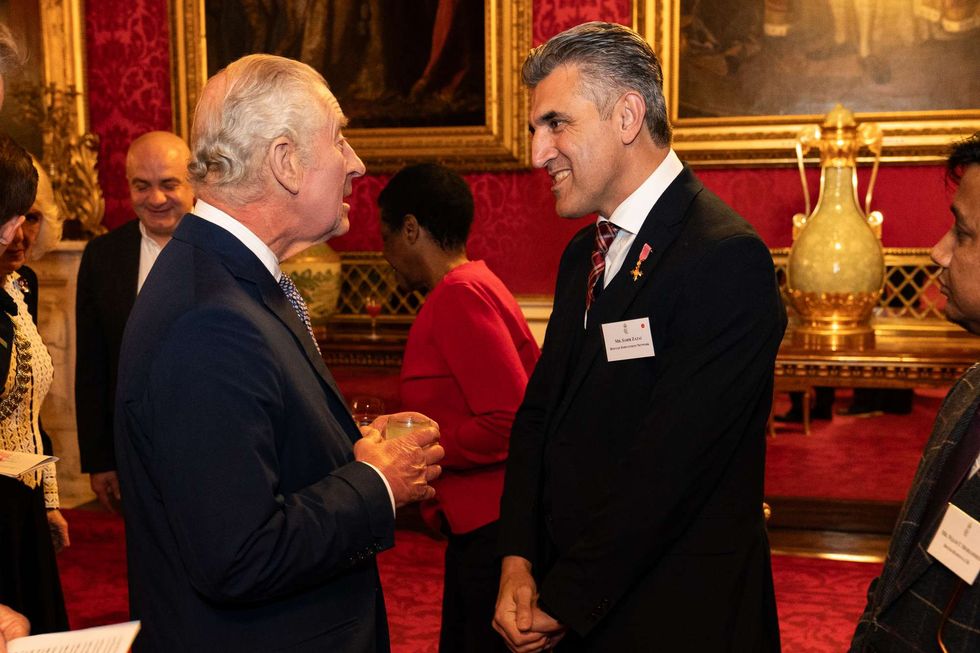 Sabir Zazai (right) speaks with King Charles III during a reception at Buckingham Palace to recognise the UK's contribution to humanitarian efforts across the world and to mark 60 years of the Disasters Emergency Committee on November 8, 2023 in London, England.Getty Images