
Highlights:
- UK says it will not support a Hormuz blockade or be drawn into Iran war
- US begins blockade of maritime traffic linked to Iran
- Iran issues warnings, says it controls the Strait of Hormuz
- Oil prices rise sharply amid escalating tensions in West Asia
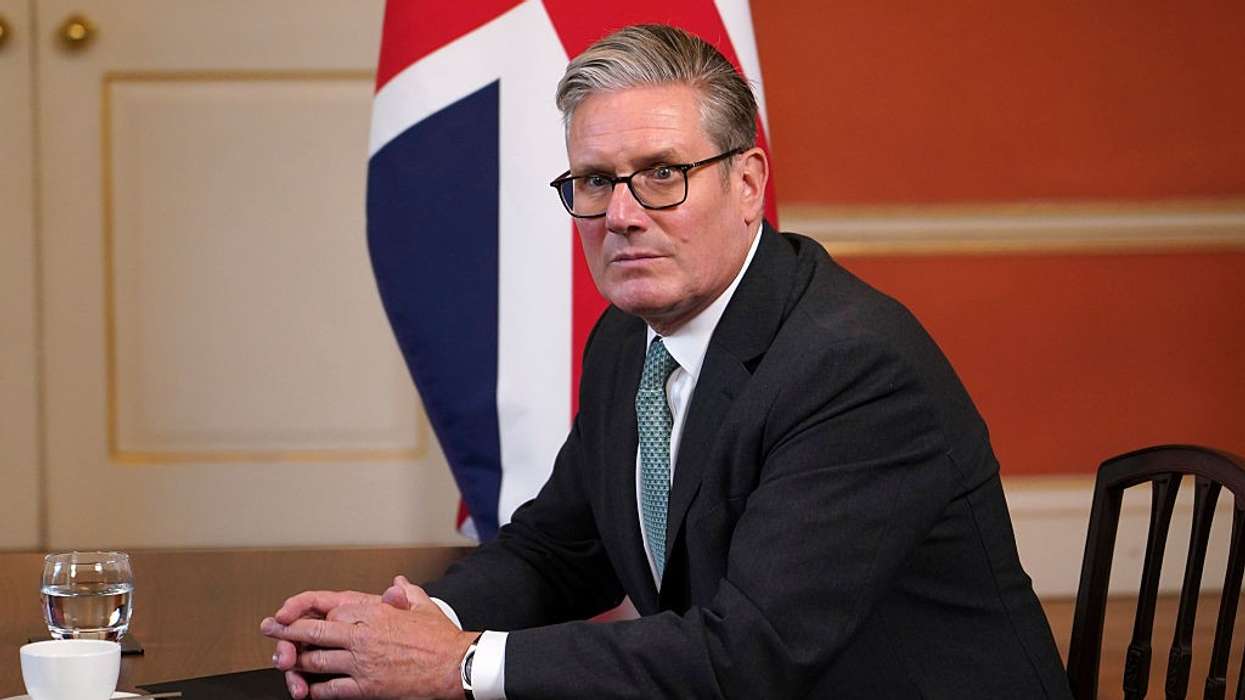
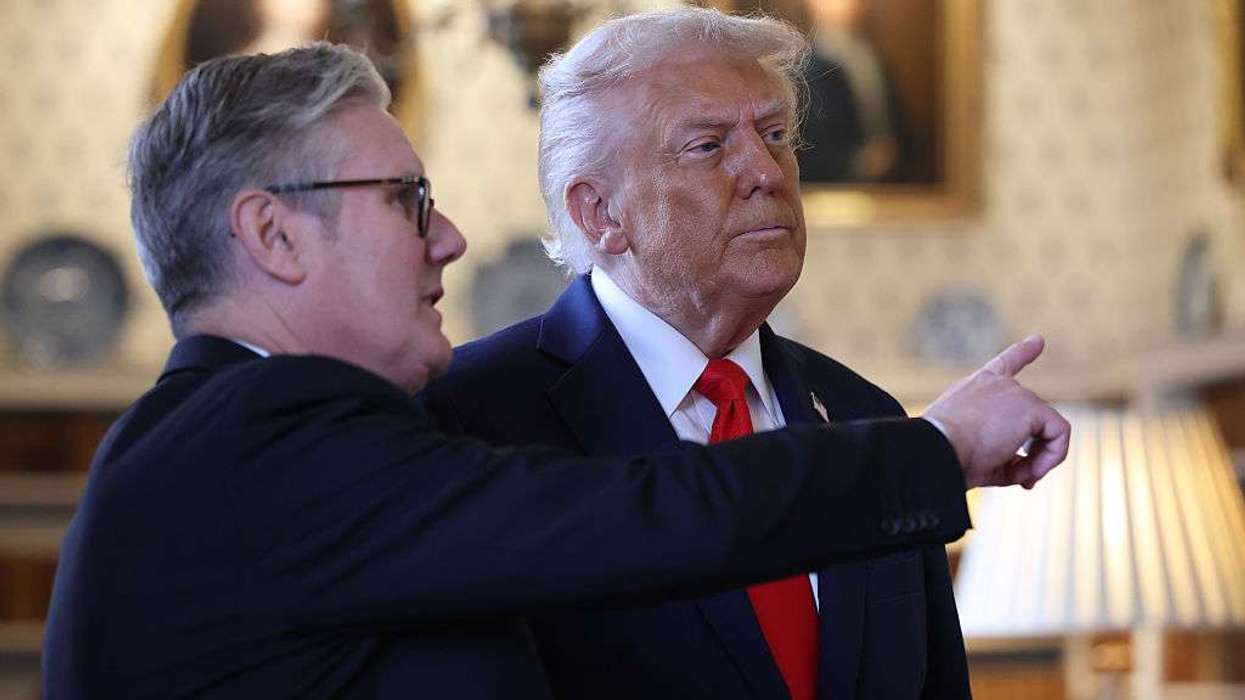
PRIME MINISTER Keir Starmer said on Monday Britain would not be involved in a blockade of the Strait of Hormuz and would not be drawn into the Iran war.
"We're not supporting the blockade," he told BBC Radio 5 Live, adding that it was vital to get the Strait reopened.
"It is, in my view, vital that we get the Strait open and fully open, and that's where we've put all of our efforts in the last few and we'll continue to do so," Starmer said.
He said Britain had minesweepers in the region and, while he could not discuss operational matters, the military capability was "focused from our point of view on getting the Strait full open".
His comments came as the US moved ahead with a blockade of maritime traffic linked to Iran after talks failed to produce a deal to end the war.
The US military said it would begin a blockade of all maritime traffic entering and exiting Iranian ports and coastal areas on Monday at 1400 GMT.
ALSO READ: US, Iran fail to reach deal after 21-hour talks in Pakistan
The US Central Command said the blockade would be "enforced impartially against vessels of all nations entering or departing Iranian ports and coastal areas, including all Iranian ports on the Arabian Gulf and Gulf of Oman."
It added that vessels transiting the Strait of Hormuz to and from non-Iranian ports would not be impeded.
US president Donald Trump said US forces would also intercept vessels in international waters that had paid a toll to Iran.
"No one who pays an illegal toll will have safe passage on the high seas," Trump wrote on social media, adding: "Any Iranian who fires at us, or at peaceful vessels, will be BLOWN TO HELL!"
Trump also said he was not concerned about whether Iran returns to negotiations after weekend talks in Pakistan failed.
"I don't care if they come back or not. If they don't come back, I'm fine," he told reporters at Joint Base Andrews in Maryland.
Iran responded with warnings and rejected the US position.
Iran's Revolutionary Guards said Iranian security forces had full control over the Strait of Hormuz and warned enemies would be trapped in a "deadly vortex" in case of any "wrong move".
Iran's navy chief Shahram Irani called Trump's threat "ridiculous and funny", according to state TV, adding the country's military was "monitoring and supervising all the movements of the aggressive American army in the region".
ALSO READ: Israeli strikes in Lebanon raise doubts over US-Iran ceasefire
Parliament speaker Mohammad Bagher Ghalibaf said Iran would not yield to pressure.
"If they fight, we will fight, and if they come forward with logic, we will deal with logic," he said.
"We will not bow to any threats, let them test our will once again so that we can teach them a bigger lesson."
Iran's Foreign Minister Abbas Araghchi said a deal had been close during the talks.
"Iran engaged with US in good faith to end war," he said in a post on X.
But when "just inches away" from an agreement, "we encountered maximalism, shifting goalposts, and blockade", he added.
Oil prices rose after the developments.
ALSO READ: Starmer begins Gulf tour, calls for action to reopen Strait of Hormuz
The US benchmark climbed above $100 a barrel on Monday. West Texas Intermediate for May delivery rose around eight per cent to $104.50, while Brent for June delivery rose seven per cent to $102.
In Lebanon, prime minister Nawaf Salam said efforts were ongoing to stop the Israel-Hezbollah war and secure Israeli withdrawal.
"We will continue to work to stop this war, to ensure the Israeli withdrawal from all our lands, the return of all the prisoners, to rebuild our destroyed villages and towns, and the safe return of the displaced," Salam said.
Israeli prime minister Benjamin Netanyahu said Israeli forces had removed the threat of an invasion by Hezbollah.
"The war continues, including within the security zone in Lebanon," Netanyahu said in a video released by his office.
The United Nations Interim Force in Lebanon said an Israeli tank twice rammed its vehicles in the south and that Israeli soldiers blocked a road in Bayada used to access UN positions.
Lebanese official media reported Israeli strikes across the south, with the health ministry saying at least five people were killed, taking the toll on that front to 2,055.
Israel has said the current West Asia ceasefire does not apply to its operations in Lebanon targeting Hezbollah.
(With inputs from agencies)
 Jayanti Solanki and Mahesh Solanki with Asha Bhosle. EE