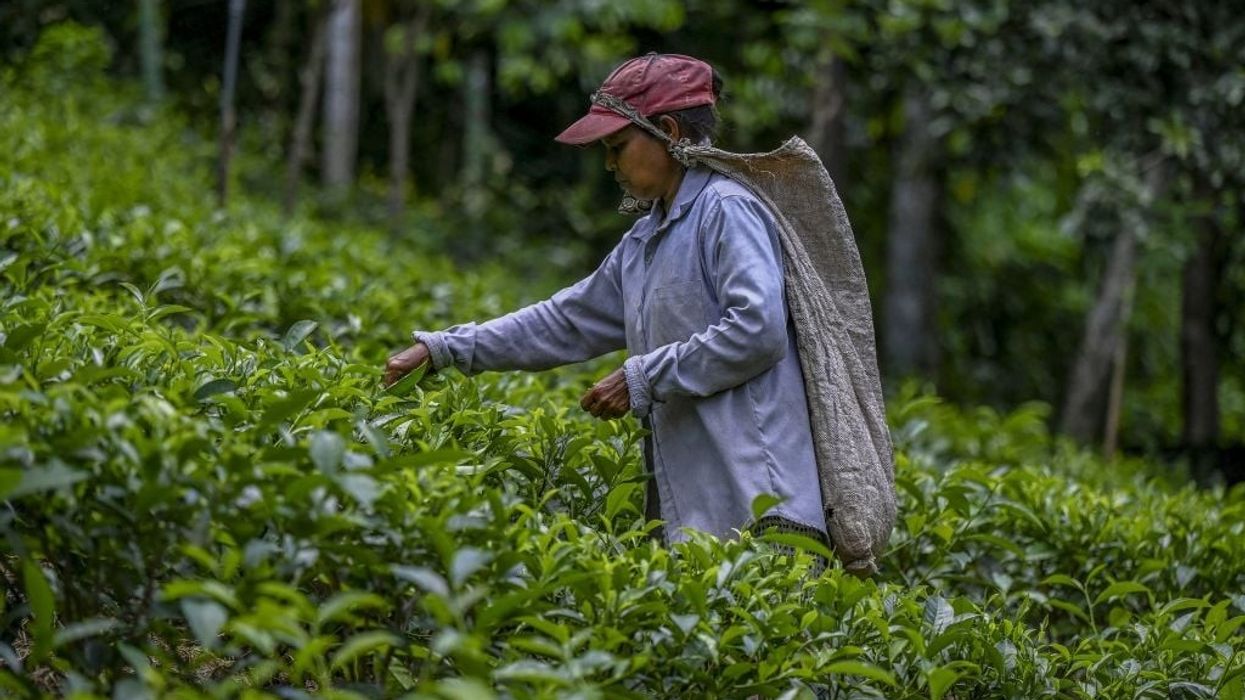

SRI Lanka's government breached its own ban on chemical fertilisers by importing potassium chloride this week, scientists said Friday (15), after outraged farmers warned the regulations could worsen food shortages.
The government imposed the ban in May as part of a drive to make Sri Lanka the world's first 100 percent organic farming nation.
But the policy sparked anger among farmers, who have warned that Sri Lanka - already in the grip of food shortages caused by a currency crisis - now faces crop failure.
The agriculture ministry said only that it had begun to distribute 30,000 tonnes of "organic potassium chloride" that arrived from Lithuania on Wednesday (13), but it did not comment on claims by scientists that the cargo violated the government ban.
"This consignment of potassium chloride is not organic fertiliser," said SDM Chinthaka, professor of chemistry at the state Sri Jayewardenepura University.
"Very clearly, the government has violated its own ban on chemical fertiliser," he said.
Media reports quoted other experts also saying the government had breached its ban in importing the fertiliser.
Farmers have staged daily protests demanding fertiliser for their crops.
Anger grew last month when the government rejected 96,000 tons of organic fertiliser from China citing quality issues.
The government had offered subsidies to farmers to produce their own compost, but this failed to meet demand.
Sri Lankan president Gotabaya Rajapaksa promised to subsidise foreign fertiliser when he came to power in 2019, but later reversed policy, arguing that agrochemicals were poisoning people.
His administration has denied that the ban on chemical fertiliser, herbicides and pesticides is motivated by a foreign exchange shortage, instead claiming it is part of a push for healthier agriculture.
Farmers of rice, the country's staple along with tea, have warned crop yields could be halved without chemicals.
(AFP)






 Heads of delegations pose for a family photo on day two of the BRICS Summit in New Delhi, India, September 13, 2026. Sputnik/Alexander Kazakov/Pool via REUTERS