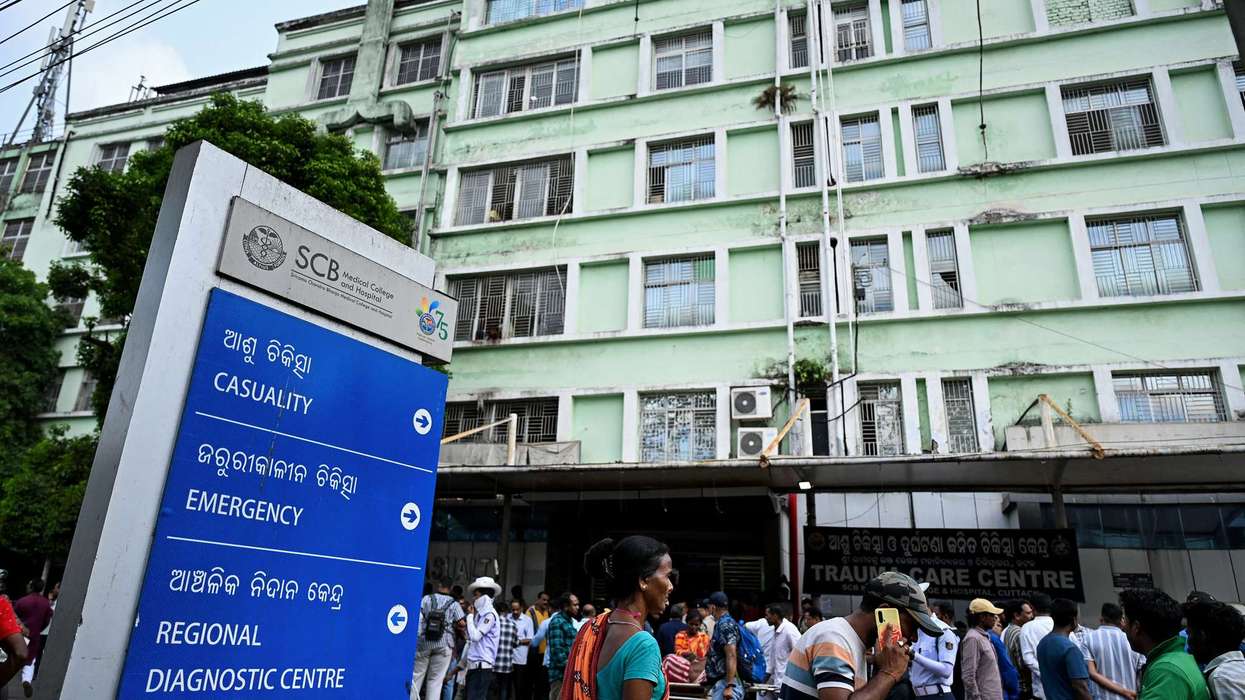

AT LEAST 10 critically ill patients died after a fire broke out in the trauma care unit of a government-run hospital in eastern India, officials said on Monday.
The incident took place at SCB Medical College and Hospital in Cuttack city in Odisha state.
Chief Minister Mohan Charan Majhi said the fire started early Monday on the first floor of the hospital building.
"A short circuit caused the fire in the trauma ICU ward where patients were being treated," he told reporters.
He said 23 patients were present on the floor when the incident happened.
Ten people died after the blaze, while the remaining patients were shifted to other wards, he said.
At least 11 staff members suffered burn injuries while trying to rescue the patients.
Prime Minister Narendra Modi described the incident as "deeply painful" in a post on social media and offered condolences to the families of the victims.
He also announced compensation of $2,160 for the affected families.
Building fires are common in India due to a lack of firefighting equipment and routine disregard for safety regulations.
Electrical short circuits, often caused by poorly maintained wiring, remain the leading cause of fire incidents in India.
In 2024, a fire at a private hospital in the southern state of Tamil Nadu killed at least six people and injured more than two dozen.
In the same year, 10 newborns died after a fire engulfed a hospital in the northern state of Uttar Pradesh.