
Highlights
- Nvidia's Alpamayo platform brings AI reasoning to autonomous vehicles; Mercedes driverless car launching in US within months.
- Open-source system allows cars to think through rare scenarios and explain driving decisions, available free to researchers via Hugging Face.
- Company preparing robotaxi service launch next year with unnamed partner as "ChatGPT moment for physical AI" approaches.
Nvidia has unveiled a groundbreaking technology platform for self-driving cars as the world's leading chipmaker seeks to embed artificial intelligence into physical products beyond software applications.
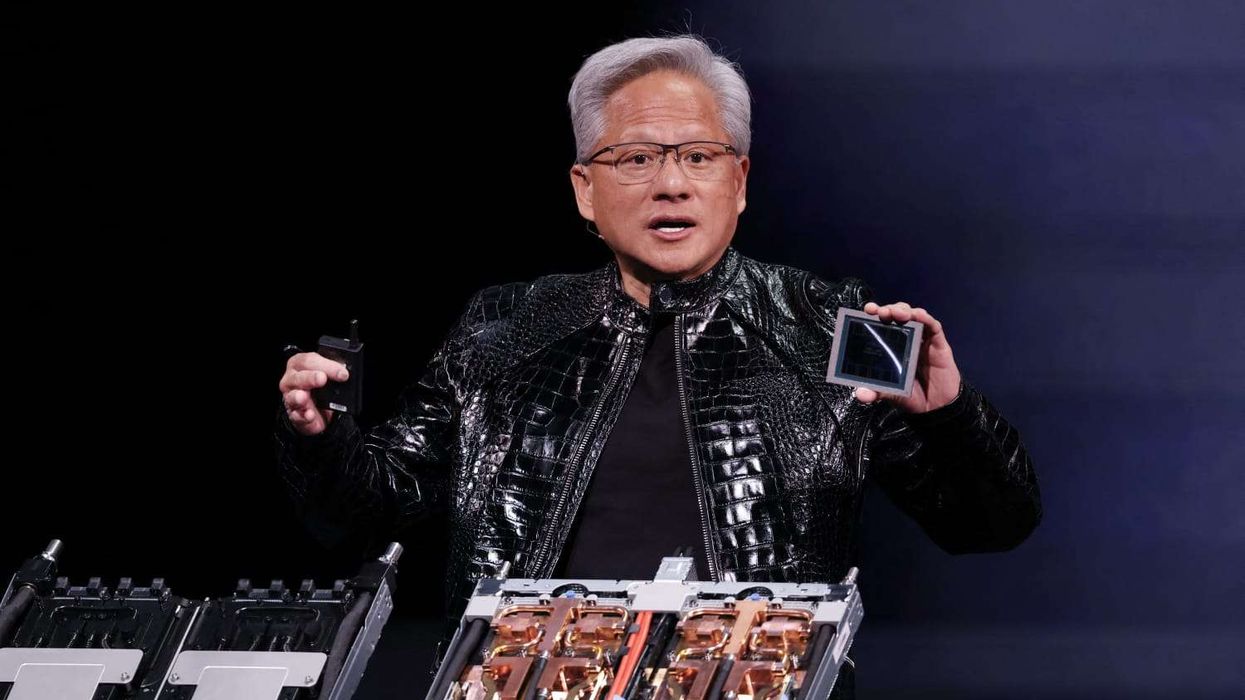
Speaking at the annual CES technology conference in Las Vegas, chief executive Jensen Huang announced the system called Alpamayo - would bring "reasoning" capabilities to autonomous vehicles.
The platform would enable cars to "think through rare scenarios, drive safely in complex environments, and explain their driving decisions," Huang claimed.
The AI chip designer confirmed collaboration with Mercedes to produce a driverless car powered by the technology, scheduled for release in the United States within coming months before expanding to Europe and Asia.
Nvidia's chips have fuelled the AI revolution, though attention has primarily focused on software applications such as ChatGPT rather than hardware implementations.
Physical AI push
"The ChatGPT moment for physical AI is almost here," Huang told hundreds of attendees while wearing his trademark black leather jacket.
A video demonstration featured an AI-powered Mercedes-Benz navigating San Francisco while a passenger kept their hands in their lap.
"It drives so naturally because it learned directly from human demonstrators," Huang explained, "but in every single scenario, it tells you what it's going to do, and it reasons about what it's about to do."
Alpamayo is an open-source AI model, with underlying code now available on machine learning platform Hugging Face, where autonomous vehicle researchers can access and retrain the model free of charge.
"Our vision is that someday, every single car, every single truck, will be autonomous," Huang declared.
The development poses potential competition for companies like Elon Musk's Tesla, which offers Autopilot driver assistance software.
"Well that's just exactly what Tesla is doing," Musk posted on social media following the announcement. "What they will find is that it's easy to get to 99 per cent and then super hard to solve the long tail of the distribution."
Paolo Pescatore, analyst at PP Foresight, said from Las Vegas "Alpamayo represents a profound shift for Nvidia, moving from being primarily a compute to a platform provider for physical AI ecosystems."
Nvidia, the world's most valuable publicly traded company with a market capitalisation exceeding $4.5tn, also revealed its energy-efficient Rubin AI chips are currently being manufactured for release later this year.