
ACROSS Britain and beyond, hospitals, research centres and cultural institutions carry the names of Nirmal and Chitra Sethia – visible markers of a philanthropic mission that has quietly expanded over decades.
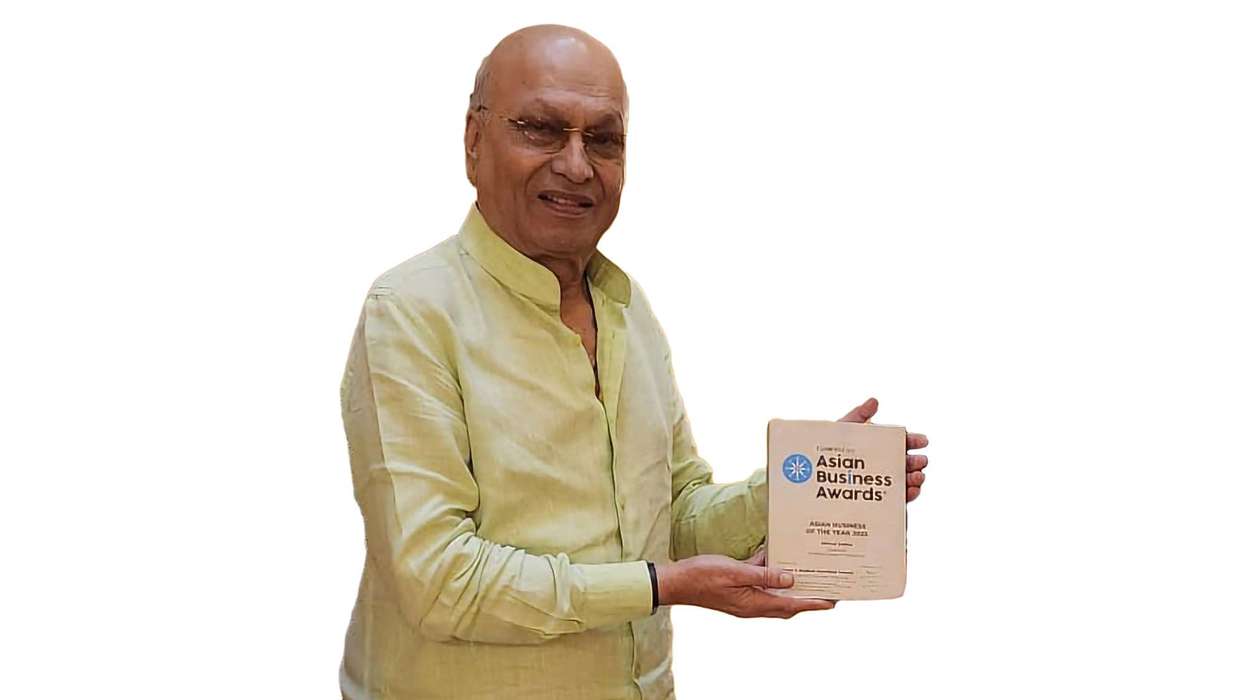
Businessman and philanthropist Nirmal Sethia is widely regarded as one of the most prolific charitable benefactors among British Asian entrepreneurs. While his commercial interests span industries from commodities and security printing to property investment and tea, it is philanthropy that now occupies the greater share of his time and attention. As he once put it with characteristic candour: “Ninety-five percent of my time goes to charity.”
That commitment is channelled primarily through the N. Sethia Foundation, established in 1995, which supports projects across healthcare, education, cultural institutions and community initiatives in the UK and internationally. Over the past three decades, the foundation has helped fund hospitals, research centres, autism services and educational institutions, creating a philanthropic footprint that stretches from Britain to India and Africa.
Healthcare initiatives form one of the most visible strands of Sethia’s charitable work. At University College London Hospital, the Chitra Sethia Centre for Robotics & Minimal Access Surgery provides specialised training in robotic and laparoscopic procedures. The facility houses a Da Vinci surgical system used to train surgeons and nurses across multiple disciplines.
Another major project supported by the foundation is the Chitra Nirmal Sethia Surgical Technology Hub at St Mary’s Hospital in London, part of Imperial College London’s Surgical Innovation Centre. Opened by the then Prince of Wales in January 2015, the hub supports research and training in minimally invasive surgery, helping clinicians develop advanced techniques for diagnosis and treatment.
The foundation has also contributed to the UCL Institute of Immunity and Transplantation at the Royal Free Hospital in Hampstead. Within the Pears Building, completed in 2021, one of the institute’s floors is named the Chitra Nirmal Sethia Floor, reflecting the family’s support for cutting-edge research into immune diseases and organ transplantation.
Beyond London, Sethia’s philanthropy has helped establish the Chitra Sethia Autism Centre in Cambridge. Created in partnership with the National Autistic Society and the Autism Research Trust, the centre provides diagnostic and post-diagnostic support for adults with autism. Its services include clinical assessments, counselling and guidance on employment, leisure and education opportunities.
Cultural institutions have also benefited from the foundation’s support. Sethia is among the founding supporters of the London Museum, the institution formed from the relocation and relaunch of the Museum of London, scheduled to reopen in 2026. Speaking about his involvement, he once noted: “There are three or four founding members; I am one of them.” Before quickly adding: “When I say ‘I’, don’t get me wrong. It’s the N Sethia Foundation.”
At the Victoria and Albert Museum, the Chitra Nirmal Sethia Gallery celebrates the global history of tea and the decorative arts associated with it. The foundation has also contributed to the restoration of St Mary the Virgin Church in Charlton Mackrell, Somerset, reflecting a broader interest in preserving Britain’s cultural and architectural heritage.
Religious and community infrastructure forms another strand of Sethia’s philanthropic activity. The foundation is the single largest donor to the Tirupati Temple in Birmingham and has supported the construction of temple complexes in India. These include the Tirupati Balaji Temple in New Delhi, opened in 2013 with a guest house, meditation hall and information centre, and another temple in Kurukshetra inaugurated in 2018.
Education has also remained a longstanding priority. The Sona Devi Sethia PG Girls College in Rajasthan, founded in 1966 by Sethia’s father, Sohan Lal, in memory of his own mother, provides education to around 900 students each year and continues to be funded and managed through the family’s charitable trust.
Humanitarian support is another aspect of the foundation’s work. Its contributions have included emergency assistance following the Grenfell Tower fire in London in 2017, as well as support for widows affected by the war in Ukraine and funding for children requiring medical treatment. Internationally, donations have also supported hospitals and medical initiatives in Africa through organisations including the World Health Organisation and Unicef.
Despite the scale of these charitable activities, tea remains a defining thread in Sethia’s life. His relationship with the trade began more than six decades ago in London after a chance encounter in the late 1950s led him to become an apprentice tea taster for one of the city’s largest tea merchants. Sethia has often described that moment as providential, believing it to be “the hand of God” guiding him toward a lifelong vocation.
He later became closely associated with Newby Teas, which he describes as “the world’s finest tea company with a mission not to make money, but to try and promote tea culture which is 5,000 years old.” Profits from the company flow directly to the N. Sethia Foundation, creating a deliberate link between business and philanthropy.
His fascination with tea culture also inspired the Chitra Collection, a private museum of historic teaware established in 2011. Comprising nearly 2,000 artefacts dating from the 10th century BC to modern times, the collection has been valued at more than £600 million and is regarded as one of the most significant assemblages of tea-related heritage in the world.
Born in Calcutta (now Kolkata) on in November 1941, Sethia first came to London as a boy. He returned to India at the age of 16 before moving back to London in 1966. He married Chitra Devi, who hailed from a princely family of Ajairajpura in Jaipur State, in February 1969, and they had three children: Richa, Rishi and Puru.
Chitra passed away in November 2010, but her name remains closely associated with many of the charitable initiatives supported by the foundation.
Today Sethia divides his time between London and Dubai while overseeing the interests of the N Sethia Group. Yet the institutions created through his philanthropy have become the most enduring expression of his influence. For a businessman who often says the majority of his time is devoted to charity, the legacy being shaped through those institutions may ultimately prove his most lasting contribution.