
FOR 25 years, the Mukul Madhav Foundation (MMF), an India-based charity with an office in London, has worked to provide resources to vulnerable and marginalised communities and individuals.
When I started the foundation in Pune in 1998, I simply wanted to do something useful. My parents and grandparents had raised me to believe that living well meant giving back. I took that seriously. What I did not anticipate was where that conviction would take me.
Now, MMF works across 25 states in India, and has touched more lives than I can count. But I am wary of big numbers. They can make you feel like you have arrived somewhere. The truth is that this work never lets you feel that way.
We started with healthcare and education, which felt like the most urgent places to begin. Over time, it became clear that you cannot separate health from clean water, or education from sanitation, or any of it from the simple fact of whether a person feels they are being treated with dignity.
Today, we work across healthcare, education, women’s empowerment, water conservation, agriculture, sports, animal welfare and more. We have addressed all 17 of the United Nations Sustainable Development Goals, not because we set out to tick boxes, but because human need does not confine itself to categories.
One programme I am particularly proud of is Mission Cerebral Palsy, which recently completed ten years. We work with children with special needs, early diagnosis, therapy, long-term rehabilitation. Before we started, many of these families had nowhere to turn. The system had simply left them behind.
Education remains the area closest to my heart. We have built schools, upgraded classrooms, offered scholarships and brought digital learning to communities that had none of it.
I pay particular attention to girls in rural and tribal areas. There is something about educating a girl that ripples outward in ways that are hard to fully measure. She carries it into her home, into her children, into the next generation. That is the kind of change that lasts.
I feel strongly about how we work. We do not arrive in a community with ready-made answers. We sit with people. We listen to what they need, not what we assume they need. Then we work with local government to make sure solutions can grow and be sustained beyond our direct involvement.
Since 2014, we have worked as the official Corporate Social Responsibility partner of Finolex Industries Limited, which has helped us operate at greater scale. In 2018, we opened our UK office, extending our reach and our conversations internationally.
My husband Prakash has stood beside me through all of it. My daughters, Gayatri and Hansika, have grown into trustees in their own right, bringing fresh energy to the work. And the communities we serve are not passive recipients; they are partners. That distinction matters enormously to me.
I realised early on that charity alone was not enough. What women needed was not a handout, but a voice – in their families, their communities, and the institutions that shape their lives. So, I set out to build solutions where women are not merely beneficiaries, but stakeholders and decision-makers. True empowerment, as I see it, begins the moment a woman stops being a recipient and starts being an equal partner.
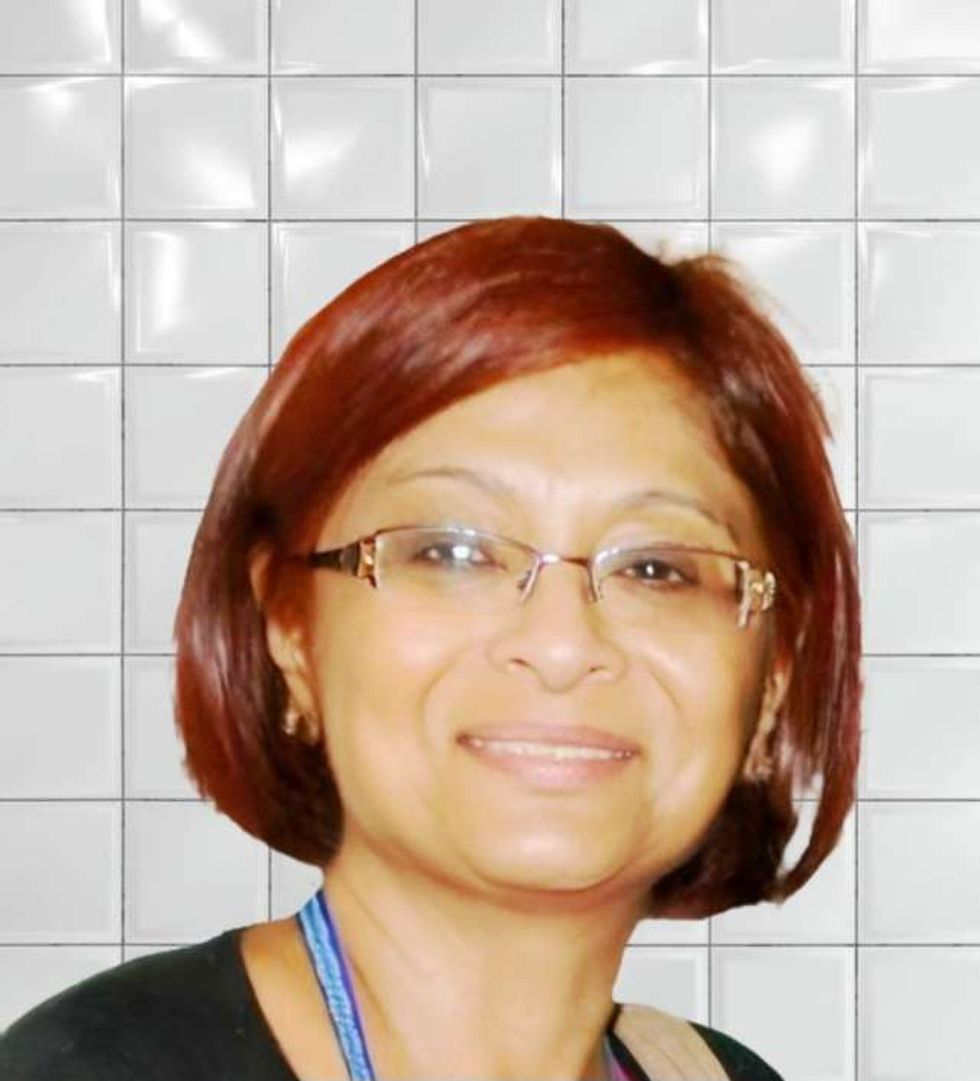
The author is the co-founder and managing trustee of the Mukul Madhav Foundation (MMF)




 Dr Kalpana Lakhani Garavi Gujarat