
RESCUERS in Nepal and China worked through difficult weather and rising river levels on Sunday (30) as they searched for thousands of people still missing following a glacier collapse that sent a catastrophic mudslide through the Himalayas.
Authorities said the death toll had risen to 750, with more than 3,000 people missing across the Nepal-China border after ice, rock, mud and debris tore through mountain valleys and rivers on Wednesday (26).
Nepal's disaster authority said 734 people had died, 2,498 remained missing, and 7,514 had been rescued. In China, authorities said 16 people were killed in Gyirong County, and 546 were missing. Latest combined figures from both countries put the number of missing at 3,044.
The Red Cross has estimated that more than 90,000 people are likely to have been affected by the disaster, which China has linked to climate change.
Chinese foreign minister Wang Yi told his Nepalese counterpart in a Saturday (29) phone call that the mudslide was their "most severe cross-border disaster" in recent years and that rescue operations had risen to an unprecedented level of difficulty and complexity, state broadcaster CCTV reported.
China said 261 foreign nationals from 23 countries were unaccounted for in Tibet, near a key border crossing with Nepal. Separately, Nepal's disaster authority said on Sunday that 589 foreigners, including trekkers and Hindu pilgrims travelling to Tibet's sacred Mount Kailash, were unaccounted for.
The Isha Foundation, led by Indian guru Sadhguru, said in an Instagram post on Saturday that 80 members had been on a group trip in the area, adding: "At this time, there seems to be no encouraging indications of survivors at the immigration office area."
Rivers rising, new landslide feared
Local police in Nepal told Reuters that residents and rescue workers had moved to higher ground after the Trishuli River's water levels rose following fresh rainfall, raising fears of further flooding.
Rescue operations have been suspended several times since Friday because of bad weather and concerns that a lake formed by the disaster across the Nepal-China border could trigger fresh flooding after overflowing into Nepal's Lhende Khola and Trishuli Rivers.
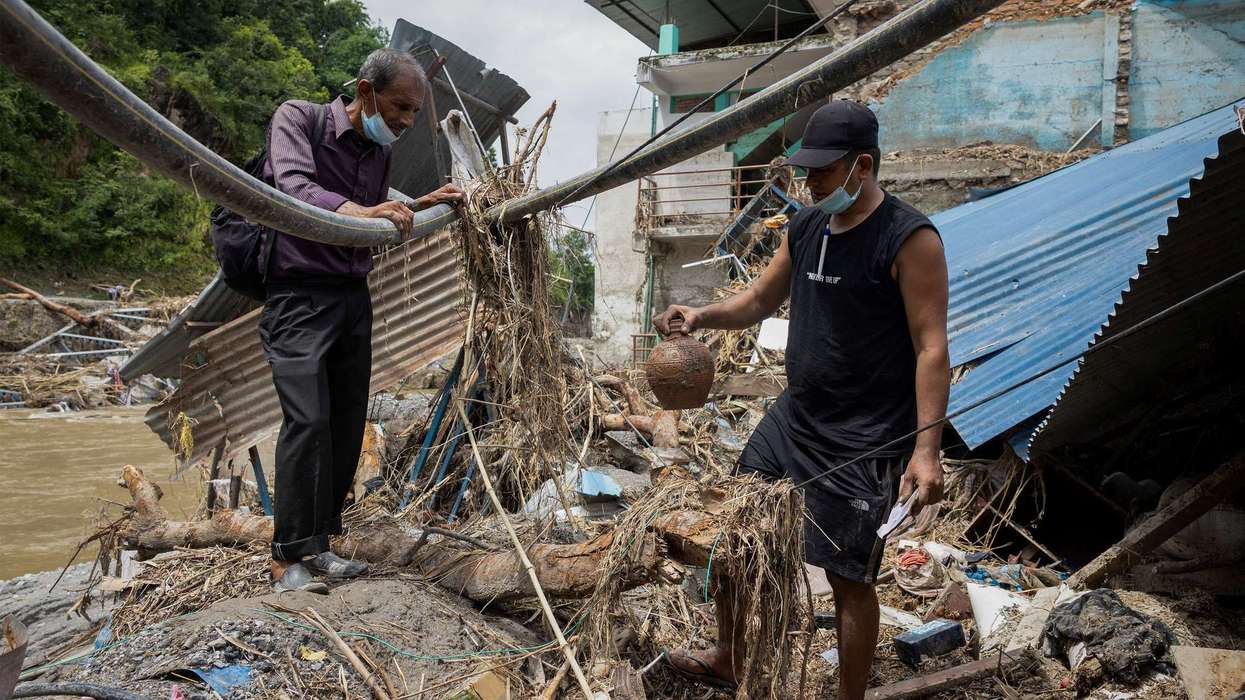 Bishok Kadel (R) 43, carries a piggy bank after recovering it from his damaged house following the flash floods and a mudslide, in Devighat, Nuwakot district, Nepal, August 30, 2026. REUTERS/Adnan Abidi
CCTV reported that the lake had been largely drained by Saturday evening, but drones detected a landslide late on Saturday 2.8 kilometres downstream of the lake, forming a new dam and pool of water.
Chinese rescuers near the Tibet border port hit by the mudslide were "moved to a safe location" on Sunday after the new lake formed, state media reported.
Tunnel rescue under way
In Nepal, efforts have become more focused on hundreds of people believed trapped inside tunnels at hydropower plants damaged by the floods. Nepal's disaster authority listed 933 hydropower workers among the missing.
Nepali army troops and engineers were working on Sunday to rescue workers believed trapped in a tunnel at the Trishuli 3A hydroelectric site after successfully inserting a pipe into the passage. Home Minister Sudan Gurung said in a statement that rescuers had "started sending air through the small opening."
Overnight rain and rising river waters hampered efforts early on Sunday, filling the excavation area with water before conditions eased and teams resumed work, the Nepal army said.
Lok Bahadur Chhetri, a spokesperson for Nepal's foreign ministry, said Nepal required international assistance in specialised areas including tunnel rescue operations, DNA testing, refrigerated storage for bodies and forensic identification of decomposed remains. Indian and Chinese experts were already working to help open tunnels and support rescue operations, he said.
Mass burials begin
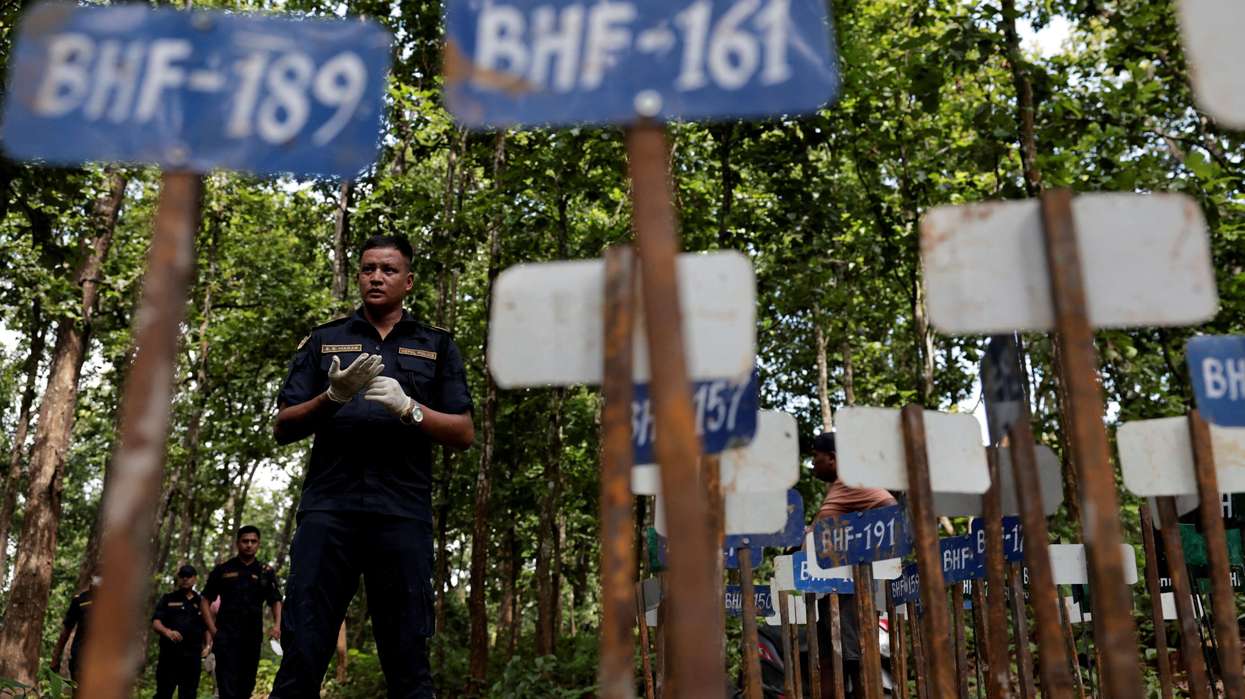
Days after relatives moved between hospitals, morgues and relief centres searching for loved ones, authorities in Nepal began mass burials of hundreds of unidentified victims whose bodies had started to decompose.
In Chitwan district, which escaped the direct impact of the disaster, bodies swept downstream from the flood-hit Rasuwa region have been carried by the river system into the Narayani River. Authorities are photographing the bodies, collecting DNA samples and recording identifying details in the hope that families may still be able to identify relatives after burial.
"Of the bodies we have recovered so far, more than half are beyond recognition," said police officer Anil Thapa. "Many have no visible faces. In some cases, only hands or legs remain; in others, only parts of the body are available. In many cases, more than half of the head is missing."
After burying more than 100 unidentified bodies on Saturday, authorities were digging additional graves on Sunday for hundreds more.
In India, officials said they had recovered seven bodies from rivers flowing from Nepal, believed to be flood victims.
'There is nothing left'
Survivors described losing everything in the disaster. "All the settlements near the river were swept away," Buddhi Ram Dangol told AFP in Nepal's Nuwakot district. "There is nothing left."
At an army base serving as a rescue hub in Bidur, relatives crowded around lists of rescued people pasted on a wall. "I have come here looking for my son," said Kalka Sharda, scanning the list in desperation.
The flood was "caused by glacier instability under the long-term effects of global warming," CCTV reported, describing it as a "new and prominent feature of cryosphere disasters" on the Tibetan plateau.
China's Xinhua news agency reported that experts said a glacier on the southern slope of Lirung Peak in Nepal had fractured, triggering an ice-rock avalanche.
The resulting debris flow travelled more than 20 kilometres before crashing into Gyirong Port. CCTV said, citing Chinese scientists, that the mudslide from the Nepalese side took six to seven minutes to reach the Gyirong border crossing.
UN climate chief Simon Steill said in a statement: "The sudden glacial collapse and flash flood is a devastating reminder of how fragile these mountain environments can be."
International response
China has mobilised more than 2,100 rescue workers, according to CCTV, while Xinhua put the number at 2,141, including more than 500 in the worst-hit area near Gyirong.
China has allocated at least $32.7 million to support relief efforts and has been airdropping equipment and supplies to frontline rescuers, with soldiers using life-detection equipment to search for the missing. Authorities said they had evacuated 555 stranded tourists and 499 Chinese residents from Tibet.
The United States and Canada said they would each provide $3.6 billion in humanitarian aid to Nepal. The UK has offered $6.8m, and the UN released $2.5m in emergency funding.
The European Union promised $2.3m on Friday (28). At the same time, the International Federation of Red Cross and Red Crescent Societies said it had allocated more than $1m and launched an emergency appeal for $31m.
Malaysia said it would send search and rescue specialists to assist and would contribute $1m to help recovery efforts and victims.
Nepal's foreign minister Shisir Khanal said the reconstruction bill could run into "billions of dollars" and appealed for specialised assistance, including heavy-lift drones and technology to help locate people who are trapped, as well as forensic testing kits to identify bodies and freezer units to store them, saying bodies that had been in water could decompose at a faster rate.
The Chinese and Nepali foreign ministers spoke on Saturday and discussed sharing satellite and hydrological data, both sides said.