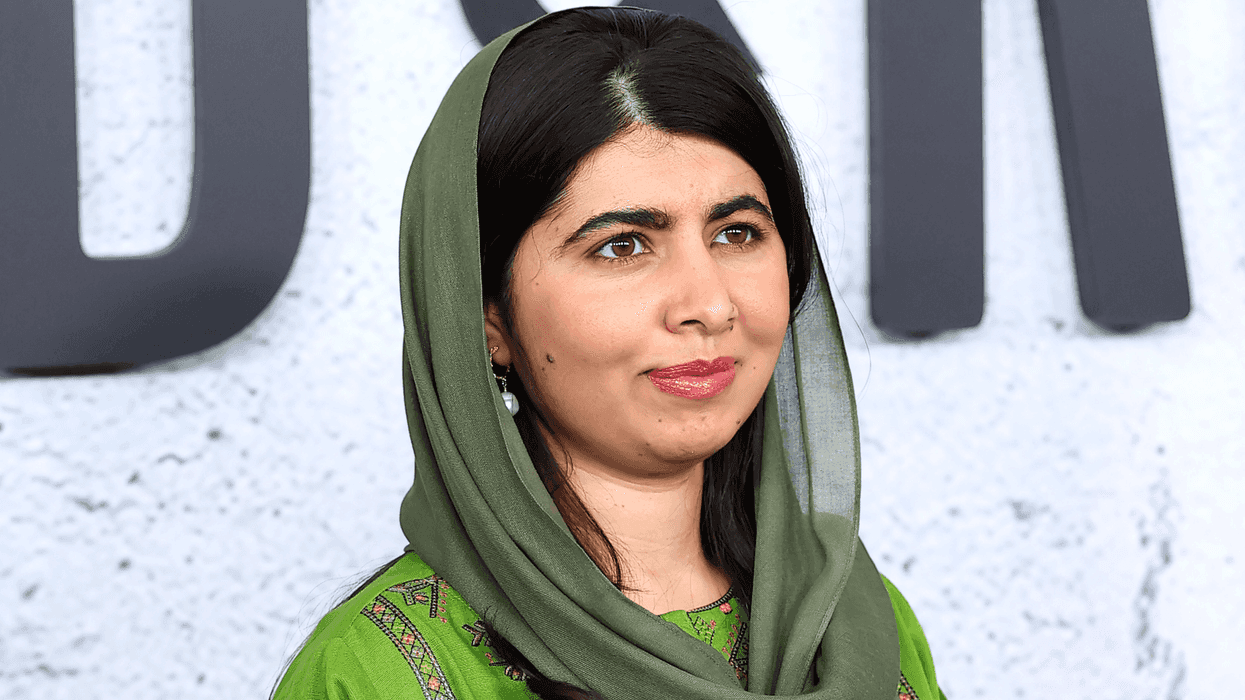

FEW global figures have grown up quite so publicly – or carried their cause with such persistence – as Malala Yousafzai. More than a decade after the attack that first brought her to global attention, the Nobel Peace Prize laureate continues to shape debates about education, justice and women’s rights, while also revealing a more personal story about the life she built beyond activism.
Her latest memoir, Finding My Way, published in 2025, moves beyond the dramatic events that defined her teenage years and instead explores adulthood – her time at the University of Oxford, friendships, therapy, marriage and the slow process of reclaiming a sense of self after becoming a global symbol.
“There is more to my life,” she explained when the book was released. For years, she said, the public version of her story had been “very one-dimensional… related to something that happened to me at age 15”. With the new memoir, she wanted readers to meet “the more real version of me”.
That tension – between icon and individual – has become central to Yousafzai’s influence. At just 28, she is one of the world’s most recognisable advocates for girls’ education, yet she has increasingly used writing, film and public speaking to show how activism intersects with ordinary life.
Her Oxford years form one of the book’s most revealing sections. Arriving at Lady Margaret Hall in 2017 to study philosophy, politics and economics, she initially struggled with the expectations that surrounded her. “I felt that I had to live up to the expectation of being an activist,” she recalled. “I thought maybe all of this means I cannot be a normal girl anymore.”
University life forced a reckoning. She joined societies, sought out friendships and allowed herself the freedom to make mistakes. One incident – trying a bong with friends in a shed on campus – unexpectedly triggered flashbacks to the Taliban attack that nearly killed her. Panic attacks followed, eventually leading her to therapy. The experience reshaped her understanding of courage. Bravery, she concluded, was not the absence of vulnerability but continuing to pursue one’s beliefs despite it.
Oxford has since become a symbolic milestone in her journey. In February 2026, Lady Margaret Hall unveiled an official portrait of Yousafzai painted by the British artist Isabella Watling. Standing before students at the ceremony, she reflected on what the moment represented.
“More than anything, I hope it serves as a reminder that a girl from Swat Valley belongs here – and that the next girl from a village in Pakistan, Afghanistan, or anywhere else – belongs here too.”
Her advocacy continues to unfold on the global stage. On International Women’s Day in March 2026, she addressed the United Nations during the opening of the Commission on the Status of Women. The speech was strikingly blunt, reflecting frustration at what she described as a global retreat from women’s rights.
“For a long time, I believed that my voice could make a difference,” she told delegates. “But today I stand here heartbroken.”
She spoke of children caught in war and conflict, from Gaza to Iran, but returned repeatedly to the plight of Afghan girls under Taliban rule. Since the Taliban regained power in 2021, girls have been barred from secondary education and women from many forms of public life. Yousafzai urged governments to recognise the regime’s policies as “gender apartheid” and to codify the term in international law.
“Speeches do not protect girls,” she warned. “But law, accountability and political courage can.”
The call reflected the core mission of the Malala Fund, the organisation she co-founded with her father, Ziauddin Yousafzai, in 2013. The fund works across regions including Pakistan, Afghanistan, Nigeria, Ethiopia and Brazil, supporting activists and programmes designed to ensure girls complete secondary education. More than a decade after its founding, the organisation has become one of the most visible global voices on education policy.
Her father’s influence remains foundational. A teacher who ran a school in the Swat Valley, Ziauddin championed girls’ education long before his daughter became famous. His determination shaped her early worldview.
When the Taliban took control of the valley and banned girls from school, the young Malala began writing anonymously for BBC Urdu about life under extremist rule. Her blog chronicled fear, defiance and the quiet determination of students desperate to keep learning.
That courage made her a target. On 9 October 2012, a militant boarded her school bus and asked a chilling question: “Who is Malala?” He then shot her in the head.
The attack shocked the world. After emergency treatment in Pakistan, she was flown to Birmingham for surgery and rehabilitation. Rather than retreating from public life, she emerged from recovery with greater determination.
The following years transformed her into an international figure. At 16 she addressed the UN, declaring: “If we want to achieve our goal, then let us empower ourselves with the weapon of knowledge and let us shield ourselves with unity and togetherness.”
A year later she became the youngest-ever Nobel Peace Prize laureate, sharing the 2014 award with the Indian child-rights campaigner Kailash Satyarthi.
Increasingly, Yousafzai has turned to storytelling to amplify voices from places often overlooked. In 2025 she served as an executive producer on the documentary Champions of the Golden Valley, which follows an Afghan skier who establishes a ski school in Bamyan.
“This is such a powerful story about the people of Afghanistan and how much they desire peace,” she said while promoting the film, adding that sport can “give hope to refugees and women around the world”.
In 2021 she married Asser Malik, a Pakistani cricket administrator she met through friends.
Today Yousafzai divides her time between writing, advocacy and creative projects, all anchored by the mission she first articulated as a schoolgirl: ensuring every girl can learn. More than 120 million girls worldwide remain out of school, a statistic she frequently cites as both challenge and motivation.
For Yousafzai, education is still the most transformative force she knows. And the girl who once risked everything to defend her own right to learn continues to insist that millions of others must have that chance too.
ENDS