
Highlights
- Javed Akhtar disputes AR Rahman’s claim that Hindi cinema has grown more communal.
- Akhtar recalls being called a “liar” for calling himself an atheist despite writing devotional songs.
- The debate has triggered wide reactions from musicians and filmmakers.
Akhtar Pushes Back on Rahman’s Claim
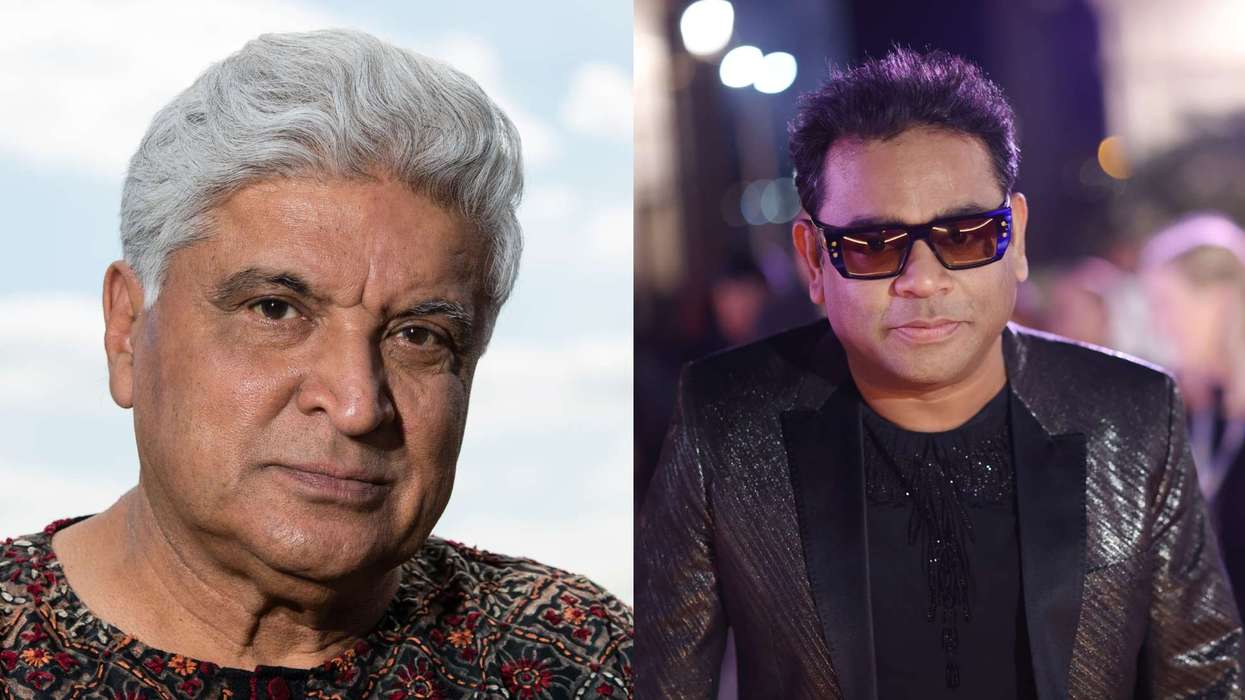
Veteran lyricist and screenwriter Javed Akhtar has publicly disagreed with longtime collaborator AR Rahman’s recent suggestion that communal factors now shape decisions in the Hindi film industry. Akhtar said the industry has always been largely religion-neutral, guided more by talent than belief.
He argued that filmmakers have traditionally chosen the best person for the job, regardless of background, and that this culture has defined Hindi cinema for decades.
‘They Called Me a Liar’
Akhtar revisited how he was once branded a “liar” for calling himself an atheist while also writing devotional songs. His work includes “O Paalanhaare” from Lagaan (2001) and “Pal Pal Hai Bhaari” from Swades (2004), both directed by Ashutosh Gowariker. The latter was written for a Ramleela sequence, voiced from Sita’s perspective.
Speaking to O2India last year, Akhtar said he grew up in Awadh at the tail end of what is often called the Ganga-Jamuni culture — a shared Hindu-Muslim way of life. He described it as a world where faiths overlapped naturally, without tension or labels.
‘I Can Write Ram Aartis’
Though his household was not religious, his father and many relatives were Communists, Akhtar said they were still seen as Muslims in the traditional sense. Yet religious stories and festivals were part of everyday life.
“I can write Rama and Krishna aartis,” he said, asking where else that knowledge could have come from if not from the culture he grew up in. Ramleela, Krishna Leela and shared festivals, he said, shaped his childhood. He added that this easy mixing of traditions feels far rarer today.
He also recalled how his aunt built a Janmashtami jhanki each year in their courtyard, how children dressed in yellow for Basant Panchmi, and how celebration itself was once a shared language in Lucknow.
Rahman Responds to Backlash
AR Rahman’s comments came from a recent BBC Asian Network interview, where he said he had received less work in recent years due to a power shift in Bollywood. He suggested it might also be linked to “the communal thing”, though not directly to his face. He described hearing through others that projects were planned for him but later handed to other composers.
After facing heavy criticism, Rahman released a video message saying his words had been misunderstood. He said India remained his inspiration and home, and that he had never intended to hurt anyone. His aim, he said, was always to serve through music.
- YouTube youtu.be
Industry Reacts
Rahman’s remarks and subsequent clarification drew strong reactions. Lyricist and filmmaker Varun Grover said the composer was attacked for sharing his lived experience in a calm manner and then pressured into issuing a clarification.
Actor and former MP Paresh Rawal reposted Rahman’s video, calling him a pride of the nation. Filmmaker Rahul Dholakia said Rahman had changed the way music is made in India and deserved respect, even when people disagreed with his views.
The exchange between Akhtar and Rahman has turned into a wider conversation — not just about faith and power, but about how memory, culture and creative space are being reshaped in modern Hindi cinema.