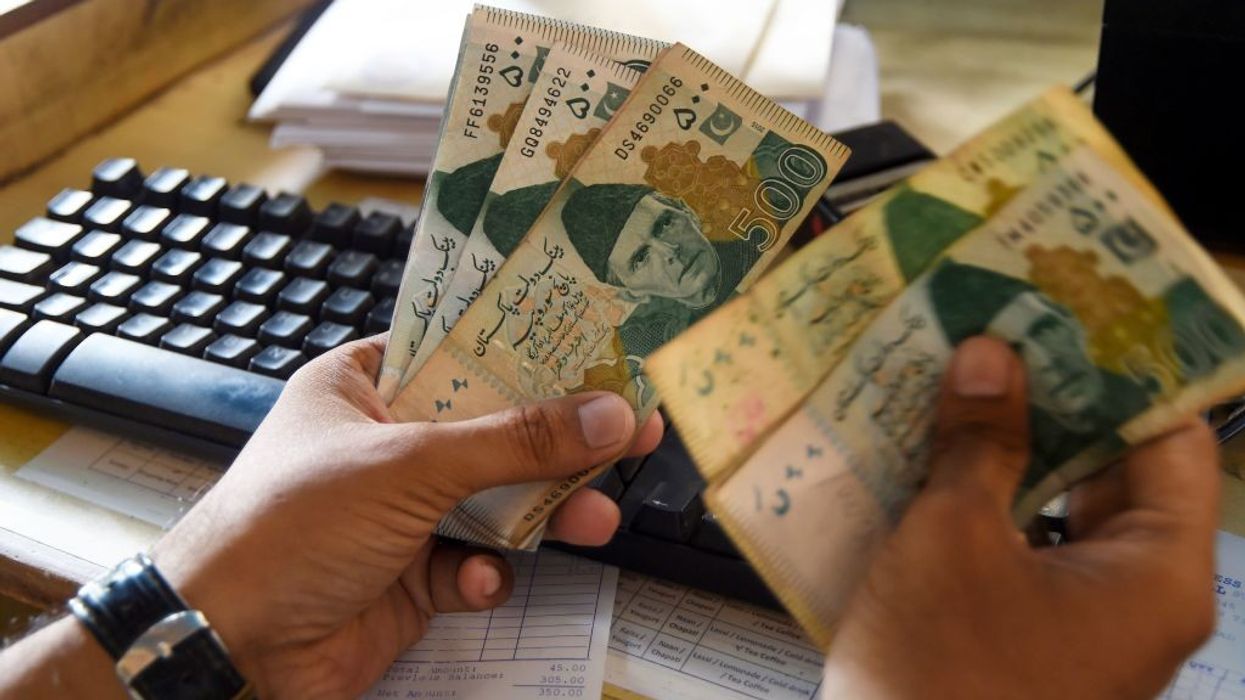

Seventy-five years of the independent polity have been tumultuous and turbulent for the state of Pakistan.
Oscillating between military rule and civilian governments, the country to date has failed to witness even one complete five-year tenure of any of its Prime Ministers. This offbeat political tug of war has raised various internal challenges for the state that was very much confident and self-assured of a shining future during the time of its formation.
Especially, the last few years in Pakistan's chronicle of instability have been exceptionally disturbed, leading to serious economic uncertainty.
With the depleting foreign currency reserves and rising inflation, the Islamic Republic is now on the brink of economic collapse.
Inflation in Pakistan rose to 21.3 per cent in June this year, the highest since December 2008 when inflation stood at 23.3 per cent.
Petrol and diesel prices have skyrocketed and people are paying as much as Pakistani rupee 248 and Pakistani rupee 263, respectively for one litre of fuel.
One of the Lahore residents said, "Obviously inflation will go rising, unemployment will increase, people are dying, people are committing suicides. The government should do something to control the dollar rate".
According to the United Nations Development Programme, Pakistan is facing a debt of excess of USD 250 billion.
This shocking loan burden is the outcome of many compounding factors including the decline of the Pakistani rupee and investments of millions of USD in the China Pakistan Economic Corridor (CPEC).
Further, the low ranking by international rating agencies coupled with the grey-listing of Pakistan by the Financial Action Task Force (FATF) has kept foreign investors away from the country.
The crisis is a direct consequence of the absence of any stable government as Pakistan has spent several decades under military rule.
The Army's interference in non-military affairs ultimately led to societal degeneration along with economic slowdown and the after effect is visible.
Additionally, other combining components like mismanagement and corruption of all the prematurely ending governments cannot be ignored which have made the situation worse.
Dr Suvrokamal Dutta, an economic and foreign policy expert in New Delhi said, "Because of political instability and because of this war between the military and the political establishment that is the root cause of why there is so much misgovernance and policy paralysis in Pakistan".
Pakistan has finally reached a spot where it is not even able to secure a bailout package from the International Monetary Fund.
The IMF's conditions are proving costly for Islamabad and it is looking for other options. Pakistan's foreign exchange reserves have depleted to a critical level and the country has a few weeks of import cover remaining.
Therefore, the risks of Pakistan going the Sri Lankan way now seem to be too close and real.
(ANI)