
Highlights
- Iran rejects US deadline to reopen Strait of Hormuz
- Fighting continues across West Asia with strikes and interceptions reported
- Oil prices rise as supply concerns intensify
- Diplomatic efforts remain uncertain despite ceasefire proposal
IRAN showed no sign of stepping back on Tuesday as a US deadline approached for it to reopen the Strait of Hormuz, while US president Donald Trump repeated threats to strike the country’s infrastructure.
Trump said that unless Tehran allows free passage through the waterway by midnight GMT Tuesday, the United States could carry out large-scale attacks. “We have a plan... where every bridge in Iran will be decimated by 12 o'clock tomorrow night, where every power plant in Iran will be out of business, burning, exploding and never to be used again,” he said. “I mean complete demolition by 12 o'clock, and it'll happen over a period of four hours -- if we wanted to.”
Iran rejected the warning. The army’s Khatam Al-Anbiya central command called Trump “delusional” and said “crushing operations of the warriors of Islam against the American and Zionist enemies” would continue. An army spokesman also said the “rude, arrogant rhetoric” would not affect operations.
Iran has effectively closed the Strait of Hormuz since the war began on February 28 after US and Israeli strikes, disrupting a route that carries about one-fifth of global oil supply. Exports from several Gulf producers have dropped due to restricted flows.
ALSO READ: Iran rejects Trump deadline, launches fresh strikes across West Asia
Fighting continued across the region. Israel said it carried out a “wave” of air strikes on what it called Iranian “terror regime infrastructure” in Tehran and other areas. Iranian media reported explosions in Tehran and Karaj. The Israeli military said its air defences were activated after missiles were launched from Iran.
Across the Gulf, Bahrain sounded air-raid sirens and urged residents to seek shelter. The United Arab Emirates said its air defences were engaging missiles and drones. Saudi Arabia said it intercepted and destroyed seven ballistic missiles launched towards its Eastern Region, with debris falling near energy facilities. Traffic on the King Fahd Bridge linking Saudi Arabia and Bahrain was temporarily closed as a precaution.
Iran’s Revolutionary Guards said their intelligence chief Majid Khademi was killed in US-Israeli strikes on Monday and vowed a “major retaliatory strike”. Israel said it also killed Asghar Bagheri, a senior commander in the Guards’ Quds Force, with prime minister Benjamin Netanyahu saying: “We will reach anyone who seeks to harm us.”
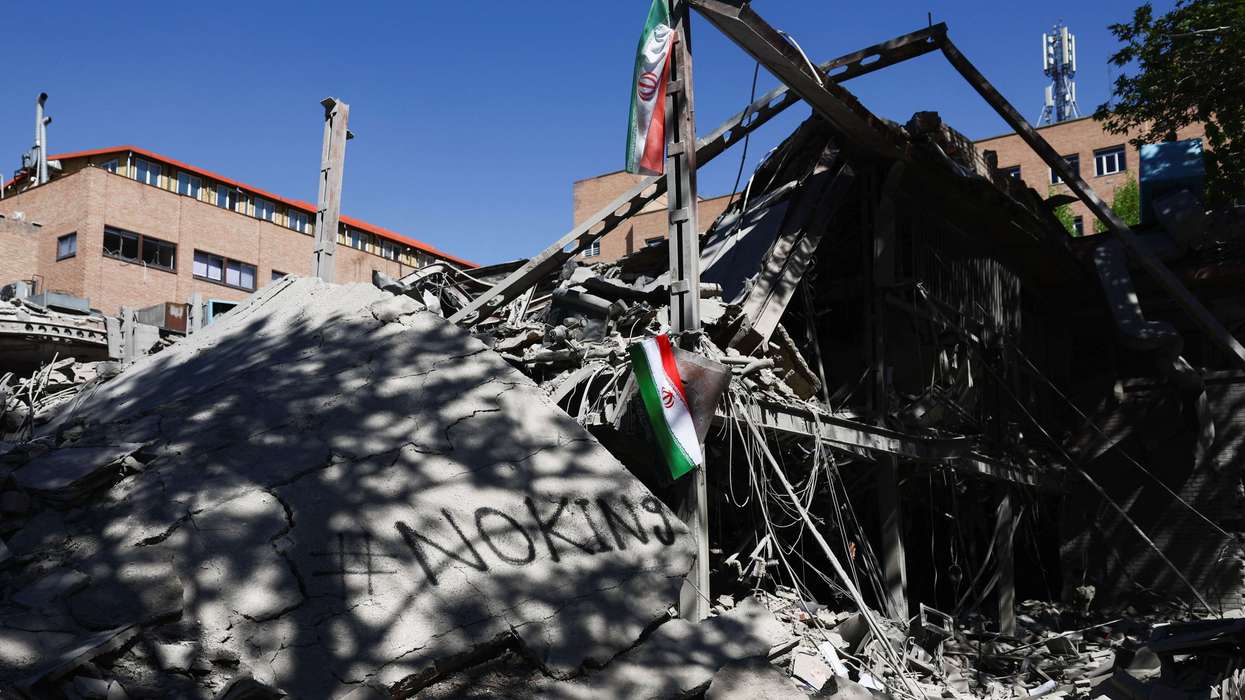
US-Israeli strikes early Tuesday “completely destroyed” the Rafi-Nia synagogue in Tehran, local media reported.
ALSO READ: West Asia war: US jet downed in Iran as strikes continue across region
Elsewhere, a drone “coming from Iran” killed a couple in Iraqi Kurdistan after crashing into their home, according to local authorities. Two blasts were also heard near Erbil airport, while air defence systems downed four missiles headed towards the US consulate.
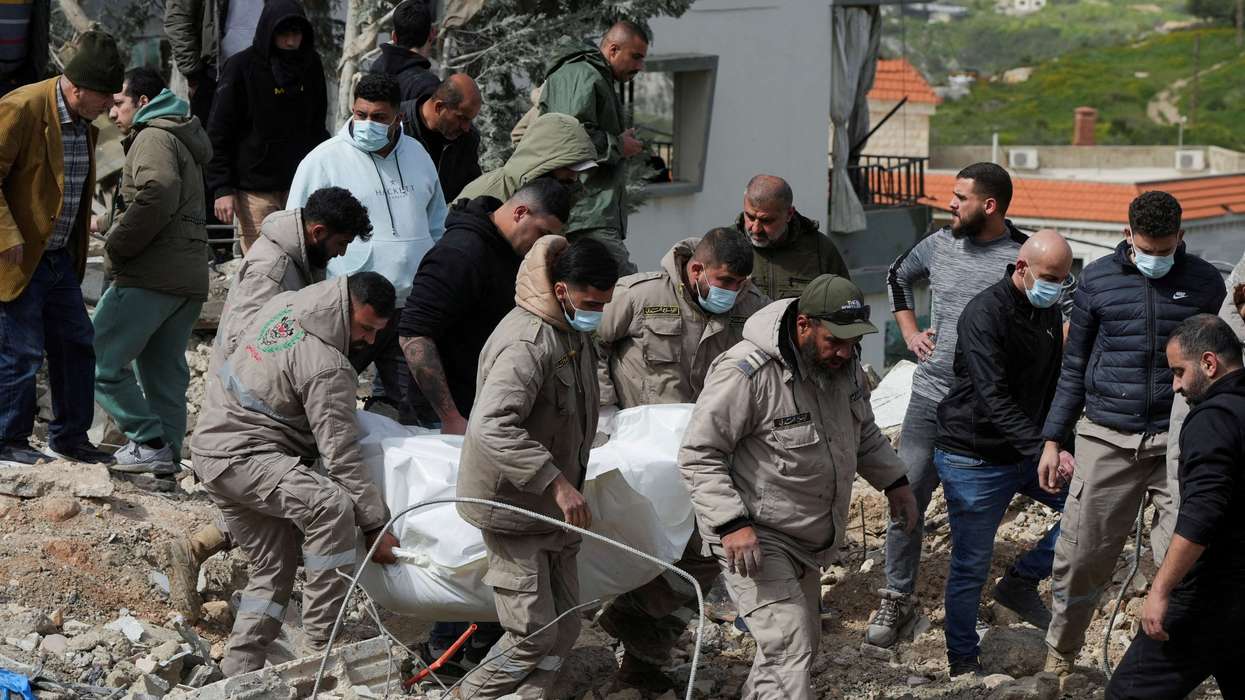
In Israel, a second Philippine national was killed after a missile struck a residential building in Haifa. The foreign affairs department said the woman died on Sunday “alongside her Israeli husband and elderly parents-in-law”. Israeli rescue services said four bodies were recovered from the rubble.
Israel also warned Iranians to avoid trains until 1730 GMT Tuesday. “For your safety, we ask you to refrain from using trains or travelling by train throughout the country from now until 9 pm Iran time,” the military said. “Your presence on trains and near railway tracks puts your life in danger.”
On the diplomatic front, efforts to end the conflict remained uncertain. Iran’s ambassador to Pakistan, Reza Amiri Moghadam, said talks were nearing a “critical” stage. “Positive and productive endeavours in Good Will and Good Office to stop the war is approaching a critical, sensitive stage,” he wrote on X.
ALSO READ: Iran fires missiles at Israel; Trump says US has not started 'destroying what’s left'
A proposal for a 45-day ceasefire mediated by Pakistan, Egypt and Turkey has not been accepted. Trump earlier called it a “significant proposal” but later said it was not enough. Iranian officials said Tehran “has rejected a ceasefire and insists on the need for a definitive end to the conflict”.
Reports said Iran is seeking guarantees against future attacks and an end to Israeli strikes on Hezbollah. Under the proposal, Iran would reopen the strait while charging around $2 million per vessel, sharing the fee with Oman.
The UN Security Council is set to vote on a resolution addressing the situation in the Strait of Hormuz. Earlier drafts that could have allowed force were opposed by veto-holding members, and the latest version does not authorise it. The draft calls on Iran to halt attacks on commercial vessels and avoid impeding transit.
Iran’s UN envoy warned that US threats amount to state terrorism and would “normalise war crimes and humanitarian catastrophes and embolden aggressors, with consequences that extend beyond the region”.
ALSO READ: Iran threatens further attacks after Trump warning
Oil prices rose as the deadline approached and the strait remained shut. Brent crude was up $1.44 at $111.21 a barrel, while US West Texas Intermediate gained $2.32 to $114.73.
Analysts said the situation in the region was driving the market. Priyanka Sachdeva of Phillip Nova said, “Oil is holding its gains because the battlefield risk is no longer theoretical. Attacks on energy and shipping assets continue, and traders fear that even if the war ends, damage to infrastructure could sideline barrels for months, not days.”
Tim Waterer of KCM Trade said, “Clock-watching is now playing almost as big a role in oil markets as the fundamentals themselves in the run-up to Trump's ultimatum deadline,” adding that supply concerns linked to the Strait of Hormuz were keeping prices supported.
Saudi Arabia’s Aramco raised the official selling price of its Arab Light crude to Asia for May delivery, setting a premium of $19.50 a barrel above the Oman/Dubai average.
Additional pressure on supply came after Russia said Ukrainian drones attacked the Caspian Pipeline Consortium terminal on the Black Sea, damaging loading infrastructure and storage tanks.
OPEC+ has agreed to increase output quotas by 206,000 barrels per day in May, though exports remain limited due to the disruption in the Strait of Hormuz.
(With inputs from agencies)