
Skip to content
Search

Latest Stories

UK growth forecast lifted to 1.2 per cent by IMF for 2025

The IMF said growth would be supported by “very strong” performance in the first three months of the year, with better-than-expected business investment.

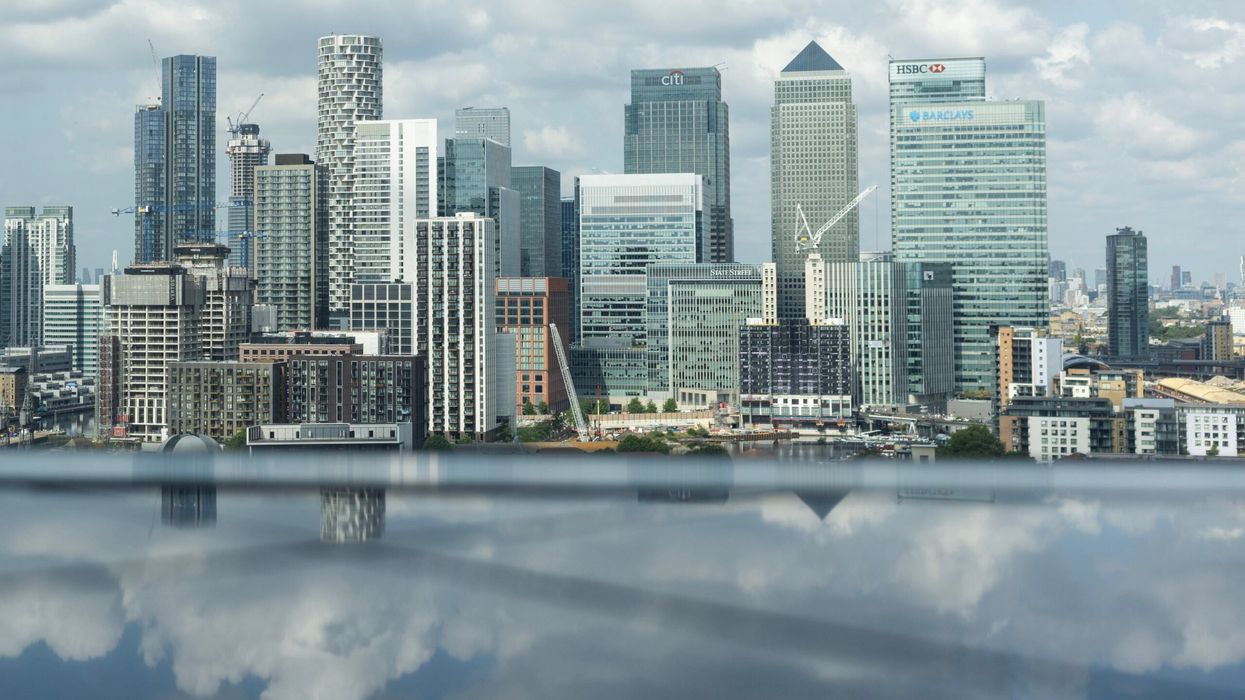
UK-business-district-Getty
The Canary Wharf business district including global financial institutions in London. (Photo: Getty Images)
Getty Images

THE INTERNATIONAL MONETARY FUND (IMF) on Tuesday raised its UK growth forecast for 2025 to 1.2 per cent from 1.1 per cent estimated last month, citing strong business investment in the first quarter of this year.

The IMF said growth would be supported by “very strong” performance in the first three months of the year, with better-than-expected business investment.


The IMF also warned that global trade tensions would reduce UK growth by 0.3 per cent for the rest of this year. “Persistent uncertainty, slower activity in UK trading partners, and the direct impact of remaining US tariffs on the UK” would weigh on growth, the IMF said.

The Fund kept its estimate for UK growth in 2026 at 1.4 per cent.

The Labour government welcomed the updated forecast. Chancellor Rachel Reeves said three new trade agreements — with the US, EU and India — would help with “protecting jobs, boosting investment and cutting prices.”

The UK and the US reached a deal this month to reduce tariffs on British cars and remove tariffs on steel and aluminium. In exchange, Britain will allow more US beef and other farm products into its markets. However, a 10-per cent levy on the UK, imposed as part of Donald Trump’s tariffs on key trading partners, remains in place.

The IMF said the three trade deals were “just first steps.” IMF mission chief to the UK Luc Eyraud said at a press briefing: “We see them as very important at the sectoral level, but not necessarily impacting massively or significantly our forecast.”

The IMF said “persistently weak productivity remains the UK's primary obstacle to lifting growth and living standards.”

UK gross domestic product grew by 0.7 per cent in the January-to-March period, according to official data.

The Bank of England has also increased its growth forecast for this year but reduced its estimate for 2026. It cited heightened economic uncertainty due to Trump’s tariffs.

(With inputs from agencies)

More For You

AI Cyberattacks
3 steps businesses must take to avoid AI cyberattacks, says UK government
iStock

3 steps businesses must take to avoid AI cyberattacks

  • AI cyber capabilities are now doubling every four months, government-backed tests show.
  • New models can find vulnerabilities and generate exploit code without human expertise.
  • Businesses of all sizes, not just critical sectors, are now potential targets.

The UK government has warned that artificial intelligence is rapidly lowering the barrier to cyberattacks, allowing systems to identify software weaknesses and generate exploit code at a speed and scale not seen before. In a joint letter issued on April 15, 2026, ministers said the shift marks a move away from attacks led by a small pool of highly skilled criminals to a landscape where advanced tools can replicate those capabilities. The warning follows testing of Anthropic’s Mythos model, which officials said is “substantially more capable” at cyber offence than earlier systems, as quoted in the letter.

Data from the government-backed AI Security Institute suggests the pace of change is accelerating sharply, with frontier AI cyber capabilities now doubling roughly every four months, compared to every eight months earlier. Ministers also pointed to parallel developments across the industry as evidence that the shift is not isolated, adding that attackers are expected to target “ordinary companies, of every size, in every sector." Against this backdrop, the government has set out three immediate steps for businesses to strengthen their defences.

Keep ReadingShow less