
When I was growing up in the 1960s and 1970s as a young British Asian, racial name-calling from National Front supporters and other bigots was a regular occurrence. On the streets, in school corridors, and even on public transport, abuse was commonplace. There were no special legal protections, yet the hostility was real.
That experience taught me early on that there is a crucial difference between genuine harm and personal offence.
Today, we hear a great deal about Islamophobia. The government’s evolving definition frames it broadly as anti-Muslim hostility. Of course, hate crimes – abuse, threats, intimidation – must always be taken seriously. But we must also ask whether we are becoming too quick to equate offence with injustice, and who ultimately benefits from that shift.
There is a clear distinction between attacking individuals and questioning ideas, practices, or beliefs. Criticism of ideas is not hatred. Just because someone is offended does not mean they are right.I have experienced this tension myself. Some of my writing could be labelled Islamophobic under current interpretations. I have questioned the wearing of the hijab or niqab, and raised concerns about halal meat in public institutions. These are not personal attacks; they are discussions about cultural and religious practices and their wider implications.
Take halal meat. As a Hindu, I may object to my child being served halal meat at school. That does not make me anti-Muslim; it reflects my own beliefs. Yet such a position can provoke complaints. Similarly, a Sikh restaurateur in London, Harman Singh Kapoor, chose not to serve halal meat in his own establishment. For exercising that right, he faced protests, harassment, and even police scrutiny. That raises serious questions about fairness and consistency.
We have also seen controversies over public expressions of faith. A recent Muslim prayer event in Trafalgar Square, supported by civic authorities, was described by one MP as an act of ‘domination.’ But there is a whiff of cultural assertiveness implied by such a gathering at, what is, essentially, an iconic British landmark.
But there are also ongoing debates about policing, social cohesion, and the perception – rightly or wrongly – of unequal treatment. These concerns should not be dismissed outright. Open discussion is essential in a democratic society. I think it is entirely legitimate to question aspects of religious ideology or political interpretations of sacred texts. While many describe Islam as a religion of peace, raising concerns about extremism or the misuse of religion for political ends should not automatically invite accusations of bigotry. I recall appearing on the Big Questions with Nicky Campbell, where I criticised attempts by Islamist groups to influence school curricula in Birmingham. The backlash was immediate and hostile.
A healthy society depends on secularism, open debate, and freedom of speech. Good ideas do not need protection from scrutiny; they endure because they are persuasive. Consider what has emerged from Indian Hindu civilisation: yoga, meditation, Ayurveda, and even the concept of zero. These spread globally not through coercion, but because they offered value.
We must also be willing to confront difficult issues within our own society. Debates around child marriage or first-cousin marriage – and the associated health risks – are sensitive but important. If such topics are shut down in the name of avoiding offence, we risk failing the very communities we seek to protect.
The same applies internationally. Take the ongoing crisis in Gaza. While Israel is frequently condemned for restricting aid, far less attention is given to the roles of neighbouring countries such as Jordan and Egypt. Consistency matters. Selective outrage undermines credibility.
History reminds us why these distinctions are important. Figures like Enoch Powell remain deeply controversial, particularly for his 1968 ‘Rivers of Blood’ speech, which many regard as inflammatory and divisive. Yet Powell was not silenced by the state; he was challenged, criticised, and ultimately dismissed from the Shadow Cabinet by Edward Heath. His case illustrates a crucial democratic principle: even offensive or unsettling views were met with argument and political consequences, not legal prohibition.
The same principle must apply consistently today. Figures such as Tommy Robinson are highly controversial and widely criticised, but in a democratic society, the answer to views we dislike is not simply to silence or imprison them. If someone expresses disagreement with aspects of Islam, that alone should not be grounds for censorship. Their arguments should be challenged, debated, and, where necessary, exposed as flawed – but not suppressed purely because they offend.
That balance must be preserved. A fair society protects individuals from harm while also defending the right to question, criticise, and, yes, sometimes offend. Offence is subjective; what troubles one person may not affect another. Turning personal feelings into enforceable standards risks fostering censorship and resentment.
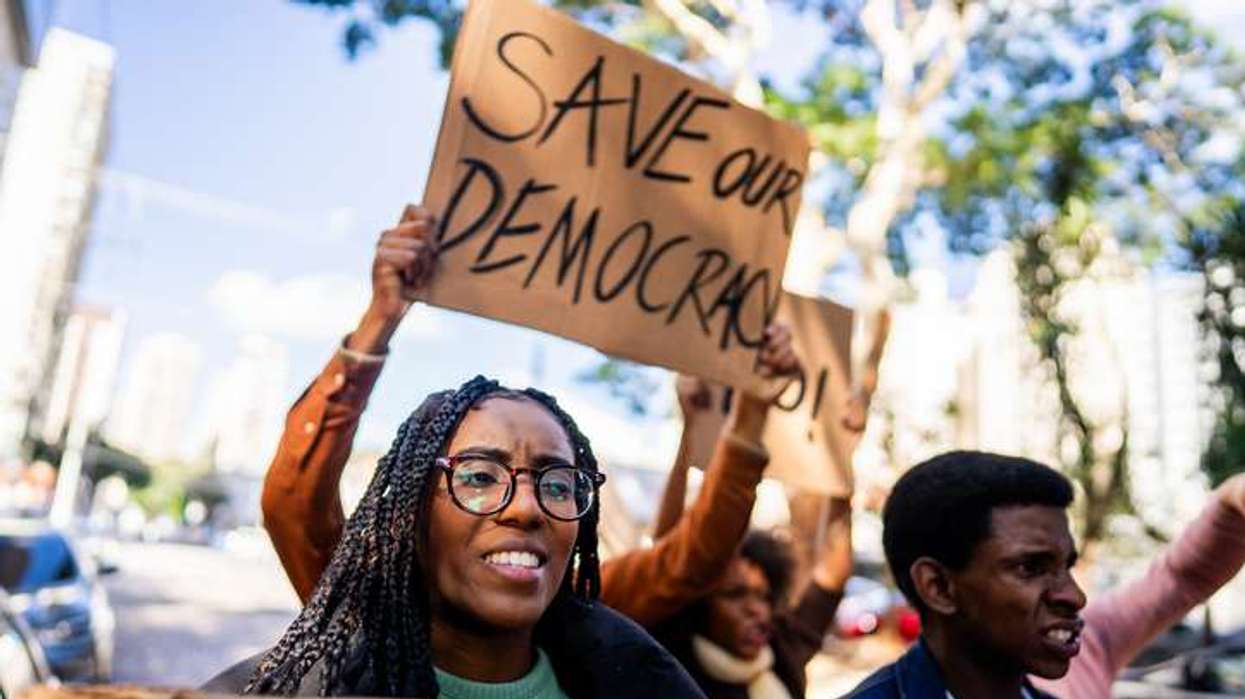
Being offended is not the same as being right. Democracy depends not on the absence of offence, but on the presence of open, robust, and honest debate.


Anurag Bajpayee's Gradiant: The water company tackling a global crisis