Skip to content
Search

Latest Stories

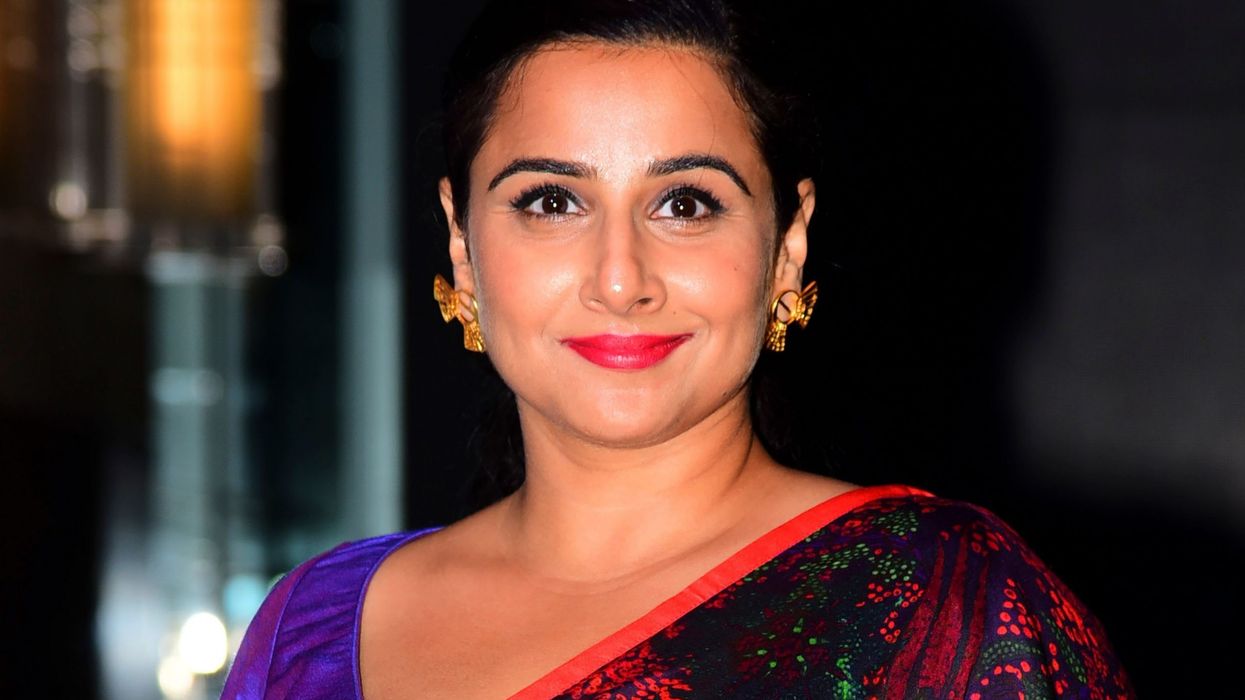
Vidya Balan, Ekta Kapoor and Shobha Kapoor on Academy’s list of 395 new members

Vidya Balan, Ekta Kapoor and Shobha Kapoor on Academy’s list of 395 new members

Recently, the Academy of Motion Picture Arts and Sciences announced their list of new members whom they have invited this year. The list includes artists and executives from 50 countries who have distinguished themselves by their contributions to theatrical motion pictures.

The list has 395 members and three of them are Vidya Balan, Ekta Kapoor, and Shobha Kapoor. The Academy has recognised Vidya for movies like Tumhari Sulu and Kahaani.


Ekta Kapoor and Shobha Kapoor’s names have come under the Producer category and they are recognised for movies like Dream Girl, Once upon a Time in Mumbai, Udta Punjab, and The Dirty Picture.

Oscar nominees Yuh-Jung Youn, Emerald Fennell, Dan Janvey, Maria Bakalova, Jon Batiste, Andra Day, Vanessa Kirby, Darius Marder, Christina Oh, Kemp Powers, Paul Raci, and Steven Yeun have also been invited by the Academy this year.

The Academy has been focusing on diversity since 2015's #OscarsSoWhite uproar. The Class of 2021 has 46 percent women, 39 percent underrepresented ethnic/racial communities, and 53 percent international artists from 49 countries outside of the United States.

Indian celebs like A R Rahman, Amitabh Bachchan, Shah Rukh Khan, Aamir Khan, Salman Khan, Aditya Chopra, and Guneet Monga are already Academy members. Last year, Alia Bhatt, Hrithik Roshan, filmmaker Nishtha Jain, Amit Madheshiya, designer Neeta Lulla, casting director Nandini Shrikent, and others were on the list.
More For You

Samir Zaidi

Two Sinners marks Samir Zaidi’s striking directorial debut

Samir Zaidi, director of 'Two Sinners', emerges as a powerful new voice in Indian film

Indian cinema has a long tradition of discovering new storytellers in unexpected places, and one recent voice that has attracted quiet, steady attention is Samir Zaidi. His debut short film Two Sinners has been travelling across international festivals, earning strong praise for its emotional depth and moral complexity. But what makes Zaidi’s trajectory especially compelling is how organically it has unfolded — grounded not in film school training, but in lived observation, patient apprenticeships and a deep belief in the poetry of everyday life.

Zaidi’s relationship with creativity began well before he ever stepped onto a set. “As a child, I was fascinated by small, fleeting things — the way people spoke, the silences between arguments, the patterns of light on the walls,” he reflects. He didn’t yet have the vocabulary for what he was absorbing, but the instinct was already in place. At 13, he turned to poetry, sensing that the act of shaping emotions into words offered a kind of clarity he couldn’t find elsewhere. “I realised creativity wasn’t something external I had to chase; it was a way of processing the world,” he says. “Whether it was writing or filmmaking, it came from the same impulse: to make sense of what I didn’t fully understand.”

Keep ReadingShow less