
Skip to content
Search

Latest Stories

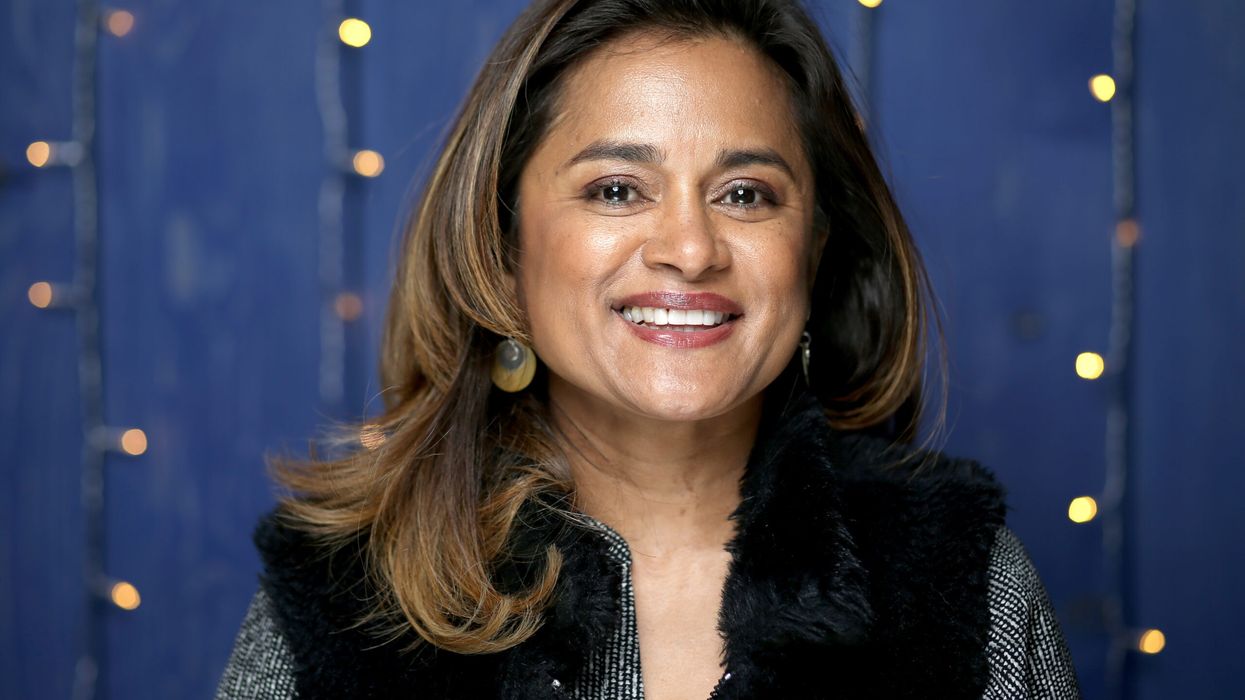
Veena Sud to showrun 'The Girl With The Dragon Tattoo'

The series is based on the Steig Larsson books and revolves around the Lisbeth Salander character.

Veena Sud to showrun 'The Girl With The Dragon Tattoo'

Filmmaker Veena Sud has joined Amazon MGM Studios' series The Girl With The Dragon Tattoo as showrunner.

The series is based on the Steig Larsson books and revolves around the Lisbeth Salander character.


According to entertainment news outlet Deadline, the show is a co-production between Amazon MGM Studios and Left Bank Pictures, in association with Sony Pictures TV.

The Girl With The Dragon Tattoo will take the popular character Lisbeth Salander and place her in today's world – with a new setting, new characters, and a new story that will resonate with fans of the original and thrill a whole new generation, the official description reads.

Lisbeth Salander is the central character in Larsson’s award-winning Millennium series. Salander first appeared in the 2005 novel The Girl with the Dragon Tattoo. She reappeared in sequels The Girl Who Played with Fire (2006), The Girl Who Kicked the Hornets’ Nest (2007), The Girl in the Spider’s Web (2015), The Girl Who Takes an Eye for an Eye (2017) and The Girl Who Lived Twice (2019).

Sud's last effort as a creator was the Netflix series Seven Seconds, starring Regina King. It was based on the Russian film The Major.

Sud's father Mohendra Sud is a physician born in India and her mother Jessica Cabreros is a nurse born and raised in the Philippines.

More For You

Samir Zaidi

Two Sinners marks Samir Zaidi’s striking directorial debut

Samir Zaidi, director of 'Two Sinners', emerges as a powerful new voice in Indian film

Indian cinema has a long tradition of discovering new storytellers in unexpected places, and one recent voice that has attracted quiet, steady attention is Samir Zaidi. His debut short film Two Sinners has been travelling across international festivals, earning strong praise for its emotional depth and moral complexity. But what makes Zaidi’s trajectory especially compelling is how organically it has unfolded — grounded not in film school training, but in lived observation, patient apprenticeships and a deep belief in the poetry of everyday life.

Zaidi’s relationship with creativity began well before he ever stepped onto a set. “As a child, I was fascinated by small, fleeting things — the way people spoke, the silences between arguments, the patterns of light on the walls,” he reflects. He didn’t yet have the vocabulary for what he was absorbing, but the instinct was already in place. At 13, he turned to poetry, sensing that the act of shaping emotions into words offered a kind of clarity he couldn’t find elsewhere. “I realised creativity wasn’t something external I had to chase; it was a way of processing the world,” he says. “Whether it was writing or filmmaking, it came from the same impulse: to make sense of what I didn’t fully understand.”

Keep ReadingShow less