
PAKISTAN is preparing to host talks between the United States and Iran in Islamabad, but Iran’s participation remains uncertain after Israeli strikes in Lebanon raised concerns over the ceasefire.
Officials said preparations were underway in the capital, including security measures and arrangements at the hotel hosting delegations. The talks are expected to cover issues including Iran’s nuclear enrichment and the flow of trade through the Strait of Hormuz.
Iran indicated its participation could depend on developments in Lebanon.
"The holding of talks to end the war is dependent on the US adhering to its ceasefire commitments on all fronts, especially in Lebanon," foreign ministry spokesman Esmaeil Baqaei said.
ALSO READ: Israeli strikes in Lebanon raise doubts over US-Iran ceasefire
"If the travel plan is finalised, the composition of the delegation will also be announced," he added.
Iran’s Revolutionary Guards said they were observing the ceasefire.
"We would like to inform you that the armed forces of the Islamic Republic of Iran have not launched anything at any country during the ceasefire hours until now," they said.
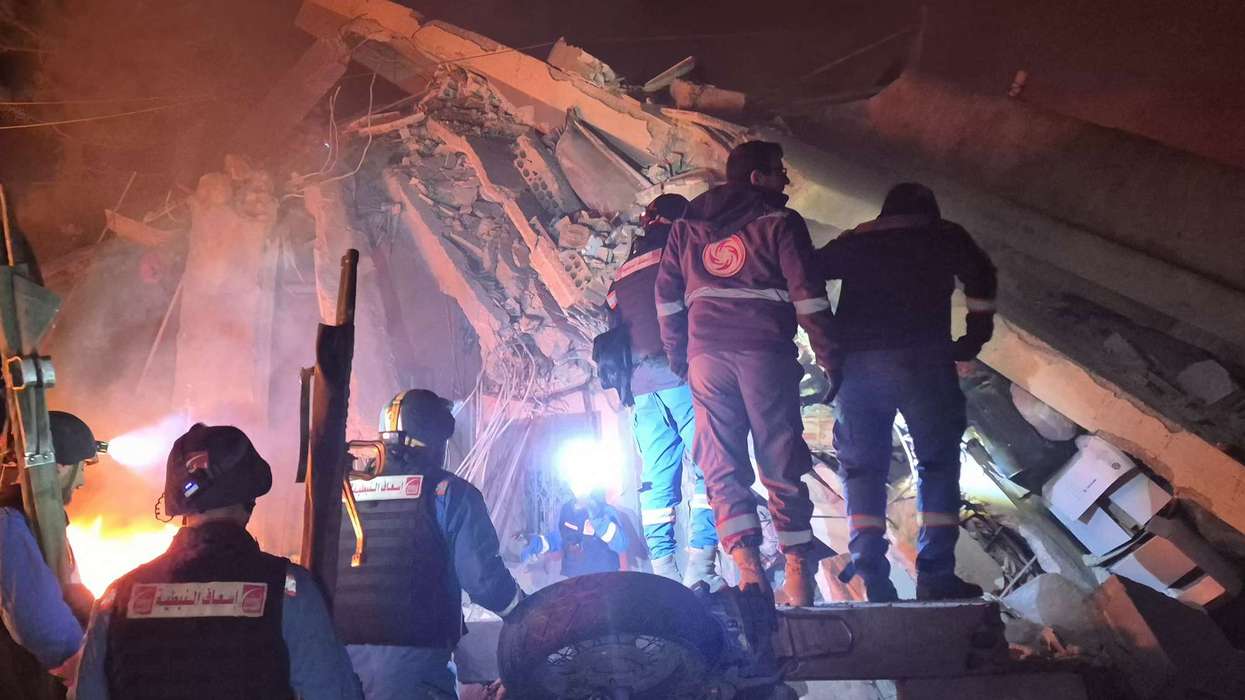
Israel carried out strikes in Lebanon earlier this week, killing hundreds. The strikes came less than 48 hours after a two-week ceasefire between Washington and Tehran began.
Pakistan has said Lebanon should be included in the ceasefire, while the United States is pushing for parallel talks involving Israel and Lebanon.
"We can confirm that the Department will host a meeting next week to discuss ongoing ceasefire negotiations with Israel and Lebanon," a US State Department official said.
Israel and Lebanon are expected to hold talks in Washington. Neither side has publicly confirmed the talks. Israel’s Prime Minister Benjamin Netanyahu has asked ministers to seek direct dialogue with Lebanon on disarming Hezbollah. A Lebanese official said Beirut would require a truce before entering negotiations.
ALSO READ: Starmer begins Gulf tour, calls for action to reopen Strait of Hormuz
Fighting continued, with air raid sirens sounding in Tel Aviv and other areas after rocket fire from Lebanon. Hezbollah said it carried out drone and rocket attacks on Israeli forces and a town in northern Israel.
Israel has said Lebanon is not covered under the ceasefire. Netanyahu said: "Anyone who acts against Israeli civilians, we will strike them. We will continue to hit Hezbollah wherever necessary."
US President Donald Trump said Israel was "scaling back" strikes and that Netanyahu had assured him operations would become more "low-key".
Concerns over the ceasefire have also been raised internationally. German Chancellor Friedrich Merz said the situation in Lebanon could cause "the peace process as a whole to fail."
Pakistan’s Defence Minister Khawaja Asif criticised Israel’s actions in a post later deleted. Israel’s Prime Minister’s office called the remarks "outrageous".
The planned US-Iran talks are expected to be led by Vice President JD Vance, along with special envoy Steve Witkoff and Jared Kushner.
A key issue in the talks is the Strait of Hormuz, a route for oil and gas shipments.
ALSO READ: Iran threatens further attacks after Trump warning
Trump accused Iran of failing to meet commitments.
"Iran is doing a very poor job, dishonourable, some would say, of allowing oil to go through the Strait of Hormuz," he said. "That is not the agreement we have!"
He also warned Iran against charging ships.
"There are reports that Iran is charging fees to tankers going through the Hormuz Strait -- they better not be and, if they are, they better stop now!" he said.
In another message, he added that "very quickly, you'll see oil start flowing, with or without the help of Iran."
Data showed a Gabon-flagged tanker passed through the strait on Thursday, the first non-Iranian oil tanker to do so since the ceasefire.
Iran’s supreme leader Mojtaba Khamenei said Iran did not want war but would defend its rights.
"We will not renounce our legitimate rights under any circumstances, and in this respect, we consider the entire resistance front as a whole," he said.
Israel also issued an evacuation warning for parts of Beirut ahead of planned strikes. The World Health Organization urged Israel to cancel the order, saying the area includes two hospitals.
British Prime Minister Keir Starmer and Trump called "for a practical plan" to restore shipping through the Strait of Hormuz.
"The leaders discussed the need for a practical plan to get shipping moving again as quickly as possible," according to Downing Street.
"They agreed that now there is a ceasefire in place and agreement to open the Strait, we are at the next stage of finding a resolution."
Meanwhile, rallies were held in Iran in memory of former supreme leader Ali Khamenei, who was killed on February 28.
(With inputs from agencies)