Skip to content
Search

Latest Stories

Pushpa The Rise: Rashmika Mandanna goes de-glam in the Allu Arjun starrer

Pushpa The Rise: Rashmika Mandanna goes de-glam in the Allu Arjun starrer

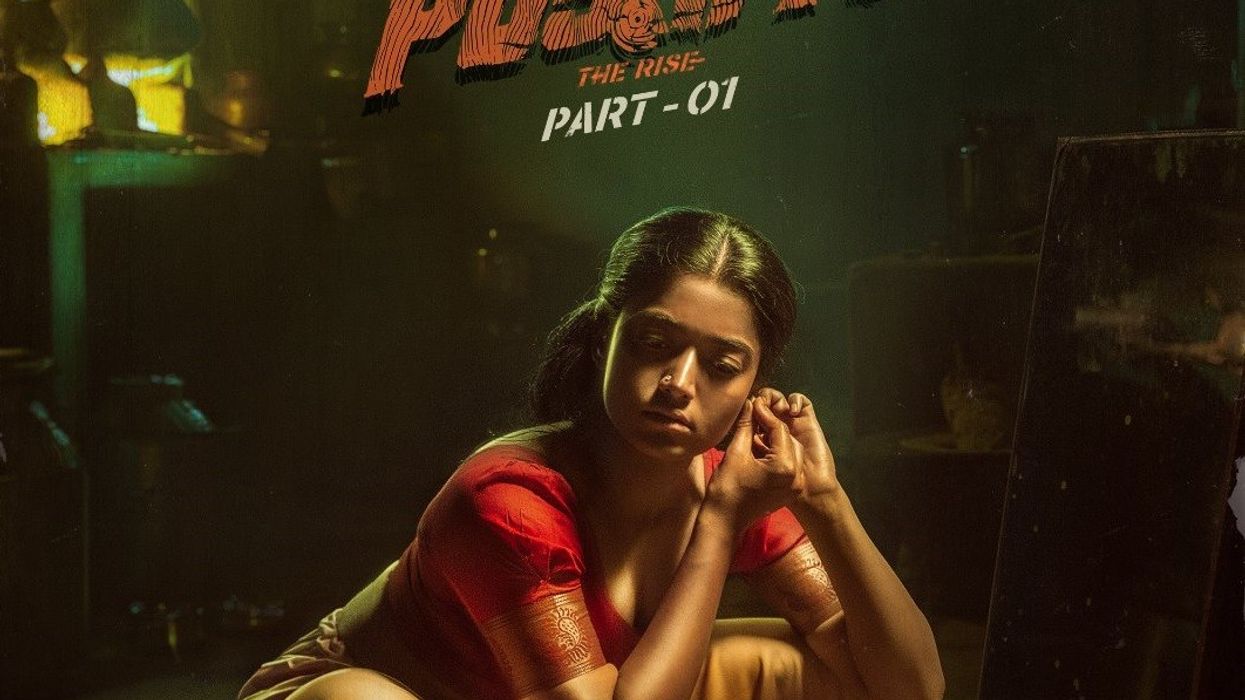
After Allu Arjun and Fahadh Faasil, the makers of Pushpa The Rise: Part 1 have now unveiled the first look poster of the female lead of the movie, Rashmika Mandanna.

Producers Mythri Movie Makers took to Twitter to share the actress’ first look poster. They tweeted, “Our fiercest #PushpaRaj's heart melts at the sight of his love Meet @iamRashmika as #Srivalli #SoulmateOfPushpa #PushpaTheRise #ThaggedheLe @alluarjun @aryasukku @ThisIsDSP @adityamusic @PushpaMovie.”


The makers also revealed that a song on Rashmika’s character is in the works. They posted, “#Srivalli song release works in progress! More details soon #SoulmateOfPushpa #PushpaTheRise #ThaggedheLe #Pushpa @alluarjun @iamRashmika #FahadhFaasil @aryasukku @ThisIsDSP @resulp @adityamusic @PushpaMovie.”

After having a look at the first look poster, we can say that Rashmika will be seen in a de-glam avatar in Pushpa. This is the first film of Rashmika and Allu Arjun, and the moviegoers are excited to watch their fresh pairing.

Directed by Sukumar, Pushpa will be released in two parts. The first part titled Pushpa The Rise: Part 1 is slated to release on Christmas this year. The movie is shot in Telugu but it will be dubbed and released in various languages like Malayalam, Tamil, Hindi, and Kannada.

Pushpa will be clashing at the box office with Ranveer Singh starrer 83. The Kabir Khan’s directorial is shot in Hindi but it will be dubbed and released in Tamil, Telugu, Kannada, and Malayalam as well.
More For You

Samir Zaidi

Two Sinners marks Samir Zaidi’s striking directorial debut

Samir Zaidi, director of 'Two Sinners', emerges as a powerful new voice in Indian film

Indian cinema has a long tradition of discovering new storytellers in unexpected places, and one recent voice that has attracted quiet, steady attention is Samir Zaidi. His debut short film Two Sinners has been travelling across international festivals, earning strong praise for its emotional depth and moral complexity. But what makes Zaidi’s trajectory especially compelling is how organically it has unfolded — grounded not in film school training, but in lived observation, patient apprenticeships and a deep belief in the poetry of everyday life.

Zaidi’s relationship with creativity began well before he ever stepped onto a set. “As a child, I was fascinated by small, fleeting things — the way people spoke, the silences between arguments, the patterns of light on the walls,” he reflects. He didn’t yet have the vocabulary for what he was absorbing, but the instinct was already in place. At 13, he turned to poetry, sensing that the act of shaping emotions into words offered a kind of clarity he couldn’t find elsewhere. “I realised creativity wasn’t something external I had to chase; it was a way of processing the world,” he says. “Whether it was writing or filmmaking, it came from the same impulse: to make sense of what I didn’t fully understand.”

Keep ReadingShow less