Skip to content
Search

Latest Stories

Priyanka Chopra & Anushka Sharma in race to bag Satte Pe Satta remake?

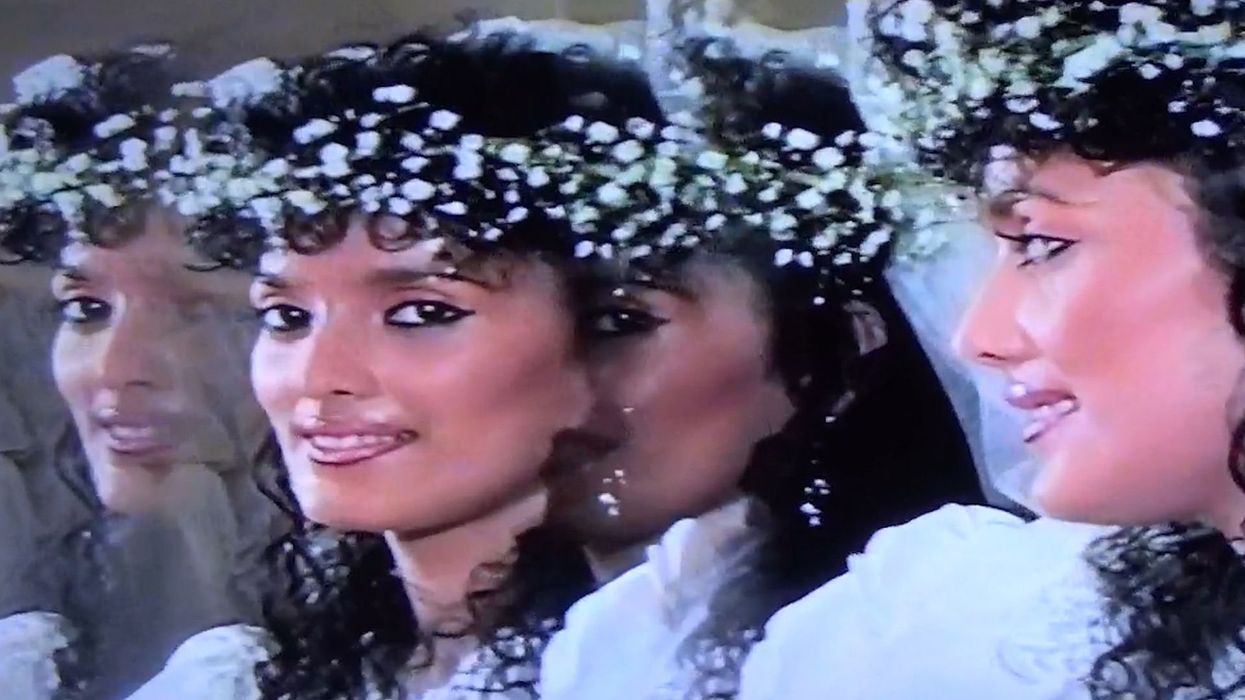
It looks like Farah Khan is having a tough time in finalizing the lead cast of her next directorial venture. It is rumoured that the project is an official remake of the cult 1982 film Satte Pe Satta, starring Amitabh Bachchan and Hema Malini in lead roles.

Buzz has it that Khan has roped in superstar Hrithik Roshan to step into the mighty shoes of megastar Amitabh Bachchan in the remake. Initially, Shah Rukh Khan was also in talks for the film, but it eventually landed into Junior Roshan’s lap.


However, the female lead is yet to be cast. While many names from Katrina Kaif to Deepika Padukone have been thrown around in the last couple of months, it is being said that none of the two are doing the film.

According to reports, the competition is now between Anushka Sharma and Priyanka Chopra. Sharma, who was last seen opposite Shah Rukh Khan in Zero (2018), is the stronger contender. “It is a big film, so everyone wants to be in a film that will be talked about a lot. It also adds to their brand value to be a part of a box-office ensemble. There is a lot of casting left. There are eight couples in the film, but the lead man has a double role, so it will be eight girls for seven boys. Once the leads are cast, you will see a mad scramble for the other roles,” a source in the know informs an Indian daily.

The remake will mark the first collaboration between successful filmmakers Farah Khan and Rohit Shetty. Khan will be directing the remake for Shetty’s production house Rohit Shetty Picturez.

More details are awaited.

More For You

Samir Zaidi

Two Sinners marks Samir Zaidi’s striking directorial debut

Samir Zaidi, director of 'Two Sinners', emerges as a powerful new voice in Indian film

Indian cinema has a long tradition of discovering new storytellers in unexpected places, and one recent voice that has attracted quiet, steady attention is Samir Zaidi. His debut short film Two Sinners has been travelling across international festivals, earning strong praise for its emotional depth and moral complexity. But what makes Zaidi’s trajectory especially compelling is how organically it has unfolded — grounded not in film school training, but in lived observation, patient apprenticeships and a deep belief in the poetry of everyday life.

Zaidi’s relationship with creativity began well before he ever stepped onto a set. “As a child, I was fascinated by small, fleeting things — the way people spoke, the silences between arguments, the patterns of light on the walls,” he reflects. He didn’t yet have the vocabulary for what he was absorbing, but the instinct was already in place. At 13, he turned to poetry, sensing that the act of shaping emotions into words offered a kind of clarity he couldn’t find elsewhere. “I realised creativity wasn’t something external I had to chase; it was a way of processing the world,” he says. “Whether it was writing or filmmaking, it came from the same impulse: to make sense of what I didn’t fully understand.”

Keep ReadingShow less