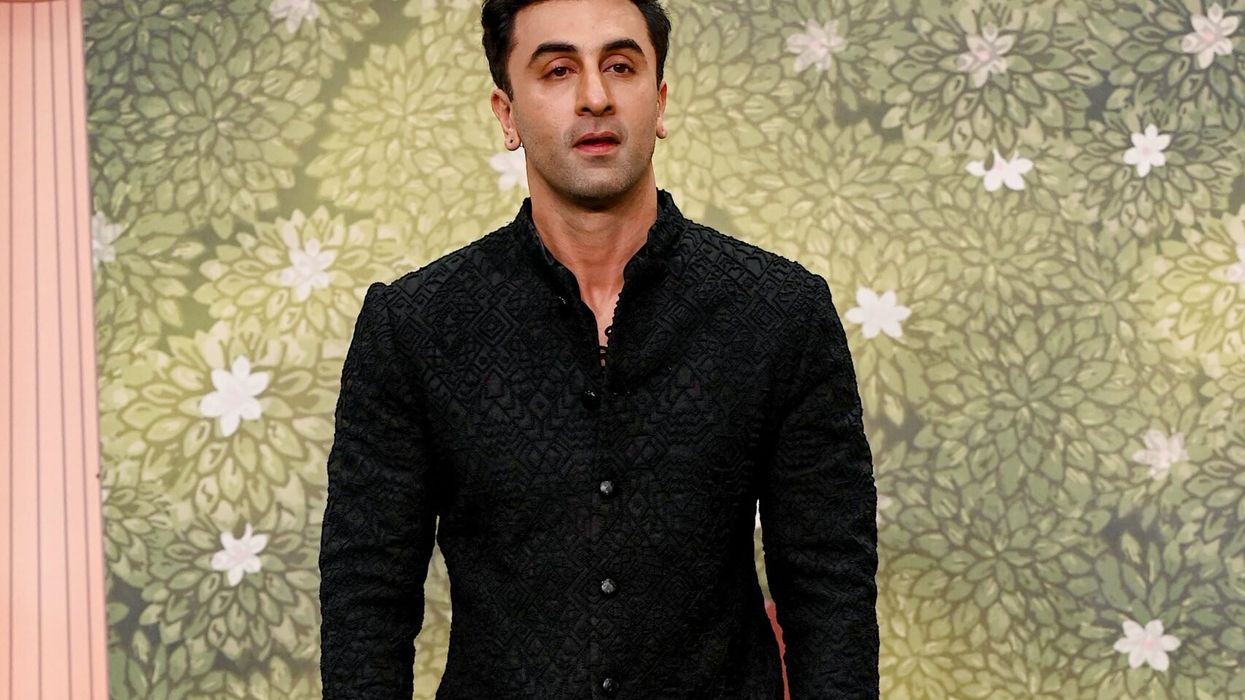

BOLLYWOOD star Ranbir Kapoor has praised Indian prime minister Narendra Modi for his oratory skills and "magnetic charm" but ruled out entering politics himself.
Kapoor shared his thoughts during a conversation with Zerodha co-founder Nikhil Kamath on his People by WTF podcast.
While Kapoor doesn't think much about politics, he recounted his first encounter with the prime minister in 2019, when he, along with industry colleagues including now-wife Alia Bhatt, "Sanju" co-star Vicky Kaushal, and producer Karan Johar, met Modi in New Delhi.
"When I first went to meet our prime minister four-five years ago along with other young actors and directors... You see him on television, you see how he talks.
"He's a great orator. But I remember the moment when we were sitting and he walked in... He's got this magnetic charm about him," the actor said during the podcast which aired on Saturday (27).
Ranbir was part of the star-studded delegation in 2019 that met Modi and also included Ranveer Singh, Bhumi Pednekar, Ayushmann Khurrana, Sidharth Malhotra, Ekta Kapoor, Rajkummar Rao, Varun Dhawan, Ashwiny Iyer Tiwari, and Rohit Shetty.
At what was described as a "courtesy meeting", Ranveer had clicked a group selfie with the prime minister which soon went viral on social media.
Ranbir, whose late actor father Rishi Kapoor was undergoing treatment for leukaemia at the time, said the prime minister spoke to each member of the delegation about something "personal".
"My father was going through treatment at the time. He asked about how the treatment was going and all of that. He talked to Alia about something else, Vicky Kaushal about something, Karan Johar about something.
Everything was very personal. You see that kind of effort in great men. He doesn't need to... That says a lot about that person," he said, adding superstar Shah Rukh Khan is one of such "achievers".
Asked if he would like to join politics, he said, "Politics? No. I think I like the world of being an artist, creation," adding he doesn't have the skill set to be a politician.
The actor said he wants to direct movies and would like "to die trying creating things".
"I know I'm not cut out to be a producer. I tried producing one film called Jagga Jasoos which didn't do well at the box office at all. But I realised it's a skill set I don't have.
"It's easy to say 'You can join politics or any other profession', because you are kind of successful in the field that you are in. But everything requires a skill set. I'm not a people person. In politics, you have to be a people person, I'm not that," he added. (PTI)