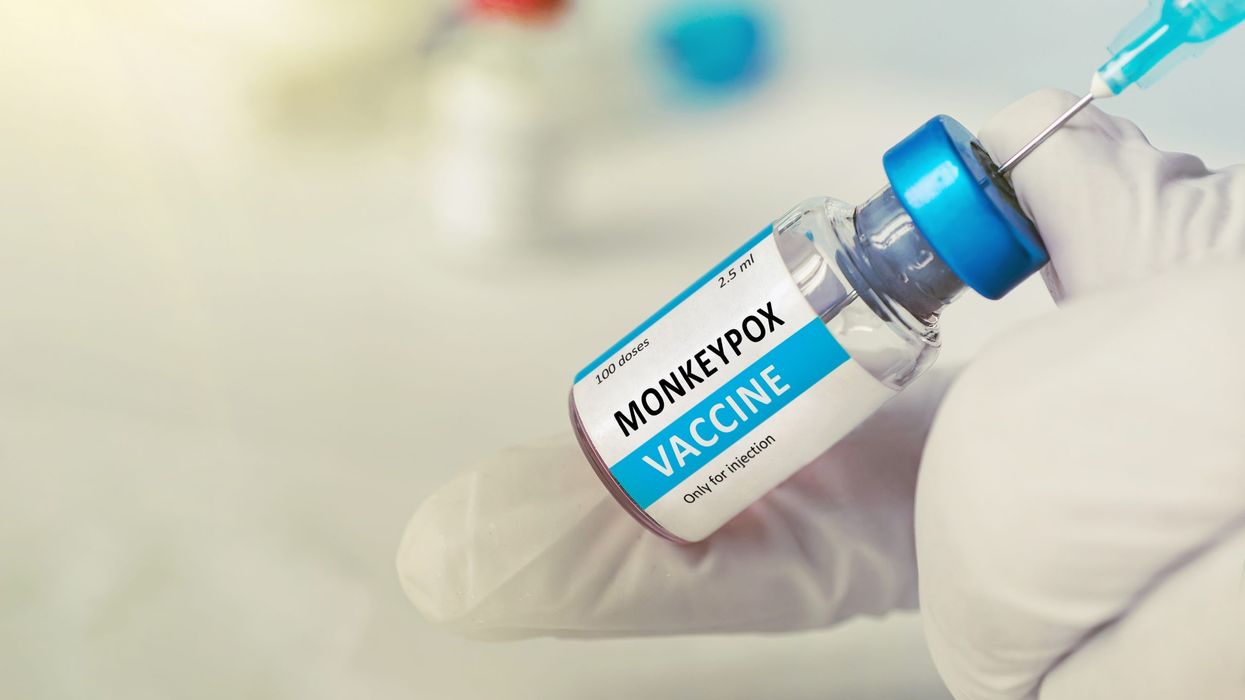

THE UK Health Security Agency (UKHSA) said on Monday it had detected a new mpox strain in England in a person who had recently travelled to Asia. Katy Sinka from the UKHSA said, "Our genomic testing has enabled us to detect this new mpox strain."
The agency said it would continue to "assess the significance of the strain", which included elements of both mpox subtypes, clade 1 and clade 2.
According to the UKHSA, "Genomic sequencing showed that the mpox genome contained elements of clade Ib and IIb mpox."
Mpox, previously known as Monkeypox, is related to smallpox and causes fever, body aches and skin lesions. It can be transmitted from infected animals and through close physical contact between people.
Sinka said, "It's normal for viruses to evolve, and further analysis will help us understand more about how mpox is changing."
Trudie Lang, a University of Oxford researcher and director of the Global Health Network, said, "It is of concern that there is an mpox case in the UK, and of further concern that it is a new recombinant mpox virus." She said, "This case highlights that mpox is circulating globally and is evolving, as predictable with these viruses."
Mpox was declared a public health emergency by the World Health Organization in August 2024 during an epidemic centred in the Democratic Republic of Congo. The status was lifted in September after a decline in cases.
Boghuma Titanji, assistant professor of medicine at Emory University, said, "The identification of a recombinant mpox strain containing elements of both clade I and clade II is precisely what experts in the field feared would happen."
Nearly 48,000 confirmed mpox cases and 201 deaths were reported worldwide to the WHO this year until the end of October. The UK continues its mpox vaccination programme for eligible groups. A "low level" of cases has been identified in the UK since 2022.
(With inputs from agencies)