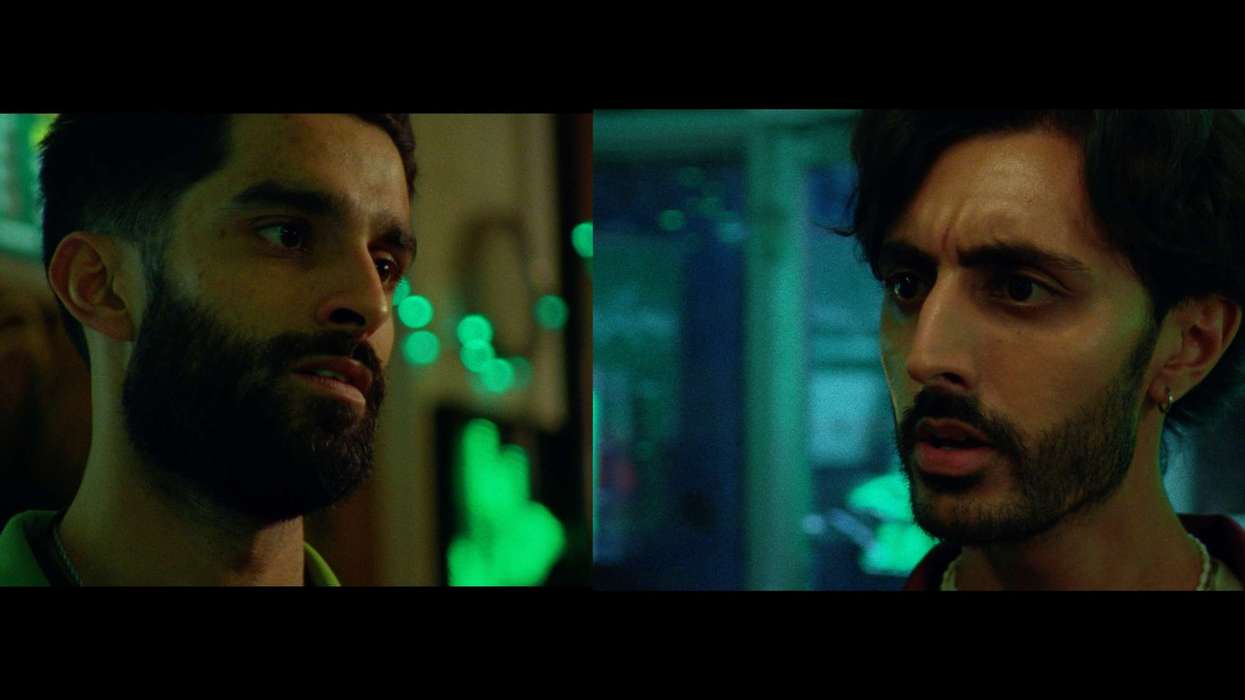

Highlights
- Luis reflects on winning Best British Short at the British Independent Film Awards
- Magid / Zafar went on to secure a BAFTA nomination in a crowded short-film landscape
- The filmmaker discusses community, persistence and carving an alternative path into cinema
A BIFA moment that brought the journey full circle
Winning Best British Short at the British Independent Film Awards marked a turning point for Luis — but the weight of the achievement didn’t land immediately. It was only at the ceremony itself, seeing lead actors Eben and Gurjeet moments after the announcement, that the scale of the journey truly registered.
The contrast was stark: what began quietly in rehearsal rooms, notes apps and late-night Zoom calls had arrived on one of British cinema’s most visible stages. Speaking alongside co-writer Sufiyaan shortly after the win, Luis says the recognition carried extra meaning because the original ambition had been modest — simply to get the film made, without compromise.
Creating a highly specific British Asian story, told cinematically and on its own terms, already felt like a success. To see that same specificity embraced by BIFA juries, he says, made the moment especially powerful.
Why Magid / Zafar cut through
Entering a saturated short-film field, Magid / Zafar stood out by design. Luis approached the project with a clear creative objective: to make something audiences hadn’t seen before, both visually and emotionally.
Every decision — from sound to framing — was filtered through that aim. Having waited years for the chance to make a fully resourced short, he treated the 19-minute runtime as if it were his only opportunity, pouring into it ideas he had been holding onto for much of his early career.
The film applies a bold cinematic language to everyday British Asian spaces: a takeaway shot with restless energy, young men observed with sensitivity and physicality, and colour used not decoratively but emotionally. The intention, Luis explains, was simple but deliberate — to assert that these lives, spaces and inner worlds belong on screen with the same visual ambition afforded elsewhere.
Early belief, community and carving a path
Luis was named an Into Film “One to Watch” at just 15, but he describes filmmaking as a leap of faith at any age. With no family background in the arts, pursuing cinema required single-minded belief — something he credits largely to his mother’s unwavering support.
Finding community early on proved equally important. Without film school, programmes like Into Film and informal online networks helped turn what can be an isolating passion into a shared pursuit. Many of those early connections, he notes, remain part of his creative circle today.
Learning the craft on set, not in classrooms
Rather than formal education, Luis built his understanding of filmmaking through hands-on industry work — from runner to camera assistant to DOP. That practical exposure, he says, offered lessons no classroom could replicate.
Understanding how productions are structured — schedules, rehearsals, camera choices — shaped not just his technical knowledge, but his instincts as a director. Music videos, in particular, became a training ground, sharpening his ability to tell stories through image and rhythm while navigating real-world production pressures.
Looking ahead
Following its BIFA success and BAFTA nomination, Magid / Zafar has become a defining chapter in Luis’ career. He is now developing his debut feature with backing from BFI and Film4, applying the same focus on character, world-building and emotional precision — just on a larger canvas.
Asked what matters most for emerging filmmakers today, his answer is straightforward: persistence.