
SOUTH Asian elders are at the heart of a new play which explores intimacy and romance in later life through characters rarely seen on the British stage, its playwright said.
Karim Khan’s Sweetmeats, with performances scheduled to begin this week, is about Liaqat, a Pakistani Muslim, and Hema, an Indian Hindu, who meet in a type 2 diabetes workshop and who gradually develop a bond that challenges both their assumptions about ageing and their capacity for new love.
“I wanted to write about this community and these people, because I was really interested in exploring what it means to experience love again,” Khan told Eastern Eye. “I wanted to shine a light on this community of elders we don’t really see on our stages, and to make them the central focus, to intimately delve into their lives, to understand their dreams, desires and hopes.”
Directed by Tara Theatre’s artistic director, Natasha Kathi-Chandra, the show features Shobu Kapoor as Hema, and Rehan Sheikh as Liaqat.
Khan’s choice of the diabetes workshop was deliberate as he wanted to address a health crisis affecting the south Asian community and also position it as a metaphor for exploring desire and connection.
“Diabetes is so endemic to the south Asian community. I wanted to explore and expose that, and make it for an audience who are coming in from a south Asian background, for them to feel seen and represented in that story, and to realise how much it is part of so many people’s daily lives,” Khan said.
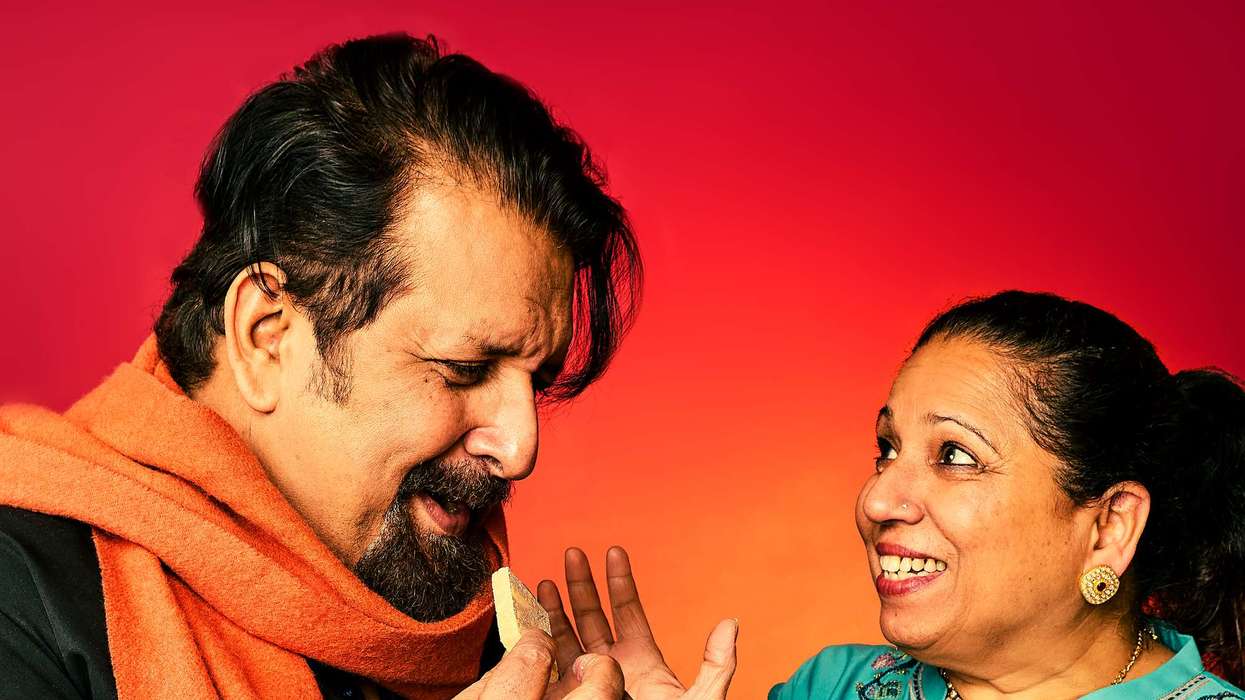 A still from SweetmeatsCourtney Phillip
“I wanted to understand the way it impacts people’s lives on a day-to-day basis, as well as on a bigger level, and potentially pick at why our community are more exposed to diabetes.”
The writer added he wanted to use sugar, health and diabetes as a metaphor to explore love and feelings and desire.
Khan described working with Kathi-Chandra as rewarding and said she was supportive and wanted to honour the text and bring it to life. “It’s been a complete joy to work with her.”
While Sweetmeats is fundamentally a love story, it also subtly addresses the political tensions between India and Pakistan through its two protagonists.
Khan, a British Pakistani, said, “I was really interested in creating a story that features both a Pakistani character and an Indian character. The play doesn’t delve into the tensions in a huge political way. It’s more that it forms the texture and fabric of their world in the same way that Indians and Pakistanis within the UK grow up together and have such a close kinship and friendship together and are so united. “
For Khan, the relationship between Hema and Liaqat represents something deeper, a return to a time before political borders divided communities.
He said, “I wanted to understand how united both these communities can be, even when the world tells them they’re very different, or the way politics inserts a distinction between them, and to explore how closely intertwined they are, in a way that dates to pre-Partition, where Muslims and Hindus were living in the same place.”
Khan added, “Th-ere’s more that unites us than differentiates us; we’re part of the same family, and we are like brothers and sisters. I feel like differences have been asserted upon us for political and nationalistic purposes, to separate us and to feed power.
“My message would be to honour that we’re all part of the same family and there’s so much – the language, the food we share, the way we experience life is so intertwined. The play shows that as well.”
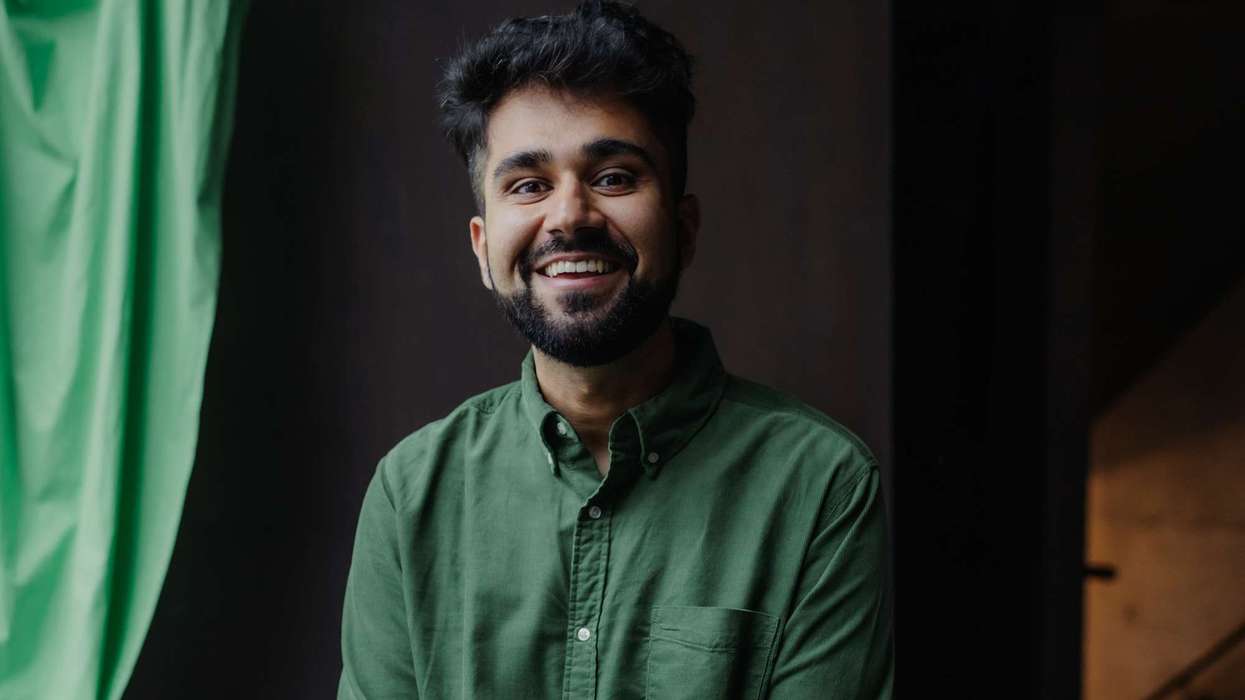
Khan, 31, won the Fringe First Award and BBC Popcorn Award for his play Brown Boys Swim at the Edinburgh Fringe in 2022; he has a particular affinity for love stories told from a different perspective.
“I love writing love stories and romance between characters. I like to explore it from a surprising angle. This play does feel surprising, in a sense that the characters on that journey are not people we’ve seen typically in love stories,” he said.
“Love stories are often associated with younger characters who are coming of age and who are reaching a new phase in their life, but this is about people who have experienced a very full life and gone on complete journeys. I would say this is still a coming-of-age story, even though it’s about that community and that generation. They’re still able to show how much people of a certain age can still change and dare to change and feel the impact of other people as they enter their lives.”
Khan said his hope was for audiences to appreciate the significance of seemingly ordinary encounters.
“I hope this story entertains them, and that it’s an opportunity to escape from their day-to-day realities, to feel warmth, feel held and seen in this play,” he said.
Sweetmeats is on at the Bush Theatre from February 7 to March 21