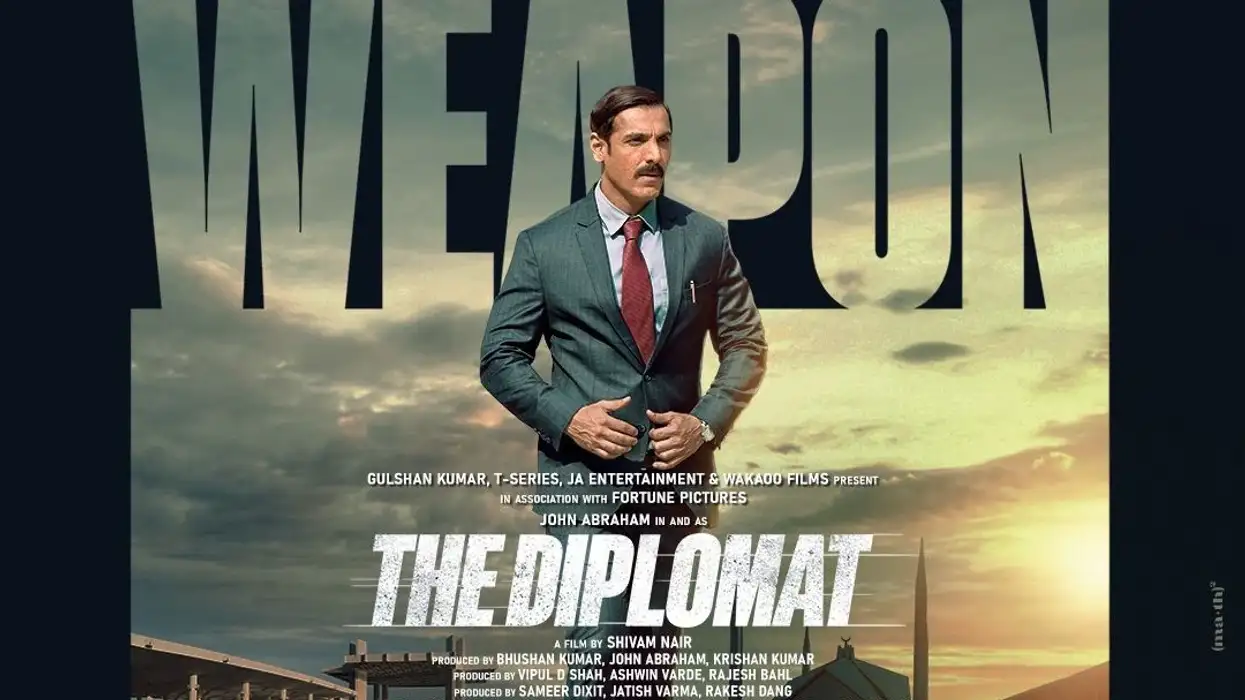

John Abraham’s latest political drama, The Diplomat, has quietly become a sleeper hit back home but the film has run into unexpected trouble overseas. It has been banned in several Middle Eastern countries including the UAE, Saudi Arabia, Qatar, and Oman. There’s been no official explanation, but the decision has left the actor surprised and disappointed.
In an interview, John addressed the backlash. “We’ve shown Pakistani characters—lawyers, judges, even cops—as upright and principled. This is not a film made to insult any country. If anything, we were careful to show a fair picture,” he said. The actor added that the film avoids nationalist chest-thumping, something he was clear about from the start.
- YouTubeyoutu.be
Directed by Shivam Nair and written by Ritesh Shah, The Diplomat is inspired by the real-life efforts of Indian diplomat J.P. Singh, who helped rescue a young woman, Uzma Ahmed, from a forced marriage in Pakistan. The film presents the behind-the-scenes diplomacy, legal hurdles, and emotional tension involved in international rescue missions.
John admitted the team faced low expectations before release. “There was no big launch or marketing push. It just quietly released on March 14. But the audience found it, and that’s what matters,” he said. The film has since picked up steam with more shows added in Indian cinemas.
Taking on a more grounded role after Vedaa, where he wasn’t the main lead, John said he’s no longer chasing screen time. “You don’t need to scream patriotism or always play the hero to be part of a powerful story,” he said. “I want to be part of good stories, not just play the same glorified character again and again.”
Interestingly, John also revealed he’s been navigating his career without a PR team. “I’ve built whatever goodwill I have through my work, not through publicity stunts,” he said. For him, the focus remains on substance over style.
Despite the Middle East ban, The Diplomat is quietly making its mark, thanks to strong word-of-mouth and an honest, balanced portrayal of complex geopolitical realities. As John put it, “There are good and bad people everywhere. We chose to show that and nothing more, nothing less.”