
A SECOND Iranian warship was heading towards Sri Lanka's territorial waters on Thursday, a day after a US submarine destroyed an Iranian frigate near the island, killing at least 87 sailors, a minister said.
Media minister Nalinda Jayatissa told parliament that the second Iranian vessel was just outside Sri Lanka's waters but gave no further details.
President Anura Kumara Dissanayake was meeting top officials to discuss an Iranian request for the ship to enter the safety of Sri Lankan waters, official sources said.
The vessel was carrying more than 100 crew members, and officials said there were fears it could be targeted in the same way as the sister ship that was sunk by a US submarine just off Sri Lanka's southern coast on Wednesday.
ALSO READ: UK launches repatriation operation for Britons caught in Gulf war
The sinking took place about 40 kilometres south of the port city of Galle after the vessel issued a distress call at dawn, according to the Sri Lankan navy. By the time a rescue ship reached the area, the frigate had already sunk.
Sri Lankan foreign minister Vijitha Herath said at least 87 sailors were killed and 61 remained missing. Thirty-two sailors were rescued, many of them wounded.
Authorities in Galle were preparing to hand over the remains of the sailors killed in the torpedo attack claimed by the US military.
Officials at the main hospital in Galle said 32 rescued Iranians were still being treated under tight security by police and elite commandos. The Emergency Treatment Unit was closed to visitors and other patients while a separate ward was set up for the Iranians.
"Most of them have minor injuries, but there were a few with fractures and burns," a nurse at the hospital said.
ALSO READ: Trump calls UK response to Iran strikes 'very disappointing'
Sri Lankan navy vessels continued searching for missing Iranian sailors, navy spokesman Buddhika Sampath told AFP.
The warship had been returning after attending a military exercise in India's eastern port of Visakhapatnam.
Iran has not yet commented on the sinking.
Sri Lanka has remained neutral and has called for dialogue to resolve the conflict. Iran is a key buyer of Sri Lankan tea, the country's main export commodity.
The incident near Sri Lanka came as the war sparked by a joint US-Israel attack on Iran spread across the Middle East and beyond.
Israel said it launched a new wave of strikes in Iran on Thursday.
The Israeli military said it had "just begun a large-scale wave of strikes against infrastructure of the Iranian terror regime across Tehran".
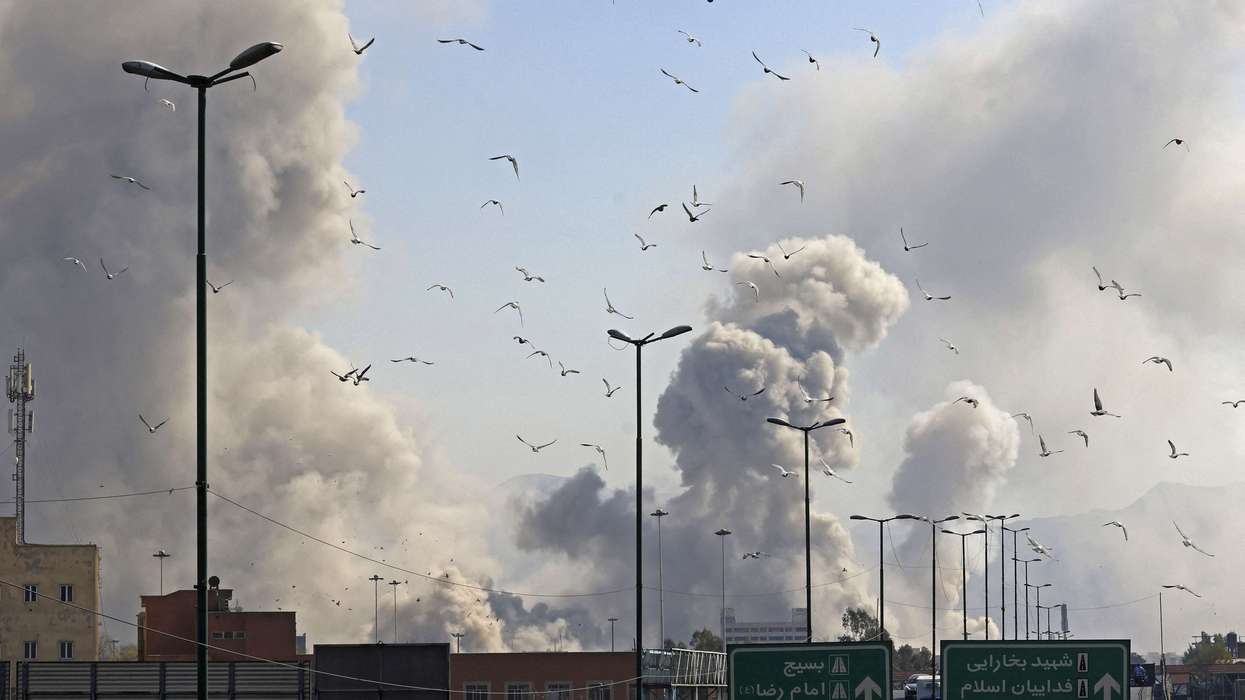
Iranian news agency Tasnim and local media reported several explosions in Tehran on Thursday morning and said the country had activated its air defences.
AFP reporters in Tehran also heard fighter jets over the west of the city and several explosions.
Iran launched missiles at Israel earlier Thursday, triggering alerts in several areas including Tel Aviv, according to the Israeli military and Tehran's state media.
Explosions were heard in Jerusalem after warnings of incoming missile fire, AFP journalists said. Israel's emergency services said there were no known casualties.
Iran said it had also targeted the headquarters of Kurdish forces in Iraqi Kurdistan with three missiles, after earlier strikes in Kurdish regions of Iran and Iraq.
The attack killed a member of an exiled Iranian Kurdish group, according to a representative.
The strikes followed a warning from Iranian officials.
"Separatist groups should not think that a breeze has blown and try to take action," said Ali Larijani, secretary of Iran's Supreme National Security Council.
"We will not tolerate them in any way."
The conflict has also spread to Lebanon.
Israel said its forces struck "several command centres belonging to the Hezbollah terrorist organisation" in south Beirut.
Lebanon's state-run National News Agency said a drone strike before dawn targeted an apartment in Beddawi, a Palestinian refugee camp near Tripoli, killing senior Hamas official Wassim Atallah al-Ali and his wife.
An air strike also hit south Beirut, while Lebanon's health ministry said three people were killed in two Israeli strikes on vehicles along Beirut's airport highway.
Hezbollah leader Naim Qassem said the group had targeted Israeli positions as far as Tel Aviv in at least 15 attacks.
"We are facing aggression... our choice is to confront it until the ultimate sacrifice, and we will not surrender," he said in his first speech since the latest fighting began.
Lebanese authorities said at least 72 people had been killed, 437 wounded and 83,000 displaced from their homes since Monday.
Iran has also struck targets linked to the United States and energy infrastructure in Gulf countries.
AFP journalists heard explosions over the Qatari capital Doha and Bahrain's Manama early Thursday.
Qatar said it was evacuating residents living near the US embassy in Doha after Iranian strikes. Earlier it said it had thwarted attacks on Hamad International Airport.
The United Arab Emirates, Saudi Arabia and Qatar said they intercepted Iranian missiles on Wednesday, including a drone aimed at Saudi Arabia's Ras Tanura refinery.
Thirteen people have been killed in Gulf countries since the war began, including an 11-year-old girl in Kuwait.
The conflict has drawn in other countries.
Australian prime minister Anthony Albanese said "military assets" had been deployed to the Middle East as a contingency plan.
Canadian prime minister Mark Carney said he could not "rule out participation" in the war.
"We will stand by our allies," he said.
Spain rejected a claim by the White House that it had agreed to cooperate with US operations. Spanish foreign minister Jose Manuel Albares said its stance on "bases, on the war in the Middle East, on the bombardment of Iran, has not changed at all."
Turkey said a ballistic missile launched from Iran and heading towards Turkish airspace through Iraq and Syria was destroyed by NATO air defence systems.
Turkey summoned Iran's ambassador over the incident.
A Turkish official said the missile had been "aimed at a base in Greek Cyprus but veered off course".
China said it would send a special envoy to mediate in the conflict.
Foreign minister Wang Yi said Beijing supports Iran in defending its sovereignty while urging the United States and Israel to stop their attacks.
Iranian foreign minister Abbas Araghchi criticised the sinking of the naval ship.
"Mark my words: The US will come to bitterly regret precedent it has set", he said.
Iran's official IRNA news agency said 1,045 military personnel and civilians have been killed since the war began, a figure AFP could not independently verify.
Iran has also said it has closed the Strait of Hormuz, the Gulf chokepoint through which about a fifth of the world's crude oil flows. Market intelligence firm Kpler said tanker transits through the strait had fallen by 90 per cent.
The Omani navy rescued 24 crew members from a container ship struck by missiles in the Strait of Hormuz.
Another tanker near Kuwait reported a "large explosion" that caused an oil spill, according to the British maritime security agency UKMTO.
Iranian state television said Iran struck a US oil tanker in the Gulf with a missile, an incident that could not be independently confirmed.
The International Monetary Fund warned the war could usher in a "prolonged period of flux" for the global economy, according to IMF chief Kristalina Georgieva.
South Korea said it was activating a $68-billion market stabilisation fund to address possible energy shortages, while China reportedly told oil refiners to stop exporting diesel and gasoline.
Tourism in the region has also been affected.
"My last group of tourists left three days ago, and all the other groups planned for March have been cancelled," said Nazih Rawashdeh, a tour guide near Irbid in northern Jordan.
"This is the start of the high season here. It's catastrophic," he said.
In Washington, the US Senate rejected a bipartisan resolution aimed at limiting President Donald Trump's authority to continue military action against Iran.
With Republicans holding a 53–47 majority, the resolution failed by the same margin. Even if it had passed both chambers of Congress, Trump could have vetoed it.
(With inputs from agencies)