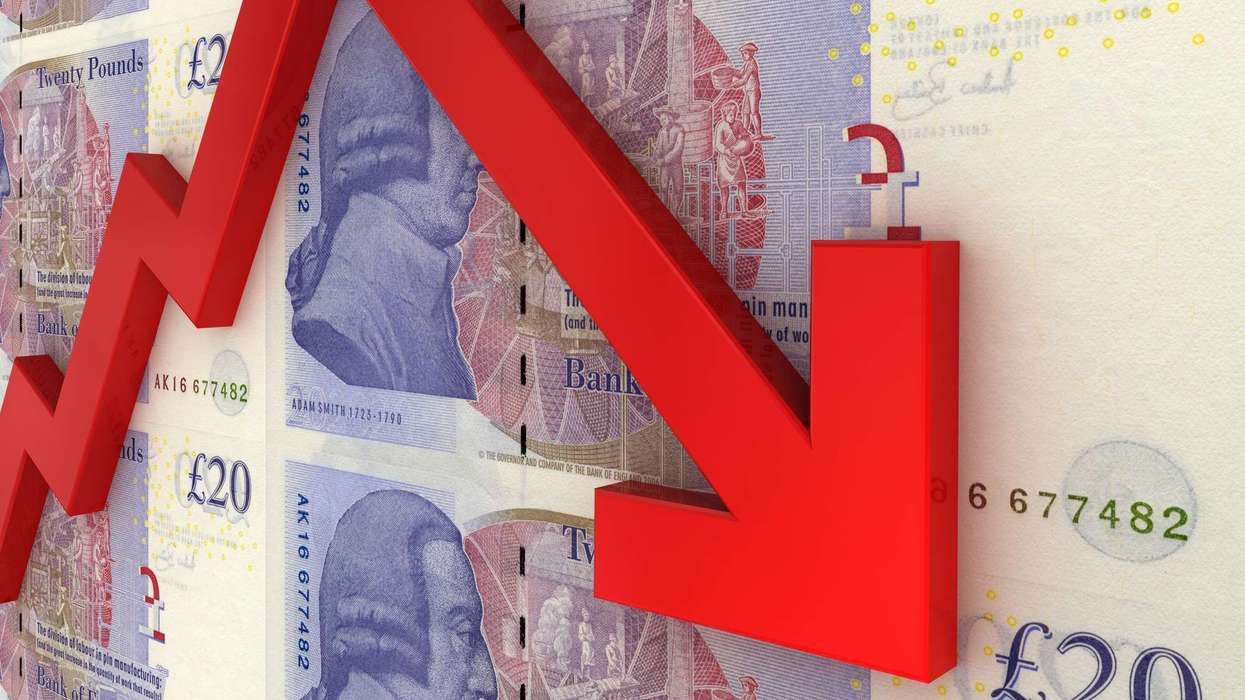
INDIA'S economic growth slowed for the fifth straight quarter in the April-to-June period to 5 per cent, government figures showed Friday (30) in a fresh blow to prime minister Narendra Modi.
But in an effort to ease the liquidity crunch that has dogged Asia's third-largest economy, the government at the same time announced the merger of 10 public sector banks into four new lenders.
The Indian economy has been suffering from weak consumer demand that saw car sales fall for the ninth month running in July, leading to calls from industry for Modi to stimulate growth.
Having already this year lost to China its status as the fastest-growing major economy, the latest growth figure for India's first fiscal quarter fell well short of market expectations of 5.7 per cent.
This is despite India's central bank, reportedly under government pressure, cutting interest rates four times this year to a nine-year low in an effort to boost activity.
"The growth figures are lower than our projections and reflect major economic slowdown," Sameer Narang, chief economist at the Bank of Baroda said.
Sujan Hajra, an economist at Anand Rathi securities, said it "reflects structural problems with the Indian economy that need long-term solutions".
Narang added though he was hopeful that measures announced this month by Modi's newly re-elected government would give the economy a boost in the coming quarters.
On Wednesday (28), India's cabinet eased restrictions on foreign investment in four key sectors, including coal mining, in an effort to attract more capital from abroad.
The government also said it was bringing forward a $10-billion liquidity lifeline for banks and rolling back a levy on equity sales that had spooked foreign investors.
The cash-strapped government is also getting a $24bn windfall from India's central bank, potentially giving it extra room to cut taxes and stimulate the economy.
India's government won a landslide election victory in May even though its economic record has been patchy, with unemployment at its highest since the 1970s.
While the economy has regularly grown at about 7 per cent since Modi came to power in 2014, it has failed to create enough jobs for the 1.2 million Indians entering into the labour market each month.
Just ahead of Friday's growth figures announcement, finance minister Nirmala Sitharaman also announced the merging of 10 public sector banks into four lenders, in a major overhaul of India's financial services sector.
The four new banks will hold business worth around Rs 55.8 trillion($781bn), or about 56 per cent of the Indian banking industry, Bloomberg News reported.
The government will also inject a combined Rs 552.5bn into the new entities.
India, which has the world's worst bad-loan ratio, will now have 12 state-run banks instead of 27.
"Banks will play an important role for (achieving) a five-trillion (dollar) economy," said Rajeev Kumar, India's finance secretary.
"For that, we need banks which have extra lending capacity and have an ability to give better services with modern techniques."
(AFP)