
Skip to content
Search

Latest Stories

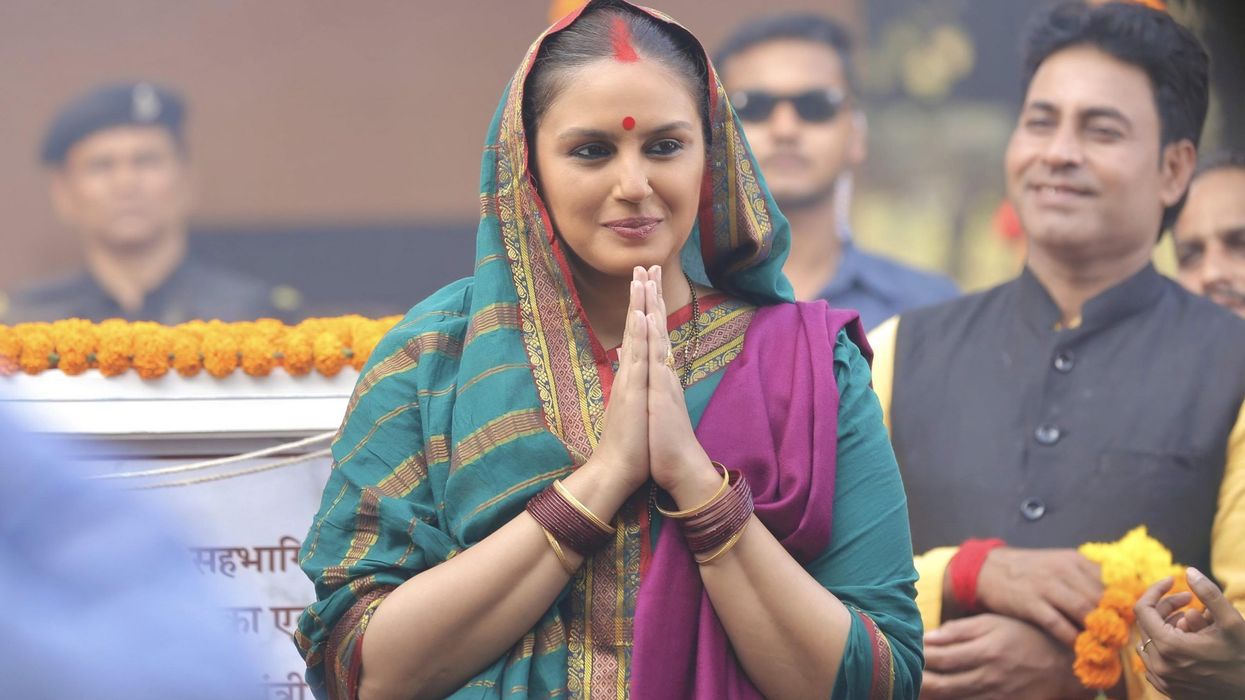
Huma Qureshi’s political drama Maharani greenlit for second season

Huma Qureshi’s political drama Maharani greenlit for second season

After the huge success of Maharani (2021), SonyLIV has renewed the high-profile political drama for a second season. Actress Huma Qureshi, who played the character of an uneducated but clever housewife who goes on to become the chief minister of Bihar, returns to reprise her role in Maharani 2.  Director Karan Sharma and his team gear up to begin production in the first week of December.

“The love and appreciation I got for my role was overwhelming,” says Qureshi.


“It will be quite challenging as I have to work hard and make sure to surpass the first season’s success. It is a huge responsibility to do better than that. Walking in the steps of Rani Bharti will always be an empowering experience,” she adds.

Since the political drama is set in Bihar, the team will recreate parts of the state in Bhopal. The month-long schedule in Bhopal will be followed by schedules in Mumbai and parts of Bihar.

Written by Nandan Singh and Uma Shankar Singh, Maharani is said to be loosely inspired by Rabri Devi’s journey who was made to join politics in 1997 after her husband and then Bihar chief minister Lalu Prasad Yadav was under scrutiny for corruption charges in the infamous Fodder Scam.

Keep visiting this space over and again for more updates and reveals from the world of entertainment.

More For You

Samir Zaidi

Two Sinners marks Samir Zaidi’s striking directorial debut

Samir Zaidi, director of 'Two Sinners', emerges as a powerful new voice in Indian film

Indian cinema has a long tradition of discovering new storytellers in unexpected places, and one recent voice that has attracted quiet, steady attention is Samir Zaidi. His debut short film Two Sinners has been travelling across international festivals, earning strong praise for its emotional depth and moral complexity. But what makes Zaidi’s trajectory especially compelling is how organically it has unfolded — grounded not in film school training, but in lived observation, patient apprenticeships and a deep belief in the poetry of everyday life.

Zaidi’s relationship with creativity began well before he ever stepped onto a set. “As a child, I was fascinated by small, fleeting things — the way people spoke, the silences between arguments, the patterns of light on the walls,” he reflects. He didn’t yet have the vocabulary for what he was absorbing, but the instinct was already in place. At 13, he turned to poetry, sensing that the act of shaping emotions into words offered a kind of clarity he couldn’t find elsewhere. “I realised creativity wasn’t something external I had to chase; it was a way of processing the world,” he says. “Whether it was writing or filmmaking, it came from the same impulse: to make sense of what I didn’t fully understand.”

Keep ReadingShow less