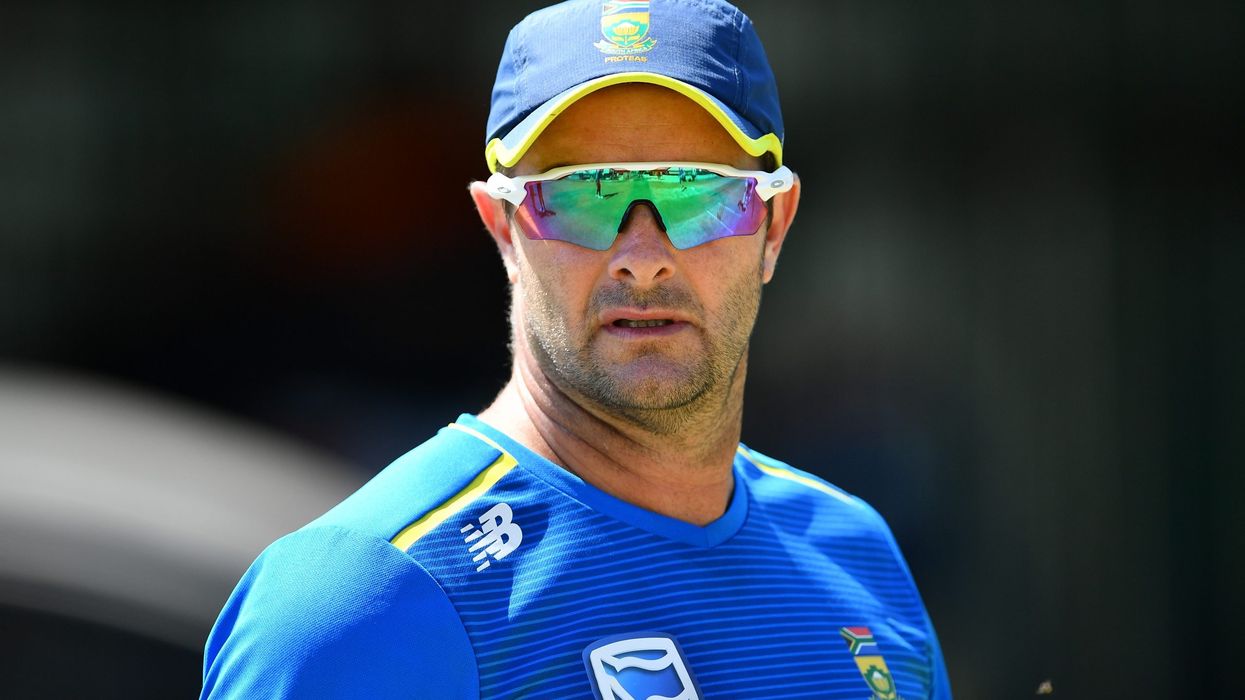

SOUTH AFRICA head coach Mark Boucher has apologised for singing offensive songs and using racist nicknames during his playing days in an affidavit submitted to Cricket South Africa's (CSA) Social Justice and Nation-Building (SJN) committee on Monday (23).
Boucher was responding to allegations levelled against him by former spinner Paul Adams, who last month said at the SJN hearings that he was subjected to racial discrimination and name-calling during his time with the national team.
While Boucher denied giving Adams the racist moniker, he did "apologise unreservedly for any offensive conduct, real or perceived".
"While at the time we thought it was playful banter within a team environment in which we all participated... I deeply regret and apologise for the part I played by joining in with my teammates in singing offensive songs or using offensive nicknames," Boucher said in the 14-page affidavit.
"We, the team, coaching staff, selectors and CSA... should have been more sensitive and created an environment where all members of the team could raise and talk about these issues without allowing them to fester..." added the former wicket-keeper, who played 147 Tests and 295 one-day internationals for the Proteas.
Skipper Temba Bavuma confirmed that Boucher had spoken to the team, providing "clarity and context" on the charges against him.
South Africa travel to Sri Lanka for three ODIs and three T20s next month, with the tour scheduled to kick off in Colombo on September 2.
(Reuters)








Netanyahu faces backlash for calling Britain ‘Islamic Republic’