
BANGLADESH began official campaigning on Thursday for general elections scheduled next month, the first since the 2024 uprising that ended the rule of Sheikh Hasina.
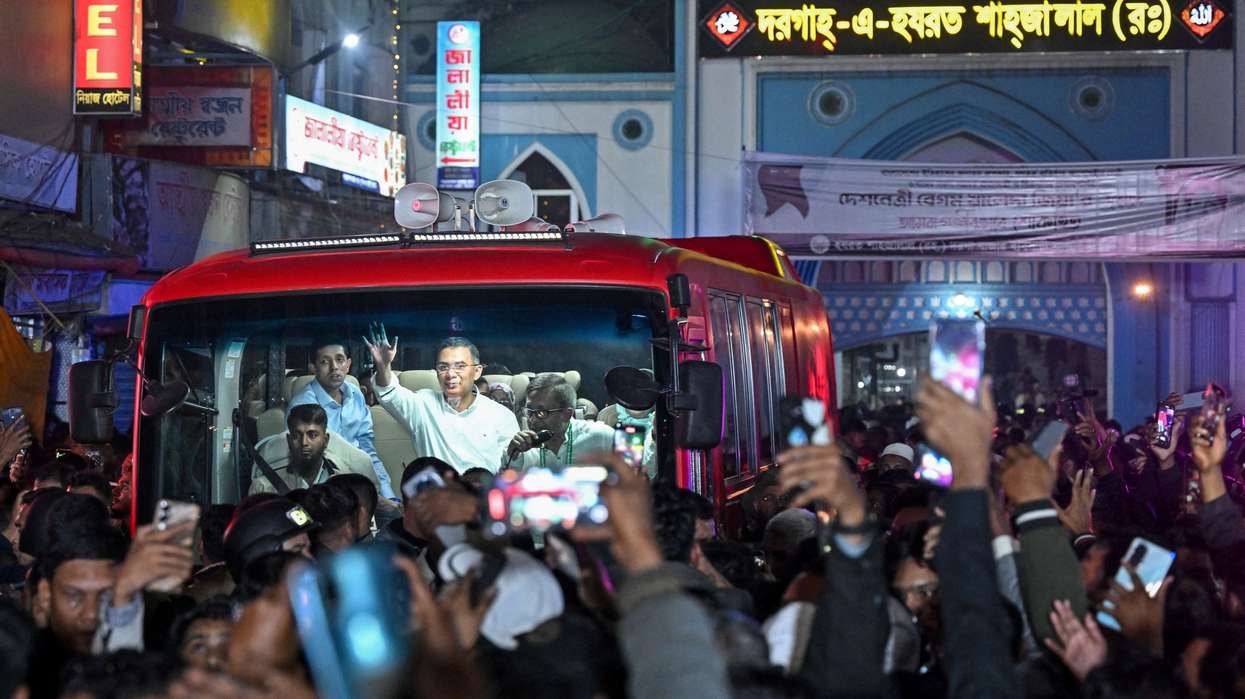
Large crowds of supporters gathered in the northern city of Sylhet for a rally by Tarique Rahman of the Bangladesh Nationalist Party (BNP), who is seen as a key frontrunner. Supporters waved flags and chanted his name.
"Do we have a leader? Yes, we do," BNP loyalists shouted, carrying placards of Rahman, the prime ministerial hopeful who returned to Bangladesh in December after 17 years in exile.
The largest Islamist party, Jamaat-e-Islami, is set to begin its campaign later in the day in the capital Dhaka.
The South Asian nation of 170 million votes on February 12 to elect 350 lawmakers.
The polls are expected to bring new leadership after months of turmoil following the removal of Hasina’s government, with implications for domestic politics and regional relations.
The campaign begins amid security concerns, including the murder last month of a student leader involved in the anti-Hasina protests, and warnings of a "flood" of online disinformation.
European Union election observers said the vote would be the "biggest democratic process of 2026".
‘Never fulfilled’
Rahman, 60, widely known in Bangladesh as Tarique Zia, took over leadership of the BNP after the death of his mother, former prime minister Khaleda Zia, who died in December at the age of 80.
"He will carry forward the legacy of his parents," said Harun Ur Rashid, a 40-year-old BNP supporter, referring to Khaleda Zia and her husband, former president Ziaur Rahman, who was assassinated in 1981.
Bangladesh has a large Muslim-majority population and a significant Sufi following, and political parties have traditionally launched campaigns in Sylhet, home to the centuries-old shrine of Shah Jalal.
Supporters lined the streets on Wednesday night as Rahman prayed at the shrine and cheered as his campaign bus passed.
Jamaat-e-Islami, which opposes Sufi mystical interpretations of the Koran, is launching its campaign in Dhaka in the constituency of its leader Shafiqur Rahman.
Aligned ideologically with the Muslim Brotherhood, the party is seeking a return to formal politics after years of bans and crackdowns.
Since Hasina fled to India, senior Islamist leaders have been released from prison, and Islamist groups have become more active.
The National Citizen Party (NCP), formed by student leaders who led the uprising and allied with Jamaat, will also hold a rally in Dhaka.
Engineer Raqibul Hasan Shawon, 26, watched the BNP rally from the sidelines.
"I haven't decided whom to vote for yet," he said. "We have heard commitments before, but they were never fulfilled."
‘New Bangladesh’
Muhammad Yunus, the 85-year-old Nobel Peace Prize laureate, returned from exile in August 2024 to lead a caretaker government as "chief adviser" and is expected to step down after the elections.
Yunus said he inherited a "completely broken" political system and promoted a reform charter aimed at preventing a return to authoritarian rule. A referendum on the proposed reforms will be held on the same day as the election.
"If you cast the 'yes' vote, the door to building the new Bangladesh will open," Yunus said on January 19 in a national broadcast urging support for the referendum.
Earlier this month, he said he was "concerned about the impact" of a rise in disinformation.
"They have flooded social media with fake news, rumours and speculation," Yunus said, blaming both "foreign media and local sources".
Relations with India have worsened since Hasina fled to New Delhi as protesters stormed her residence.
Hasina, 78, who was sentenced to death in absentia in November for crimes against humanity linked to the crackdown on protesters, remains in hiding in India.
(With inputs from agencies)