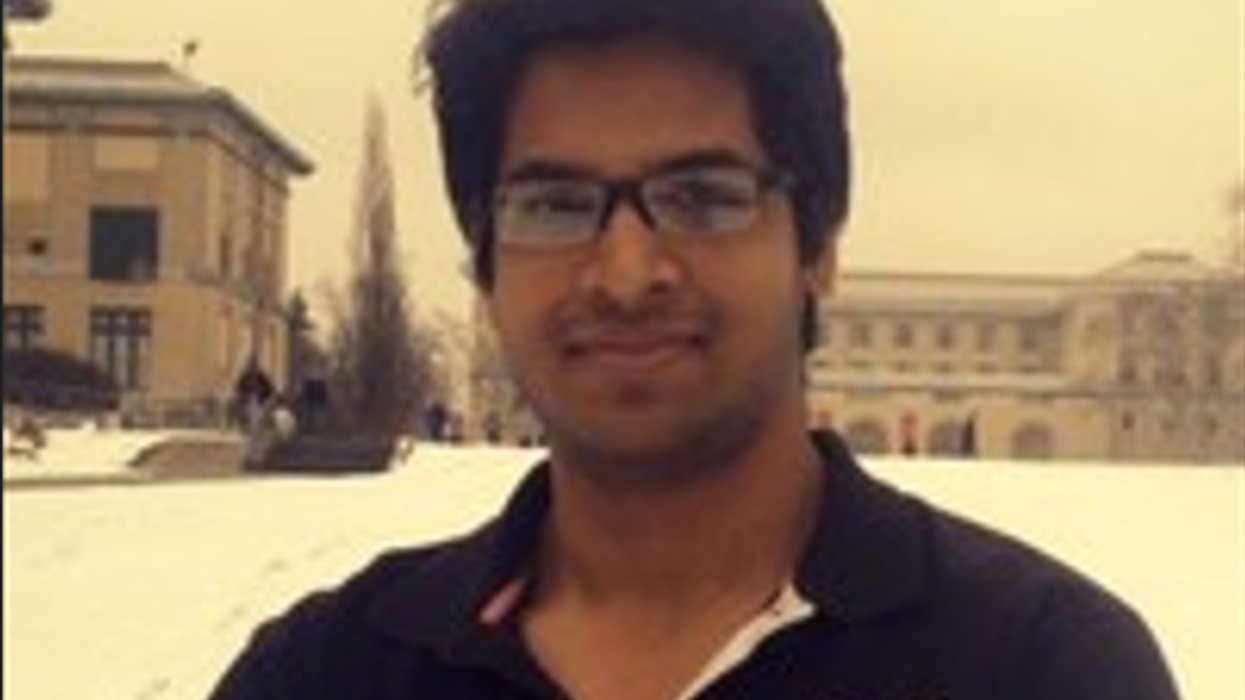

AN Indian American engineer has been lauded by Tesla CEO Elon Musk for his pivotal role in the development of Tesla's autopilot technology.
Musk recently praised Ashok Elluswamy on social media, crediting him and the AI/Autopilot team for their groundbreaking work.
"Thanks Ashok! Ashok was the first person to join the Tesla AI/Autopilot team and ultimately rose to lead all AI/Autopilot software. Without him and our awesome team, we would just be another car company looking for an autonomy supplier that doesn't exist," Musk tweeted.
Who is Ashok Elluswamy?
Elluswamy holds a Bachelor of Engineering in electronics and communication from the College of Engineering, Guindy in Chennai. He later pursued a Master of Science in Robotic Systems Development at Carnegie Mellon University.
Before joining Tesla, he worked as a Software Engineer at WABCO Vehicle Control Systems and as a research intern at the Volkswagen Electronic Research Lab.
Elluswamy was the first engineer hired for Tesla's autopilot team in June 2014. Over his 10-year tenure at Tesla, he has climbed the ranks to become the director of Tesla autopilot software in May 2019.
According to reports, his contributions have been instrumental in advancing Tesla's autonomous driving technology, starting from humble beginnings with limited computing resources to leading a highly successful team.
Elluswamy's expertise lies in robotics, with a focus on computer vision, perception, planning, and control. His leadership has been crucial in Tesla shipping the world's first autopilot system in 2015, a milestone that set Tesla apart in the autonomous vehicle industry.
Described by one of his professors as one of the “top students,” Elluswamy has earned high praise for his technical skills and innovative approach. He is actively involved in sharing updates about Tesla and his work on social media, where he has a substantial following.
Living in San Francisco, US, Elluswamy continues to lead Tesla's autopilot software development, contributing to the company's reputation as a leader in autonomous vehicle technology.






 Curator Emma Slocombe with ikat robes and arabachi coats in the Peter the Great Room in Blickling Hall Amit Roy
 View of the entrance to Blickling Hall on a rainy autumn dayAmit Roy
 Kente cloth from Ghana in the Long Gallery in Blickling Hall
 Decoration in the Great Hall at Blickling Hall Amit Roy
 Palampore fragment made in coastal south-east India in the Brown Room in Blickling Hall Amit Roy
 Bed valance dating from early 1700s in the Italian Print Room at Blickling Hall Amit Roy
 Indian inspired fabric draped on sofas in the South Drawing Room in Blickling Hall Amit Roy
 Indian inspired fabric draped on sofas in the South Drawing Room with Indian carpet in Blickling Hall Amit Roy
 Karun Thakar has picked out the geometric patterns in the bookcase and the Kente cloth in the Long Gallery in Blickling Hall Amit Roy
 Large tapestry depicting Peter the Great defeating the Swedish army at the Battle of Poltava in 1709 Amit Roy
 ikat robes and arabachi coats in the Peter the Great Room in Blickling Hall Amit Roy
 Baghs and kanthas made by women provide contrast to the men only portraits in the Great Hall at Blickling Hall Amit Roy
 Baghs and kanthas in the entrance Great Hall at Blickling Hall Amit Roy
 Baghs and Kanthas in the Great Hall in harmony with stained glass window at Blickling Hall Amit Roy
 Kimonos reflect Japanese influence in Upper Ante Room in Blickling Hall Amit Roy
 Kimono in Upper Ante Room in Blickling Hall
 A view of the Palace and fort at Agra shows romantic side of India Amit Roy
 Blickling Hall Amit Roy
 Table carpet, European 1670-1680 Amit Roy
 Unfinished 17th century Italian embroidery in the Print Room at Blickling Hall Amit Roy
 Picture of Kashmir shows a romantic view of India Amit Roy
 A panel of Ashburnham bed hangings made in Gujarat for sale in Europe in the Brown Room in Blickling Hall Amit Roy
 Colcha made in the 1600s by women in Bengal for the Portuguese market in the Long Gallery at Blickling Hall Amit Roy




