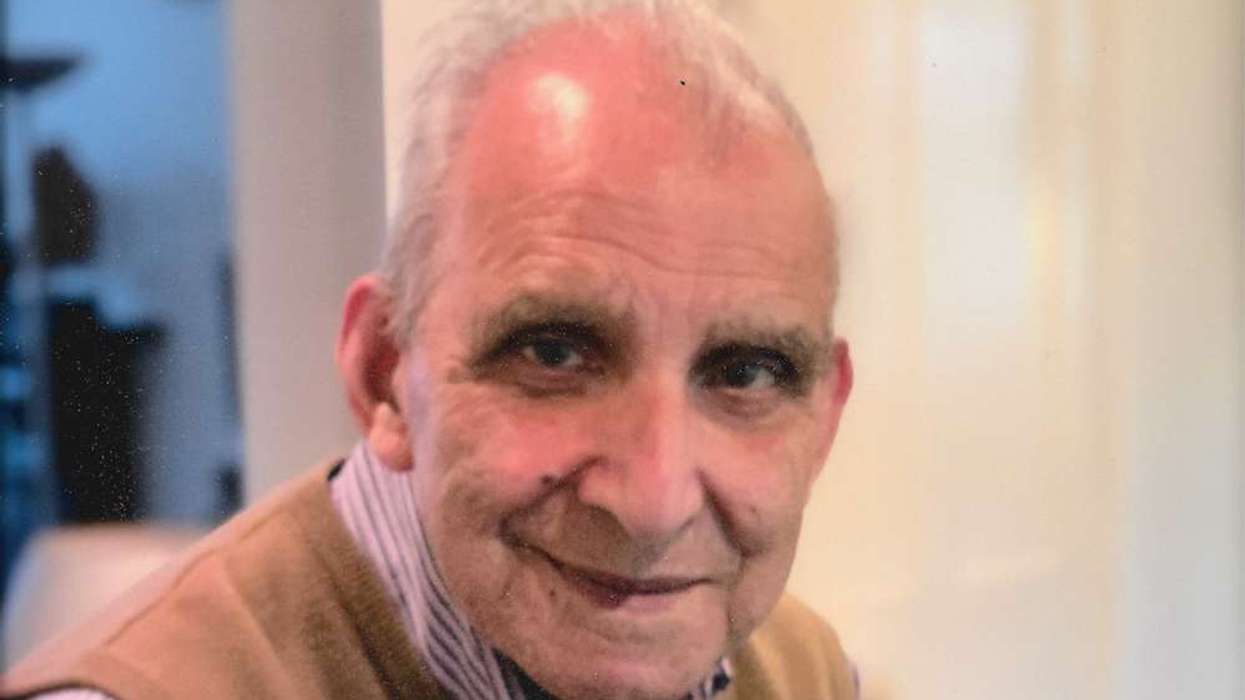

TRIBUTES have been paid to an Asian community leader in Scotland known for his work to establish the Edinburgh Hindu Mandir.
Amrit Lal died on January 13, aged 93 and his funeral was held on February 27.
Both Amrit and his wife Saroj (who died in 2020) were known for their advocacy of race relations and community cohesion in Scotland, where they settled, having arrived as a married couple in 1967.
The couple were remembered at the House of Commons last week.
Tracy Gilbert MP, the member for Edinburgh North and Leith, tabled an Early Day Motion, formally titled ‘Memorial for Amrit and Saroj Lal’ last Thursday (26), just a month after Amrit’s funeral.
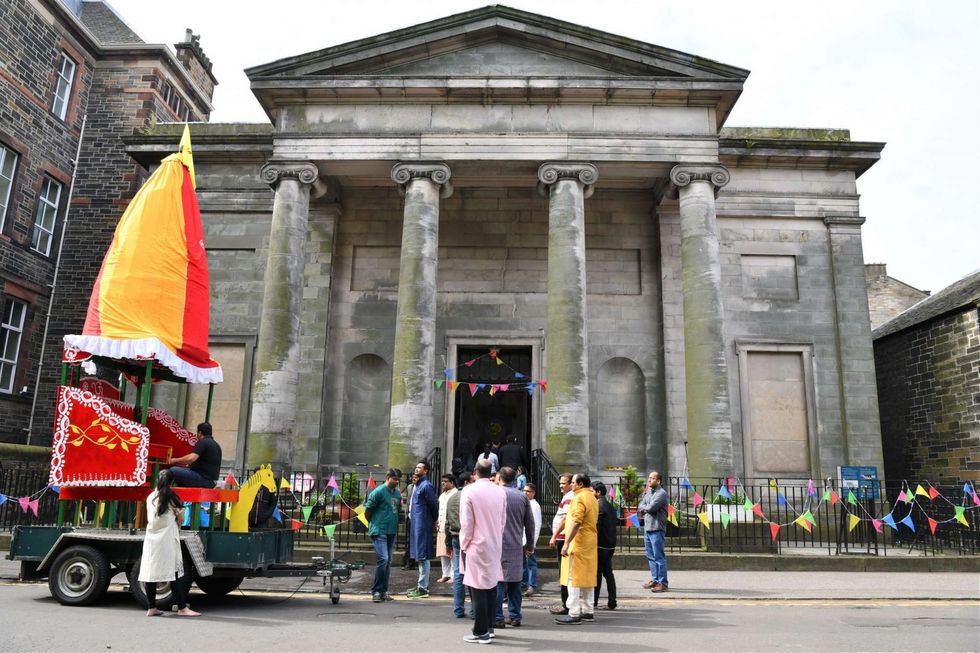 The Edinurgh Hindu Mandir.
It recognised the couple’s contribution to the life and communities of Edinburgh, through the creation of the Edinburgh Hindu Mandir and Cultural Centre at its permanent home on St Andrew Place in Leith.
First minister John Swinney MSP led tributes to Amrit, who led the transformation of a derelict Leith church into the Hindu Mandir.
“Together, Amrit and Saroj embodied compassion, courage and community,” said Swinney. “Their impact endures in the lives they shaped, the institutions they strengthened, and the principles they championed. Their legacy remains an inspiration to us all.”
Public tributes at Amrit’s funeral service included messages from Ian Murray MP, the Lord Provost, Robert Aldridge, and the leader of the City of Edinburgh Council, councillor Jane Meagher.
Amrit Lal Tangri was born on September 9 ,1932, in Jandali Kalan, Punjab, British India. He first arrived in Southampton in 1952, with little money, limited English and no contacts, to take up an apprenticeship with Albion Motors in Glasgow. He then returned to India in 1962 when he married Saroj.
In the early 1980s, Edinburgh’s Hindu families had no permanent place of worship. Prayer meetings and festivals were held in borrowed halls and community centres, a makeshift arrangement that community members were determined to change. In 1981, they formed an organising committee, and around the mid-1980s Amrit became president of the Edinburgh Hindu Mandir.
Paying tribute to his father, son Vineet Lal said, “His outlook was shaped by an Arya Samaj upbringing, grounded in the teachings of the Vedas and a belief in gender equality, education and seva (service).
“He believed institutions had to be built carefully, honestly and for the long term. Every decision had to withstand scrutiny; every pound was accounted for.”
In 1989, following negotiations with the City of Edinburgh Council led by his wife Saroj, the organisation acquired a disused church on St Andrew Place in Leith.
The building was cold and derelict. It took two years to make the ground floor fit for purpose. Amrit oversaw the fundraising, planning and renovation that followed, working alongside committee members and volunteers to create a temple on a new first floor and a cultural centre on the ground floor.
On November 13, 1993, the temple held its first Diwali in its new home.
But the place of worship was not the only gift the couple gave the city.
Vineet said, “Supported by Amrit, Saroj campaigned for and established Ganga Ghat on the River Almond, a first for the UK: a dedicated site where families of any faith could immerse the ashes of their loved ones in accordance with their beliefs.
“My father was present for the first official immersion, the ashes of Surendra Chandarana, in 1994.”
From the 1990s, Amrit and Saroj were involved in building Edinburgh’s emerging interfaith networks. Amrit also served on the board of the Minority Ethnic Carers of People Project (MECOPP), supporting minority ethnic carers.
After Saroj’s death on March 12, 2020, he lived more quietly, sustained by his memories and a nostalgia for his childhood in Punjab.
“He will be remembered as a true gentleman: a noble, caring man of immense integrity, whose legacy will long outlast him and his beloved Saroj,” said Vineet. “In the stones of the Edinburgh Hindu Mandir, and in the sacred waters of Ganga Ghat, where, fittingly, the ashes of both Amrit and Saroj were finally laid to rest, their shared vision for the city endures.”
Saroj became one of the first Asian women to teach in an Edinburgh school in the 1970s. She dedicated her life fighting for equal opportunities.
Amrit is survived by son Vineet, daughter Kavita and granddaughter Isha.