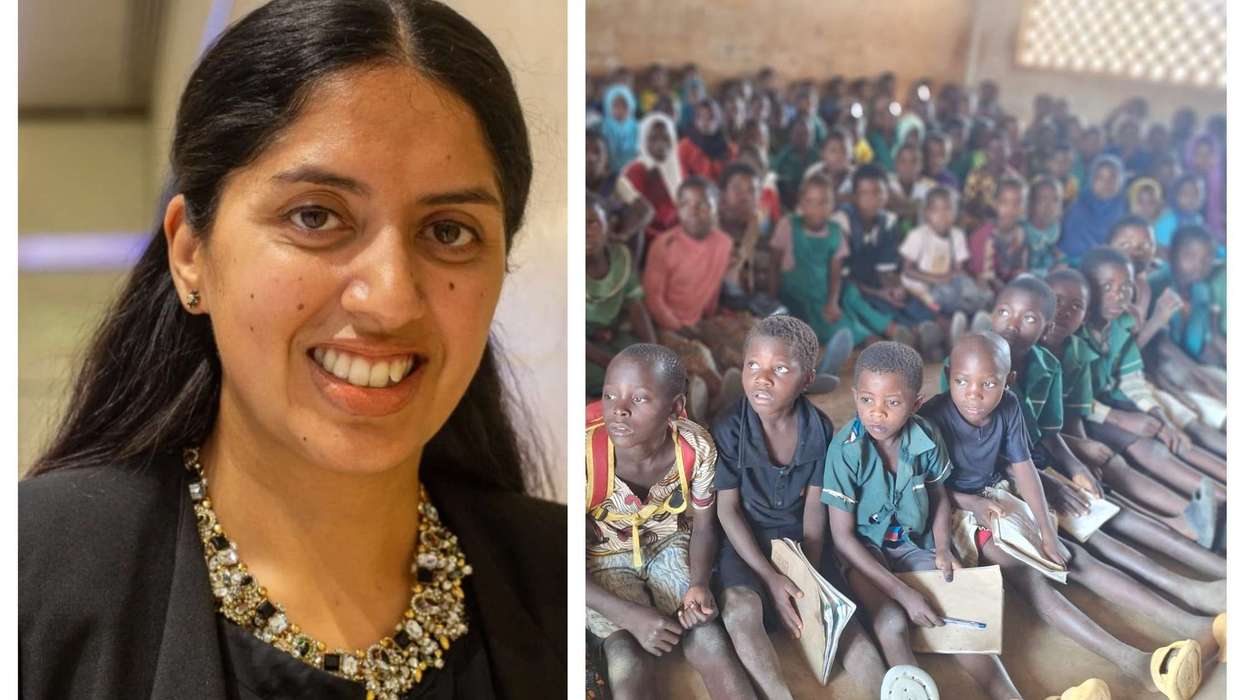

AMARA SHARIF works in inclusion, diversity and equity at a Big Four firm, but a visit to Malawi in late 2024 led her to start something outside her professional role. That experience resulted in the creation of Pepala, a not-for-profit organisation that redirects surplus stationery, books and sports equipment from the UK to schools in Malawi.
Pepala, set up in January 2025, works with corporate donors and industry bodies to prevent unused educational materials from being sent to landfill and instead place them in classrooms.
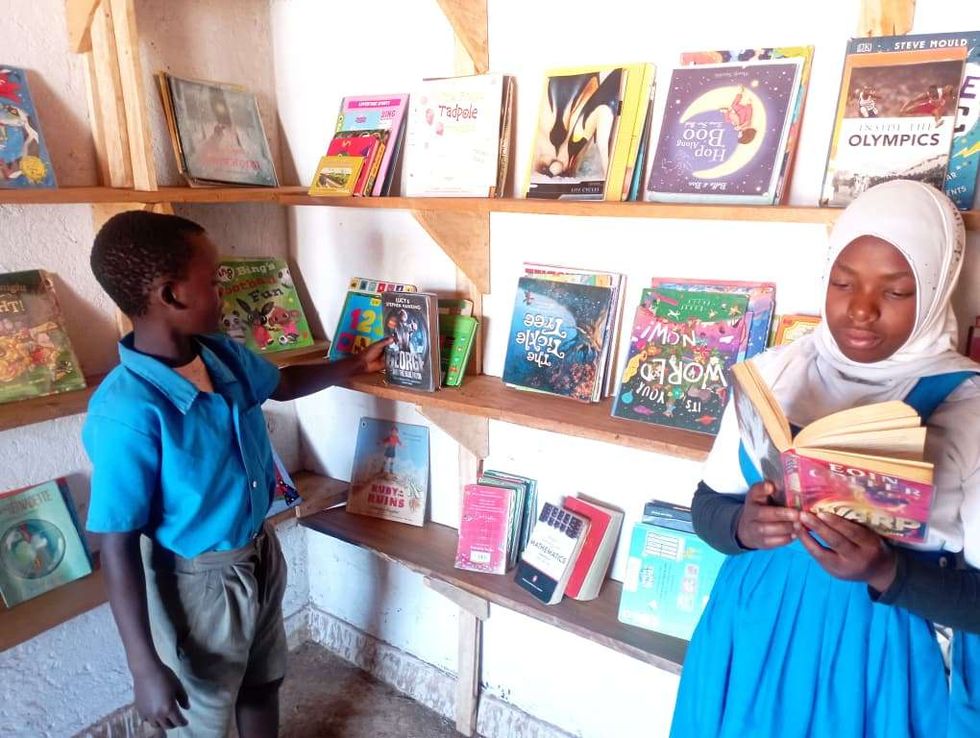
It has partnered with the British Promotional Merchandise Association and received surplus stock from organisations including KPMG, Britvic, Stabilo and Sue Ryder. In its first year, Pepala has diverted more than 70,000 items from landfill to classrooms and helped establish the first libraries in two Malawian state primary schools.
 Pepala founder Amara Sharif turned surplus stationery into classrooms in Malawi, supporting education through a sustainable social enterprise.Photo provided by Amara Sharif
“I went to visit Malawi in October 2024 and it was a charity deployment which was, it was a food feeding programme,” Sharif said. “Schools in Malawi don't get lunch subsidised by the government whereas in the UK we do, we're quite lucky we get school meals.”
What she saw inside schools stayed with her. “When I visited the schools in Malawi, I think what really took me back or really surprised me was when I saw 300 students sitting on the floor with one teacher and some of the students didn't have a pen,” she told Eastern Eye in an exclusive interview.
“For me, having a pen and a piece of paper is basic human rights for any student, right? It's how you learn.”
She said the schools she visited were government funded and served children from different backgrounds. “These are state schools, they're government funded so you get children from all different types of backgrounds, all different types of faith.”
Returning to the UK without acting was not an option. “And I came back from my 10 days in Malawi and couldn't do nothing. I had to do something.”
The organisation’s name came from a local connection. “Pepala is taken from the root word paper and I can't take any credit for the name, it was a lady that I met out there on my deployment,” Sharif said.
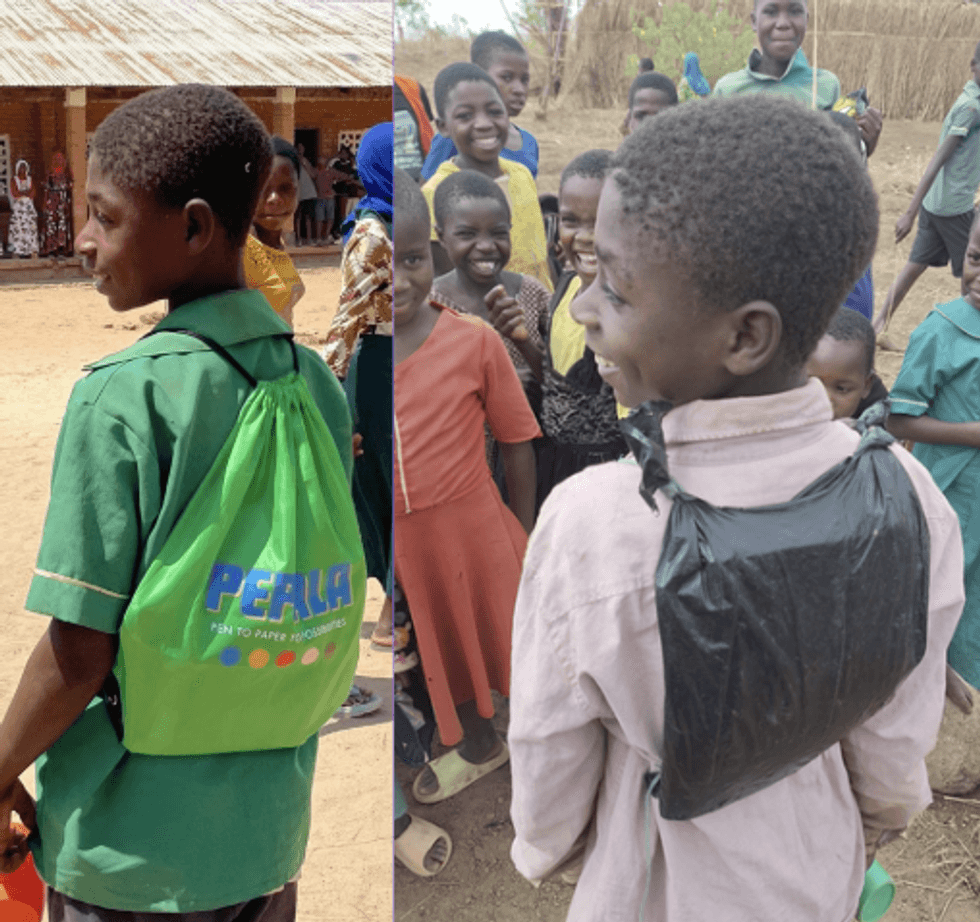
One meeting during the trip proved especially influential. “The boy that I met that really changed my life was this one,” she said. “He's so innovative, so smart that he took a plastic bag, you know, something that we would just throw away in the UK, but this is his lifeline to school.”
 Pepala founder Amara Sharif turned surplus stationery into classrooms in Malawi, supporting education through a sustainable social enterprise.Photo provided by Amara Sharif
She described how he adapted what he had. “He put some rope on either side and he's made a little drawstring bag out of it.”
“That’s when the light bulb moment came to my head,” she said. “Which was, why didn't I do something where we have so much in the UK, we have so much stationery, so many bags.”
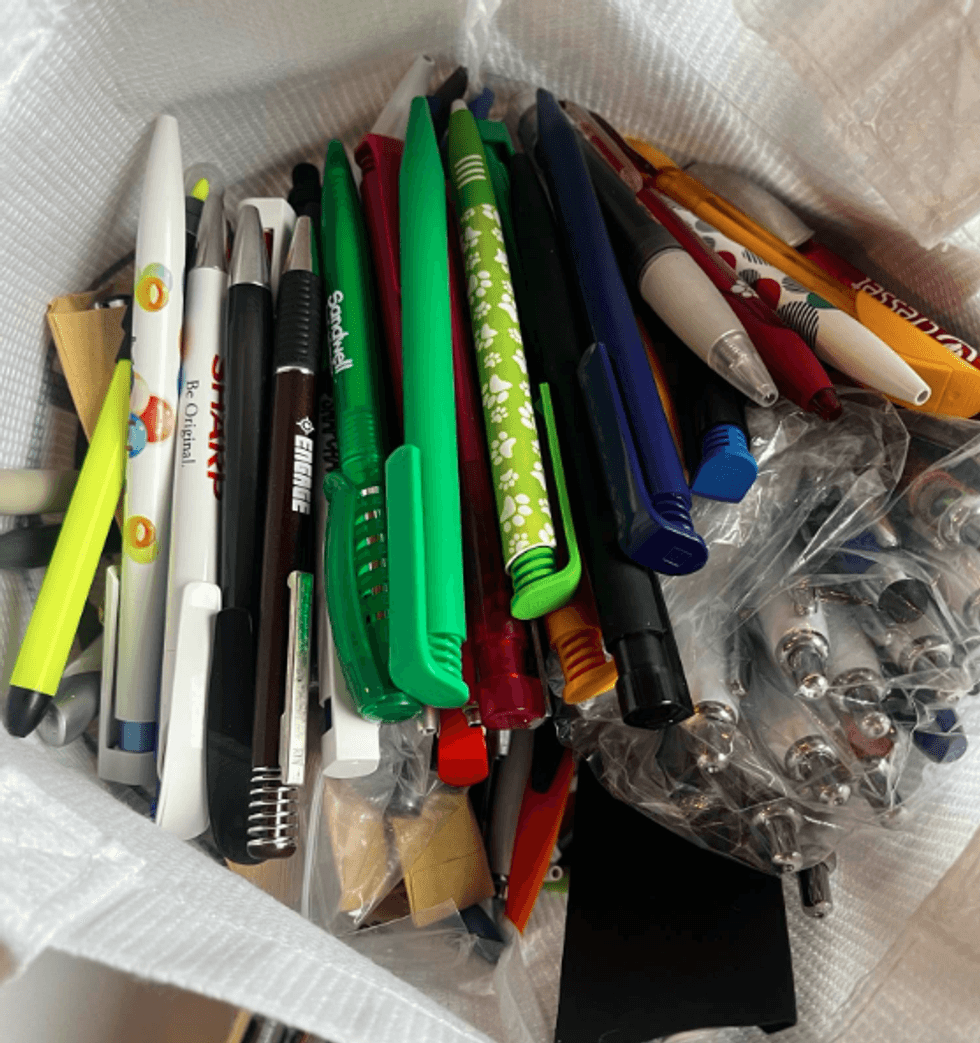
Sharif said her corporate experience had already made her aware of the scale of waste in the UK. “If you look at the statistics in the UK, the two most ordered items across most businesses are pens and notebooks,” she said. “These are thrown away and sent to UK landfill every single day because companies change their brand.”
Pepala’s model focuses on reuse rather than disposal. “What we do with Papala is a sustainable non-profit,” Sharif said. “So we say, don't throw your stuff away because recycling actually harms the environment.”
“Give it to us. What we do is we box it up, we pack, repackage it, we send it to schools in Malawi.”
 Pepala founder Amara Sharif turned surplus stationery into classrooms in Malawi, supporting education through a sustainable social enterprise.Photo provided by Amara Sharif
Since launching in January 2025, Pepala has worked with a range of organisations clearing unused stock, including books, pens, backpacks, water bottles and clothing. One of its most significant developments has been helping establish libraries in Malawian schools, where libraries were previously not part of the school system.
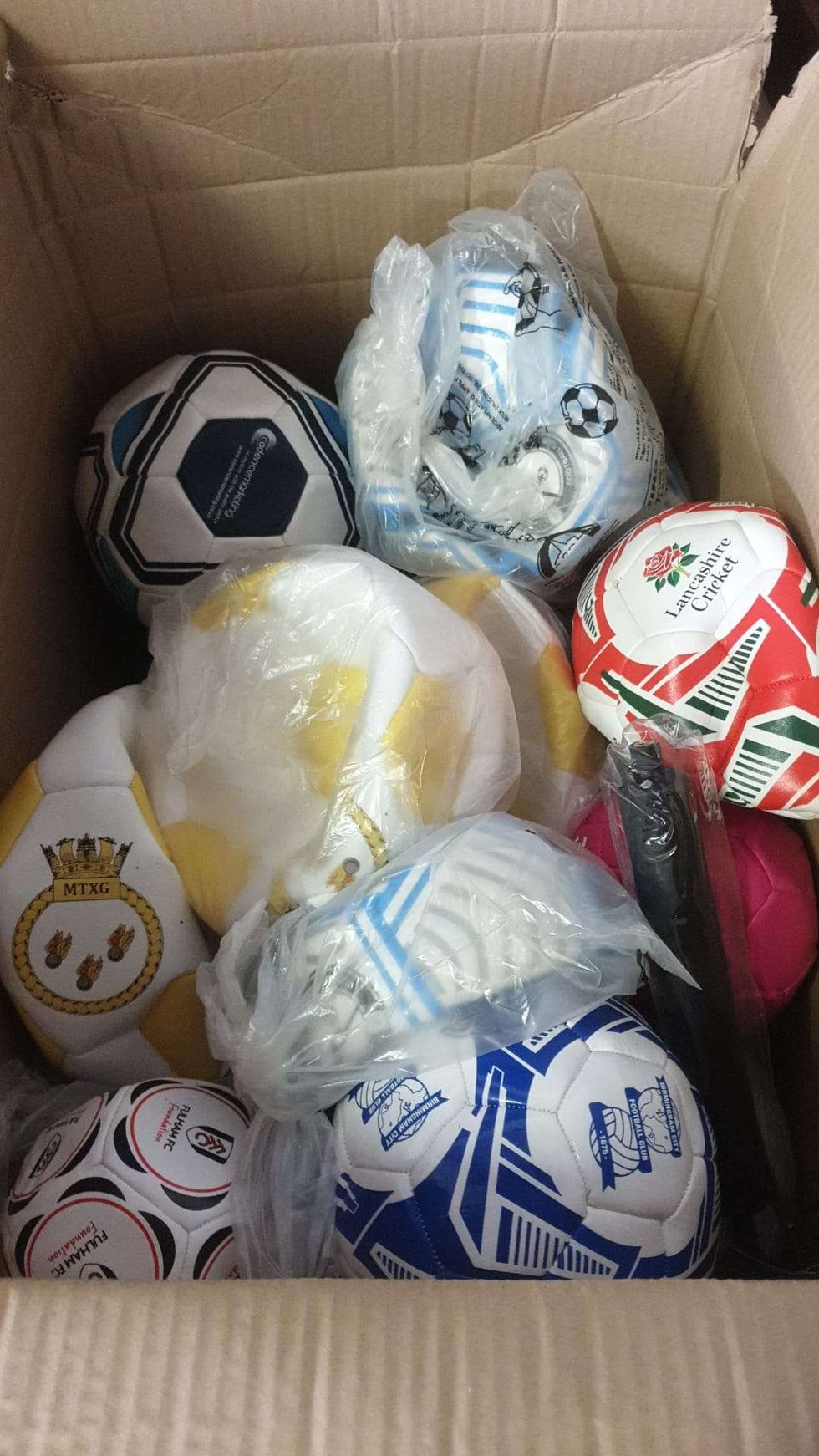
Sports equipment also forms part of Pepala’s work. Sharif said the cost of basic items such as footballs is out of reach for many schools, given local wages. Donated equipment has therefore become an important addition to shipments.
 Pepala founder Amara Sharif turned surplus stationery into classrooms in Malawi, supporting education through a sustainable social enterprise.Photo provided by Amara Sharif
A key driver of Pepala’s growth has been its partnership with the British Promotional Merchandise Association, which connects the organisation with companies holding surplus stock. Items are collected, stored in the UK and shipped to Malawi through logistics partners.
Pepala currently operates as a Community Interest Company, with charitable status a longer-term goal. Sharif balances running the organisation alongside her professional role and family life. “I don't work on Mondays for KPMG,” she said. “So whilst I have made a decision not to climb the corporate ladder, because for me, that Monday for me is so fulfilling.”
Reflecting on her motivation, Sharif said: “I don't see this as work. I see it as something that I absolutely love.”
Pepala continues to appeal to individuals and organisations with surplus items. “We could have rescued surplus stationery, surplus stock, anything useful for schools we will take,” she said. More information on how to support or donate to Pepala is available at www.pepala.org.uk.