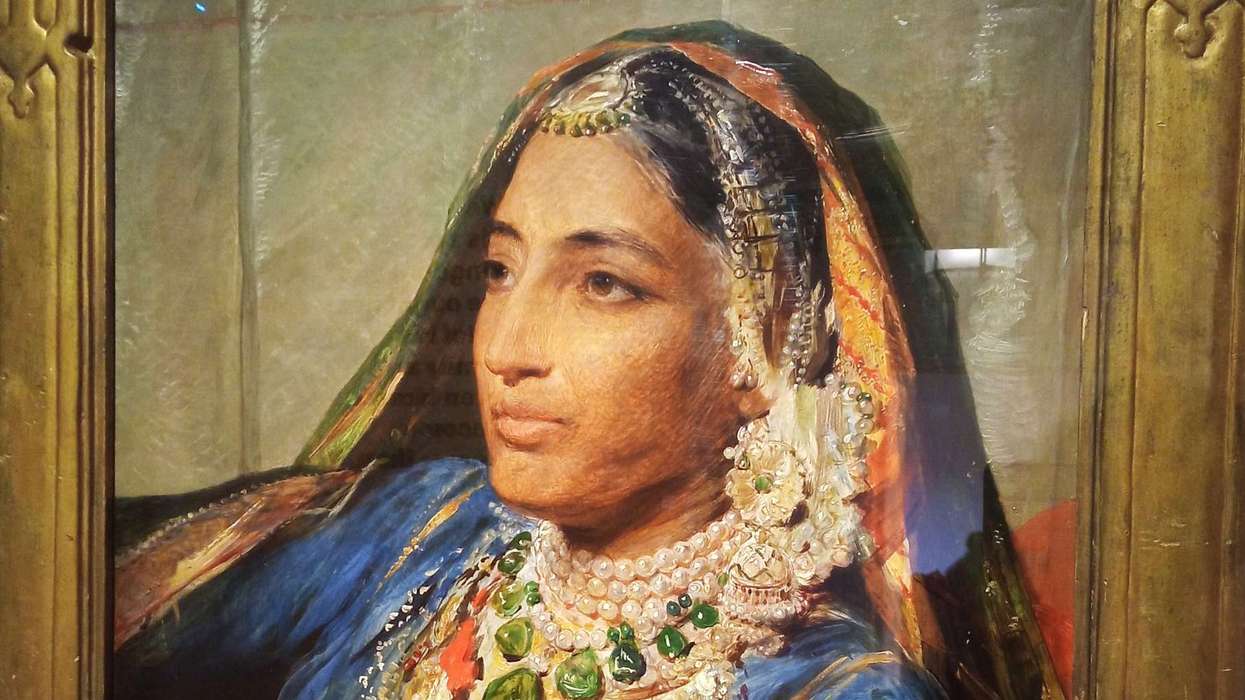

A NEW exhibition at Kensington Palace reveals that the three daughters of Maharajah Duleep Singh – Bamba, Catherine and Sophia – wanted to extend the fight for women’s rights from Britain to India.
The sisters also came to resent the harshness and unjustness of imperial rule in India, even though they themselves were treated like royalty in the UK.
Much is already known about Sophia, the youngest of the three who was a strong supporter of the suffragette movement in Britain, even though she herself had a privileged position in society as the goddaughter of Queen Victoria, Empress of India.
The exhibition, The Last Princesses of Punjab: The story of Sophia Duleep Singh and the women who shaped her, shows Bamba, Catherine and Sophia were politically aware women who understood how the Sikh kingdom of their grandfather, Maharajah Ranjit Singh, “the Lion of the Punjab”, had been snatched away by the British.
They tried even after the Partition of India in 1947 to get back their lands.
The dramatis personae in the story include three queens – Queen Victoria (May 24, 1819 – January 22, 1901); Maharani Jind Kaur (c. 1817 – August 1, 1863); and Maharani Bamba (July 6, 1848 – September 16, 1887).
Jind was the youngest of Ranjit Singh’s wives. Their son, Maharajah Duleep Singh (September 6, 1838 – October 22, 1893), was brought to Britain at the age of 15 after the British annexation of the Punjab and is famous for “gifting” the Kohinoor diamond to Victoria.
Duleep’s wife, styled Maharani Bamba (July 6, 1848 – September 16, 1887) in the exhibition, was born Bamba Müller in Egypt, the daughter of a German father and an Ethiopian mother.
The couple had two surviving sons, Victor and Frederick, but the exhibition at Kensington Palace focuses on their three daughters – Princess Bamba (September 29, 1869 – March 10, 1957); Princess Catherine (October 27, 1871 – November 8, 1942); and Princess Sophia (August 8, 1876 – August 22, 1948).
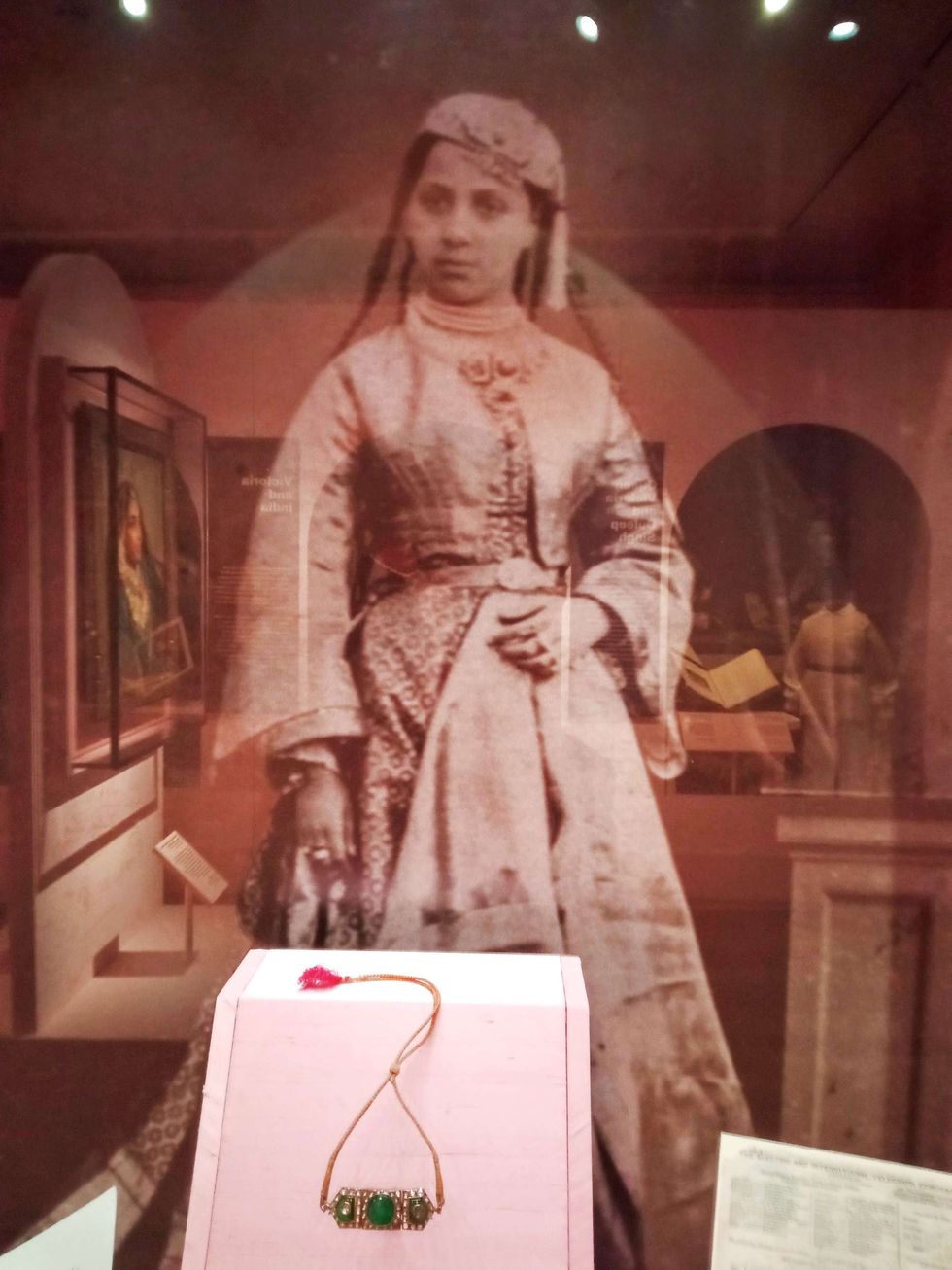 Maharani BambaKensington Palace
The exhibition was initially to mark Sophia’s 150th birth anniversary on August 8, this year, but has been widened to set the lives of the three princesses against the tumultuous political and social changes taking place in Britain and in India.
The British exercised their own brand of cruelty on Duleep, who was converted into a Christian (rather like Shylock in The Merchant of Venice), brought to Britain as a young boy, separated from his mother for many years, and turned into a huntin’, fishin’, “country gentleman’. Victoria had particular affection for him. But when he wanted to assert his Sikh identity and reclaim his kingdom, he was prevented from returning to India.
His daughters, brought up in England as Christians, remained true to their faith, but realised with passing years that their heritage had been stolen from them. The exhibition has been honest in portraying the essential tragedy of their lives that Duleep and his daughters were destroyed by aristocratic English kindness.
But there were important moments in the lives of the three Punjabi princesses. Bamba and Catherine were sent to Sommerville College, Oxford, where an evocative black and white photograph from 1891 shows another Indian woman in the group – Cornelia Sorabji, the first woman to study law at the university (the historian Kusoom Vadgama has written at length about Sorabji’s place in history). Bamba also made the Somerville hockey team.
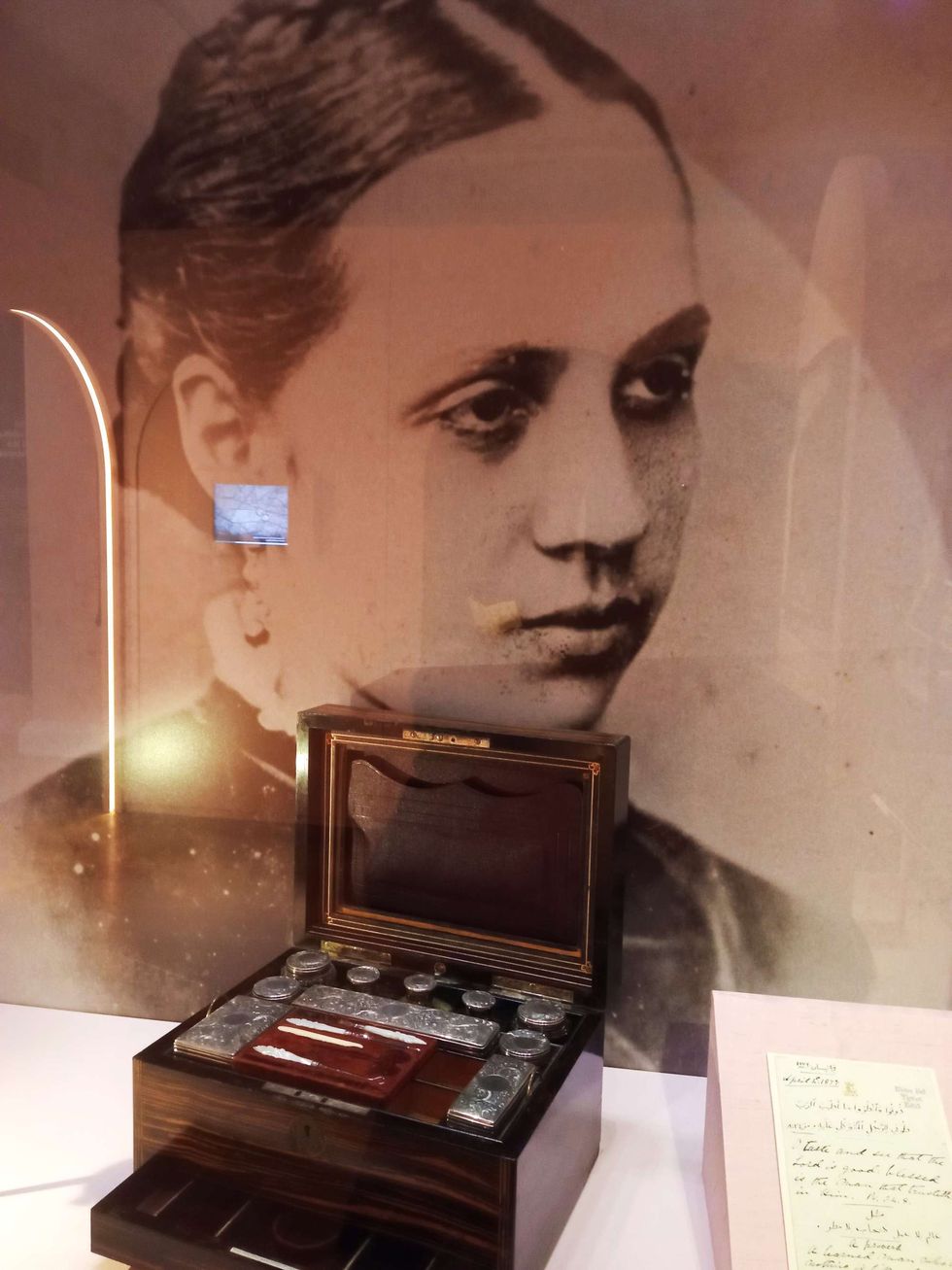 A portrait of Maharani Bamba above her dressing table set on displayKensington Palace
On a visit to India in 1906, Bamba and Sophia met two of the leading lights of the Indian freedom movement – Lala Lajpat Rai and Gopal Krishna Gokhale.
The artist Chila Burman has been commissioned to do one of her signature neon installations, depicting two prominent Indian women activists – Sarojini Naidu and Mithan Lam – who met Sophia when they came to Britain in 1919 to petition the India Office for women’s suffrage as part of the India reform acts.
In 1902, the princesses went to India to attend the Delhi Durbar, which celebrated the coronation of Edward VII. Although he did not attend, the pomp and splendour of the British Raj was displayed by the viceroy, Lord Curzon. The princesses realised that behind the ostentatious display of imperial wealth and power, famine and poverty stalked the land.
Sophia, who merits a blue plaque at Faraday House, her grace and favour residence near Hampton Court Palace, volunteered as a nurse during the first World War, worked 37 hours a week at Isleworth Hospital, looked after Indian soldiers, and kept a scrapbook on her encounters with them.
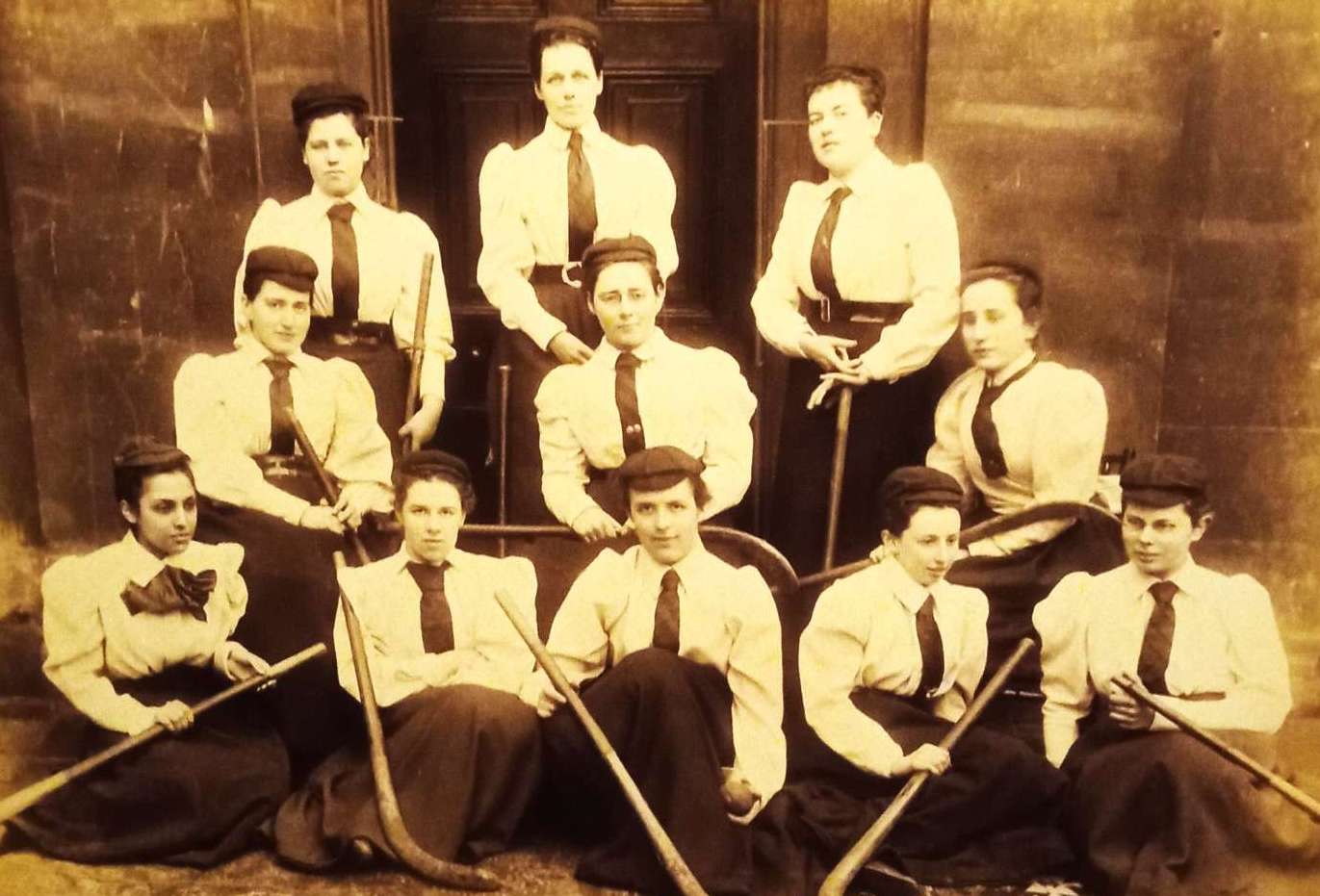 Princess Bamba with the Somerville College hockey team in 1894Kensington Palace
Bamba, who became “the keeper of the flame”, made it her mission to be a thorn in the side of the British as she tried, unsuccessfully, to claim back her kingdom. She left a comfortable life in England and chose to live in Lahore, where she was buried in 1957 in the gora kabristan – the section of the cemetery reserved for whites. As none of the family had children, the dynasty ended with Bamba. As Sophia had predeceased her, Bamba travelled to the UK to collect her sister’s ashes for interment in Lahore. Bamba’s belongings ended up in the Lahore Fort Museum.
Maharani Jind was allowed to join her son, Duleep, in London for the last two years of her life. When she died in 1863, Duleep took her ashes to India. As he was not allowed into the Punjab, her ashes were interred in Nashik by the banks of the Godavari river. Later, they were moved to Lahore to rest alongside her husband’s samadhi.
Eastern Eye was given a tour of the exhibition, first by its curator, Polly Putnam, and then by Dr Mishka Sinha, who was brought in by Historic Royal Palaces as curator of inclusive history.
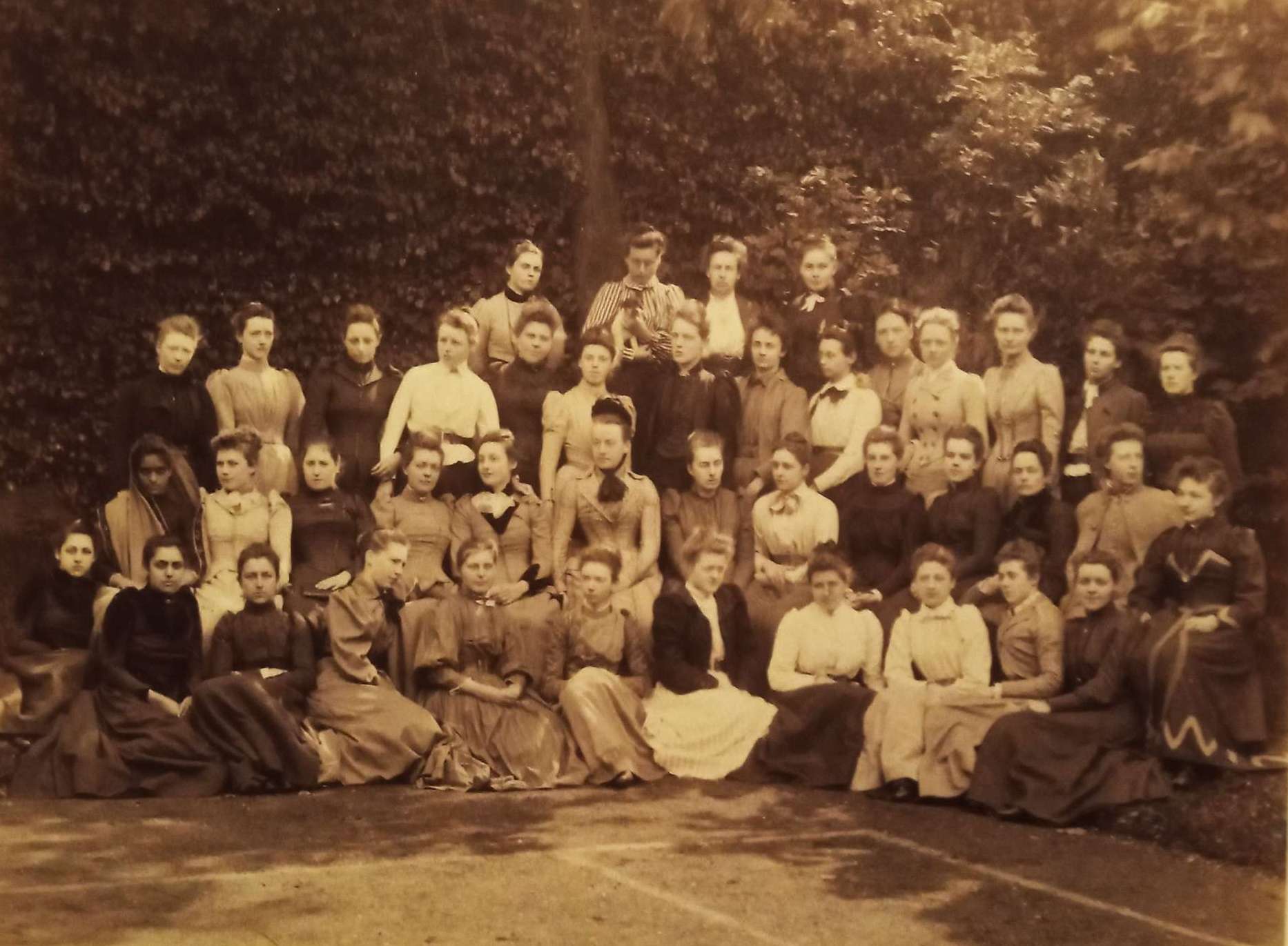 Princess Catherine and Princess Bamba with Cornelia Sorabjiat Somerville College, Oxford, in 1891Kensington Palace
Asked whether the exhibition had relevance to contemporary society, Putnam replied: “There’s a living legacy to these women’s stories. I suppose women’s rights are always something that are fought for, rather than something that happens automatically. Even today, women always have to be on their guards for things. In Sophia and Catherine, we have great examples of people who always stood out for other women. Princess Bamba was the most conscious of her royal heritage.
Putnam added: “It’s a difficult exhibition because we cover so much history. We start with the Anglo-Sikh wars, the annexation of Punjab, the Indian rebellion of 1857. Then we go through to the women’s suffragette movement. We even touch on the Nazi persecution of Jews all the way up to Partition. There’s huge history that’s covered. But it’s amazing that the lives of these women touch all of this history. Hopefully through (117) objects and through their personal stories, you’ll get a sense of their characters.” Sinha said that in Lahore, Bamba introduced a Punjabi aristocrat called (Umrao Singh) Sher-Gil to a Hungarian woman (Marie Antoinette Gottesmann). Their daughter turned out to be the famous artist, Amrita Sher-Gil.
 Mithan Lam in a neon installation by artist Chila BurmanKensington Palace
She also said the story of the princesses is better known in Britain than in India: “The British Sikhs are a strong voice in Britain, and have a very strong presence. And there are wealthy individuals who have been collectors and advocates. But in India, nobody knows about them, really. When Sophia and Catherine go to India, they’re not particularly well known there. This is a story with lessons for India.”
The Last Princesses of Punjab: The story of Sophia Duleep Singh and the women who shaped her is at Kensington Palace until November 8, 2026.