
Skip to content
Search

Latest Stories

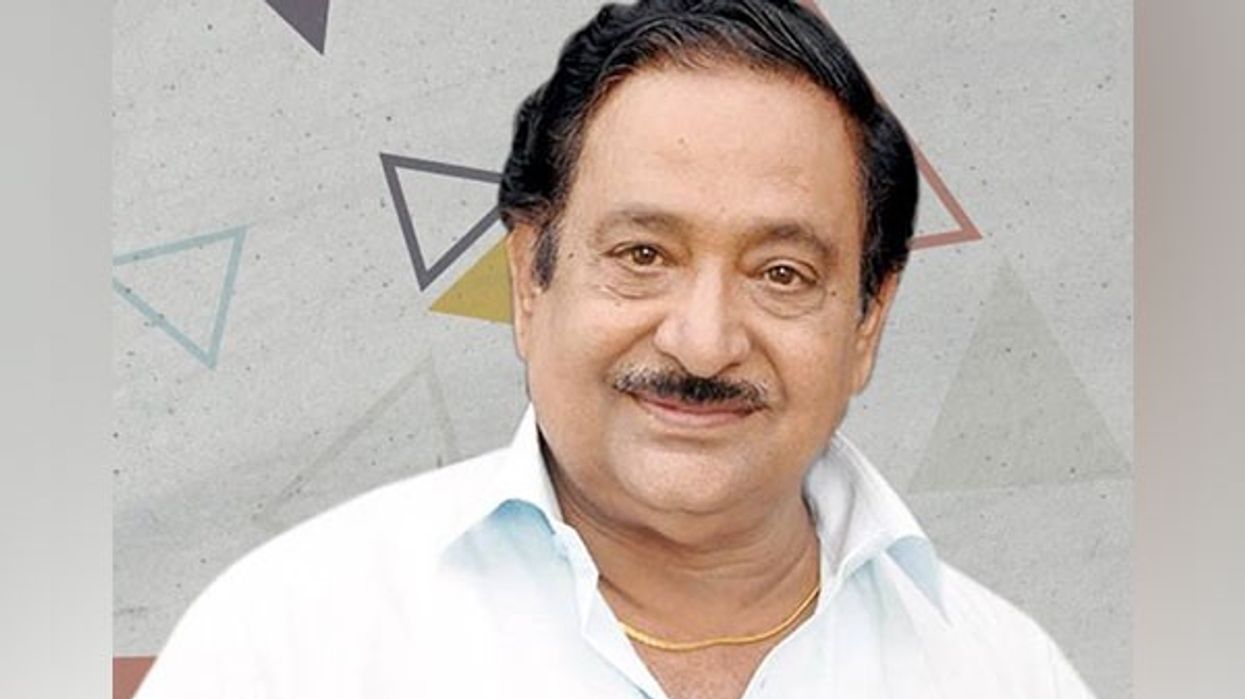
Telugu actor Chandra Mohan passes away after cardiac arrest

He is survived by his wife, Jalandhara, and two daughters.

Telugu actor Chandra Mohan passes away after cardiac arrest

Veteran Telugu actor Chandra Mohan passed away after a cardiac arrest at Hyderabad's Apollo Hospital on Saturday.

The 82-year-old actor breathed his last on Saturday morning around 9.57 am at Hyderabad's Apollo Hospital, Jagan, the public relations officer (PRO) of Apollo Hospital, informed.


According to reports, the final farewell and last rites are scheduled to take place in Hyderabad on November 13, Monday.

Mallampalli Chandrasekhar Rao, popularly known as Chandra Mohan, left an indelible mark on the Telugu film industry.

Born on May 23, 1943, in Pamidimukkala village in the Krishna region of Andhra Pradesh, he entered the Telugu film industry in 1966 with the release of Rangula Ratnam, for which he won the Nandi award for best actor from the state government.

He acted in a number of films, including Shankarabharanam, Seethaamalakshmi, Padaharella Vayasu, Siri Siri Muvva, and Chandamama Raave.

He won two Nandi Awards and one Filmfare Award South.

He was also a cousin of veteran director and Dada Sahab Phalke award winner K Vishwanath.

He is survived by his wife, Jalandhara, and two daughters.

More For You

Samir Zaidi

Two Sinners marks Samir Zaidi’s striking directorial debut

Samir Zaidi, director of 'Two Sinners', emerges as a powerful new voice in Indian film

Indian cinema has a long tradition of discovering new storytellers in unexpected places, and one recent voice that has attracted quiet, steady attention is Samir Zaidi. His debut short film Two Sinners has been travelling across international festivals, earning strong praise for its emotional depth and moral complexity. But what makes Zaidi’s trajectory especially compelling is how organically it has unfolded — grounded not in film school training, but in lived observation, patient apprenticeships and a deep belief in the poetry of everyday life.

Zaidi’s relationship with creativity began well before he ever stepped onto a set. “As a child, I was fascinated by small, fleeting things — the way people spoke, the silences between arguments, the patterns of light on the walls,” he reflects. He didn’t yet have the vocabulary for what he was absorbing, but the instinct was already in place. At 13, he turned to poetry, sensing that the act of shaping emotions into words offered a kind of clarity he couldn’t find elsewhere. “I realised creativity wasn’t something external I had to chase; it was a way of processing the world,” he says. “Whether it was writing or filmmaking, it came from the same impulse: to make sense of what I didn’t fully understand.”

Keep ReadingShow less