
Highlights
- SS Rajamouli filmed a key sequence for Varanasi at a new Hyderabad-based facility
- Developed at Annapurna Studios with Mihira Visual Labs and global partners
- Custom-built stage designed to meet large-scale action requirements
- Technology expected to reduce shoot time and improve planning
Building scale without leaving India
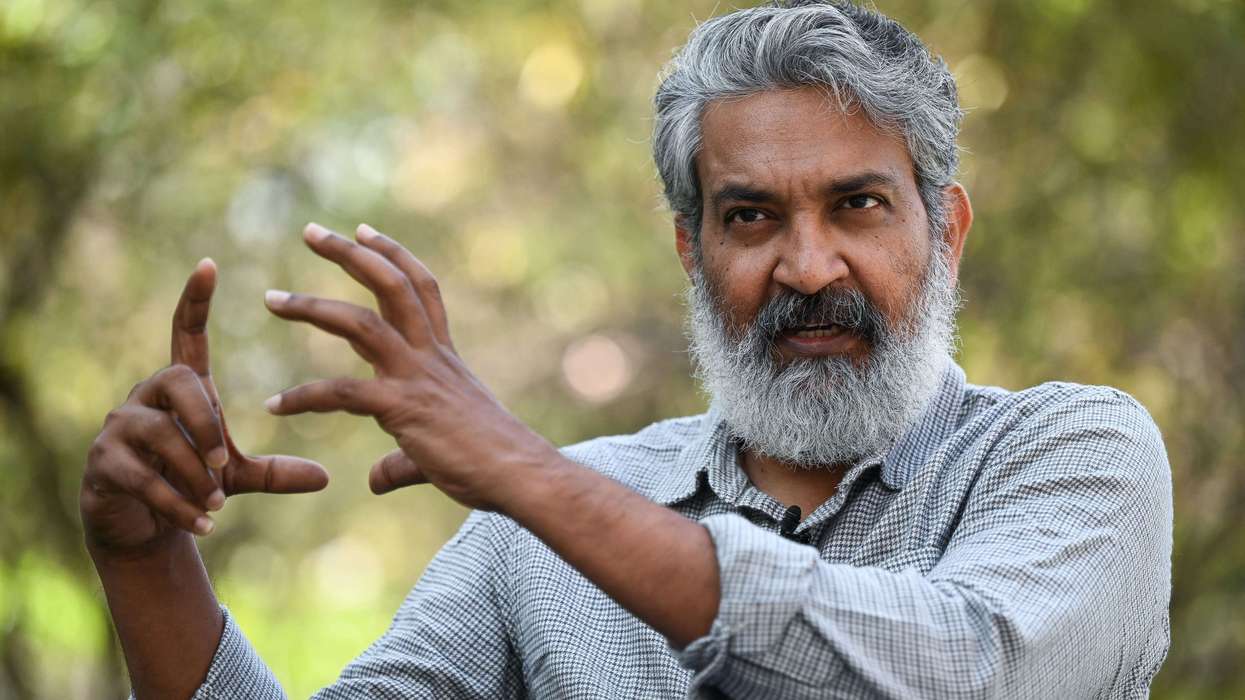
For Varanasi, SS Rajamouli chose not to rely on overseas infrastructure, instead filming a crucial sequence at a newly launched motion-capture facility in Hyderabad.
The director inaugurated the A&M Motion Capture stage at Annapurna Studios before shooting scenes for the film, which stars Mahesh Babu and Priyanka Chopra Jonas. Built in collaboration with Shobu Yarlagadda’s Mihira Visual Labs and supported by Animatrik Film Design, the studio positions itself as one of the most advanced of its kind in the country.
The decision reflects a shift within Indian filmmaking, where large-scale productions are increasingly looking to develop technical capabilities locally rather than depend on facilities abroad.
Why motion capture is changing production
Motion capture is reshaping how complex scenes are planned and executed. It allows filmmakers to pre-visualise action sequences in a fully digital environment, offering flexibility to adjust camera angles, blocking and movement without repeated shoots.
The process also extends to performance capture, recording both body movement and facial expressions, which can then be applied to digital characters. The technique has been widely used in films such as Avatar, where performances are translated into detailed digital figures.
At Annapurna Studios, the facility integrates high-resolution tracking systems and real-time visualisation tools, allowing directors and cinematographers to refine scenes before stepping onto a physical set. This reduces uncertainty, shortens shoot schedules and helps control costs.
A custom-built stage for Varanasi
The facility was designed to meet specific demands. Standard motion-capture stages typically offer around 20 feet in height, but Rajamouli required a 36-foot capture volume to stage elevated action.
Meeting that requirement meant a significant increase in budget and technical complexity, but the team proceeded in order to secure the project. According to studio CTO CV Rao, the goal was to deliver both scale and precision.
The sequence shot for Varanasi is expected to run close to 25 minutes. With international performers and crew working to fixed schedules, the timeline for installation, testing and training was tight. The system was ultimately put to the test when Rajamouli began filming, and the first successful take confirmed the setup was ready for full-scale production.
The project signals a broader shift as Indian studios invest in advanced tools to support increasingly ambitious storytelling while keeping production more efficient.