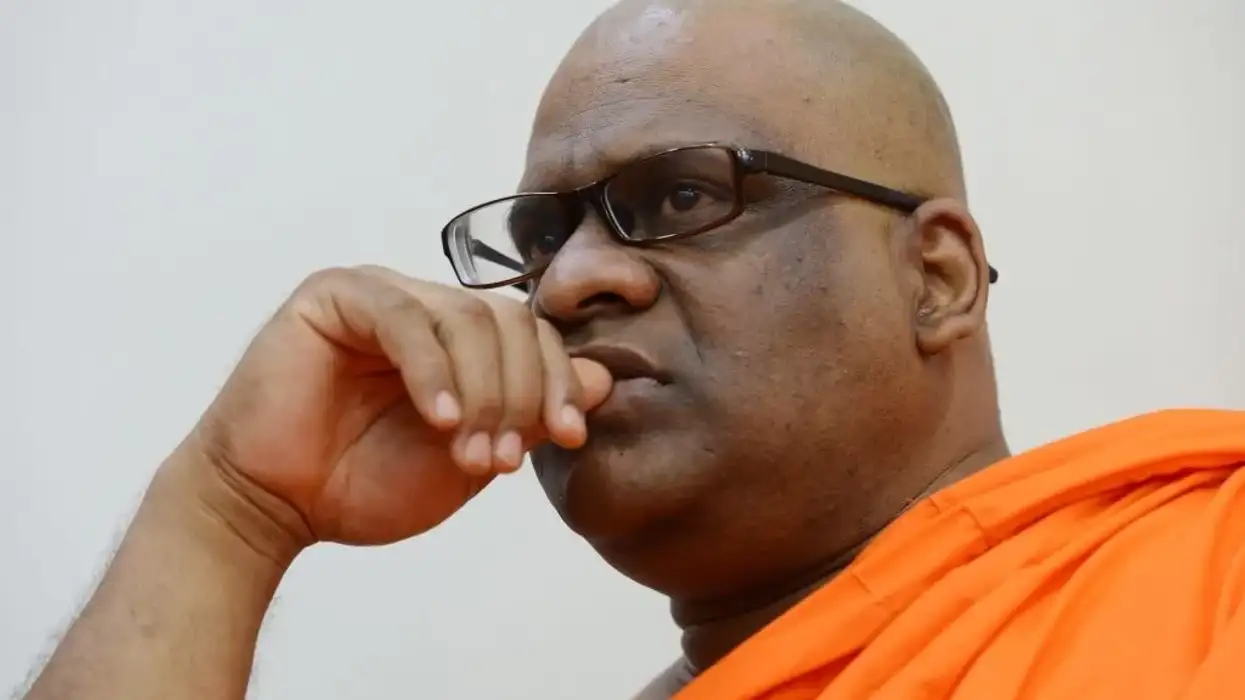

A firebrand Sri Lankan Buddhist majority hardliner monk was on Thursday sentenced to four years of rigorous imprisonment for Islamophobic comments made in 2016.
Galagodatte Gnanasara, 49, was additionally fined Rs 100,000 by the High Court here.
The monk, who was running an anti-Muslim minority campaign since 2012, was charged for comments made at a press conference held in March 2016.
During the last court hearing, held mid-February, the monk had tendered an apology to the Muslim community for the distress caused by his public comments.
The High Court ruled that Gnanasara, who led the Bodu Bala Sena (BBS) or the forces of Buddhist Power, had caused religious and communal disunity through his comments.
In 2018, Gnanasara was arrested for contempt of court but later won a presidential pardon.
He later explained that he was not against the Muslim minority but was unhappy about the conduct of the Sinhala majority politicians for not addressing the community's concerns. He was trying to address them through the BBS movement.
The monk was found guilty on two indictments filed by the Attorney General linked to complaints filed with the Criminal Investigations Department by former Governor Azath Salley, and former parliamentarian Mujibur Rahuman, according to media reports. (PTI)





 Bhavan London
 Bhavan London