
LAST week, Asia House published its annual economic outlook report1 for the year ahead, underlining the importance of the “Asian century” to the global economy, with highlighted trends including rising domestic demand, innovation and digitalisation.
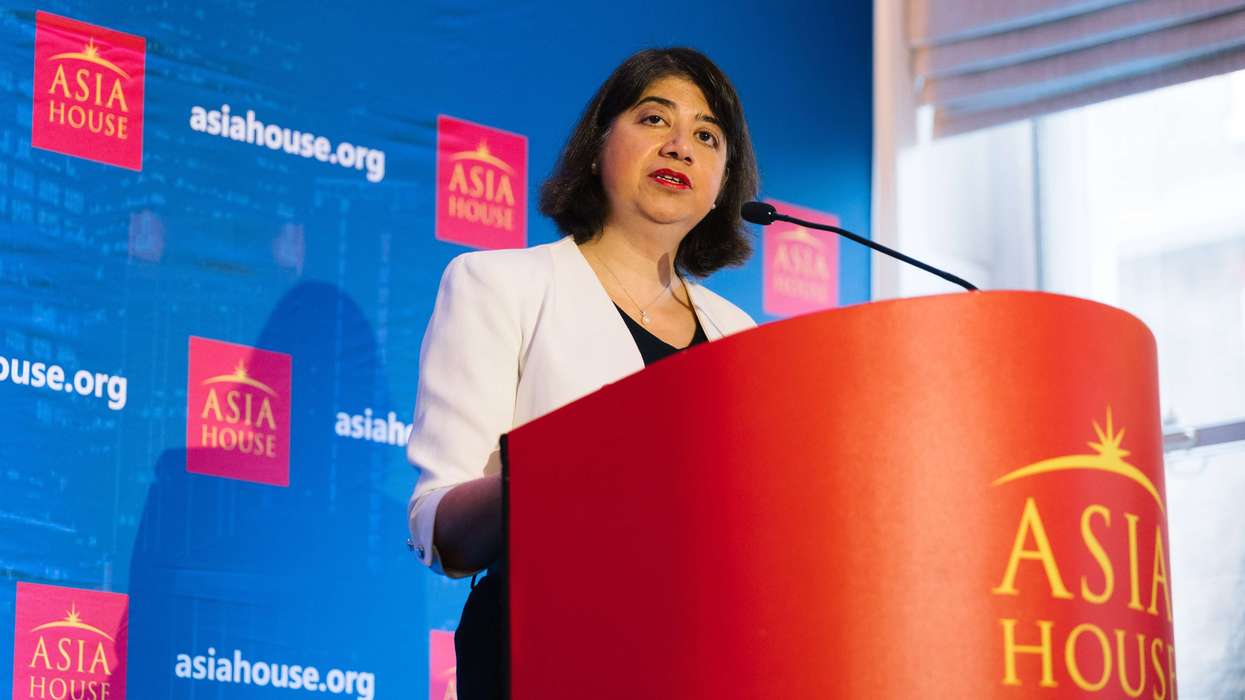
As the UK’s minister for the Indo-Pacific, I gave a keynote speech in response to the outlook’s findings, in which I set out why the UK’s deepening partnerships across the Indo-Pacific are essential to global stability, growth and security.
This year marks 30 years since Asia House was established, so it was also significant to note that the belief of the founders – that the UK and Asia could benefit from deeper mutual understanding, stronger dialogue and long-term partnership – is a purpose that has stood the test of time. Our shared history is now helping shape our shared future.
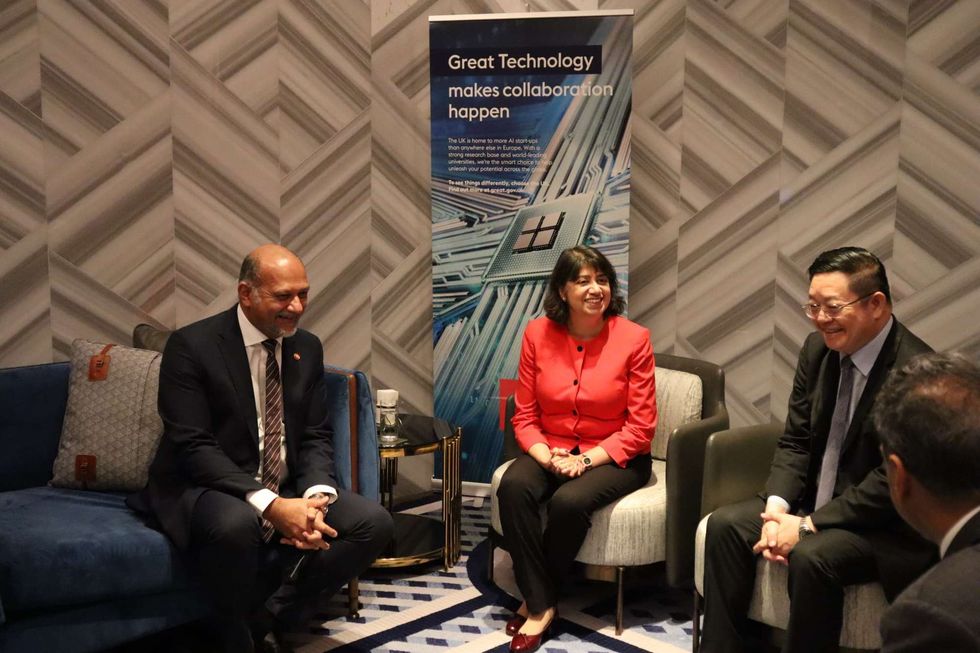 Seema Malhotra at the UK-ASEAN AI Innovation Summit in Malaysia last yearRob Watson Photography
When I spoke at the Indo-Pacific Conference in December, I made the case that the world has become more fragmented and unstable. Indeed, it is precisely because of this new age of fragmentation that we must do more across the Euro- Atlantic and Indo-Pacific. We know that by 2050, more than half of global growth will come from the Indo-Pacific region.
However, Asia House’s outlook also highlights the challenges – trade uncertainty, an economic slowdown in China, shifts in US inflation. But while the region’s fundamentals remain strong, those strengths aren’t guaranteed. Security challenges could undermine progress. In today’s times, the Euro-Atlantic and the Indo-Pacific security contexts are indivisible.
Our response to this new age of fragmentation will shape our future and is the reason why Britain must enhance its partnerships in the Indo-Pacific, partnerships based on trust and investment for the long term. This is not a binary choice between conceding to great-power politics or retreating to the comfort of mid-20th century multilateralism. It recognises that we cannot rely on one single way of working together. We will need to use different partnerships for different challenges, whether multilateral, plurilateral, bilateral, reflecting a modern, pragmatic foreign policy grounded in our progressive values.
This is true in the Indo-Pacific, where our partnerships are long and deep. Our economies and societies have never been more connected, creating opportunities for our people and our businesses, while protecting our supply chains. This is because the partnerships we build abroad make us more secure at home.
The UK enters these relationships with significant strengths. We are the world’s sixth-largest economy and the third-biggest destination for global investment. Our leadership in AI, green energy, creative industries, education, and life sciences is underpinned by our 10-year Industrial Strategy.
Our relationships are partnerships in practice, not theory. India is one of the clearest examples. During my visit in November, momentum behind the Comprehensive Economic and Trade Agreement was unmistakable. The deal could boost trade by more than £25 billion, and British companies I met are excited to seize the opportunities – including businesses already thriving in India like Tesco, Revolut, BT and Marks and Spencer.
And to name just a few others: our new Free Trade Agreement with South Korea will build on a relationship that has grown by a third in the past decade. Singapore remains a gateway for innovation and capital, with a trading relationship worth more than £25bn. Meanwhile, UK trade with southeast Asia grew by around 15 per cent in the year to June 2025.
Our accession to the modern, dynamic CPTPP trade bloc in 2024 has brought new opportunities, from tariff-free UK exports to Japan to our first ever free trade agreements with Malaysia and Brunei. We will agree a new strategic deal with Indonesia, supporting UK economic development and cooperation across both our nations
Across every country, the message is the same: we are building innovative partnerships for a shared, stable and prosperous future. That’s why the UK maintains an enduring commitment to a free and open Indo-Pacific. It is the choices we make today that will influence our shared stability and prosperity tomorrow.
This is also our approach to our relationship with China. At the China Britain Business Council reception in November, I spoke about our approach, that it is important we co-operate where we can, challenge where we must and compete where we have different interests. Strong on security, strong on the economy. A clear-eyed approach, in our long-term interests. These principles guide everything we do. Choosing not to engage with China is no choice at all, and dialogue matters.
Looking ahead to 2027, the UK will hold the G20 presidency, and our focus will lie squarely on global growth – working with partners including across the Indo-Pacific to address the major issues facing the world economy.
In November 1945, Clement Attlee reminded the country in his Mansion House address that “we cannot build a heaven at home” if there is unrest and instability outside. He spoke at a time that demanded ambitious international partnership. Our era is different, but the principle remains true. And we must always remember that the partnerships we build abroad also make us more secure at home.
Seema Malhotra is the parliamentary under-secretary of state (minister for equalities) and parliamentary under-secretary of state (Indo-Pacific)
1. https://www.asiahouse.org/2026/01/15/ asia-house-annual-outlook-2026/