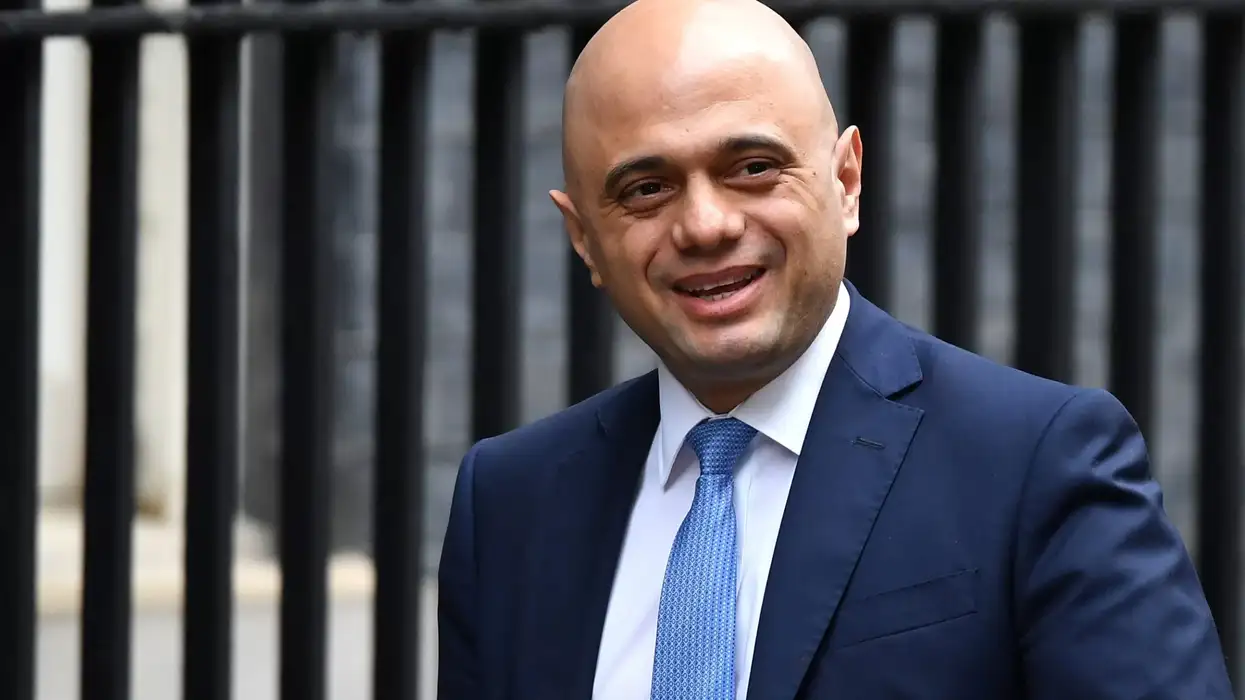
FORMER chancellor Sajid Javid will replace Matt Hancock as the UK's health and social care secretary, Downing Street said on Saturday (26).
Javid resigned as chancellor early last year after he refused to fire his political advisers as demanded by Johnson.
The British Asian MP from Bromsgrove has previously held the so-called great offices of state - as home secretary and chancellor.
Javid, whose parents migrated from Pakistan, joins chancellor Rishi Sunak, home secretary Priti Patel and COP26 president Alok Sharma as Asians holding powerful portfolios in the UK government.
A former banker who became an MP in 2010, Javid was quickly promoted from economic and financial secretary to the Treasury to secretary for business, then culture and later, communities and local government.
Prior to his career in politics, Javid, who graduated from Exeter University, worked in business and finance. He is said to have been the youngest vice president at Chase Manhattan Bank, aged 25.
He later moved to Deutsche Bank in London to help build its business in emerging market countries.
One of five brothers (one of whom has passed away), Javid has often spoken of how he grew up in one of the roughest streets in Bristol. His father was a bus driver and his mum was a seamstress.
Javid and his wife Laura, who is English, are parents to four children.