
AN ACCLAIMED Asian playwright has said it is not an easy time to be a writer anywhere in the world, citing growing attacks on freedom of speech.
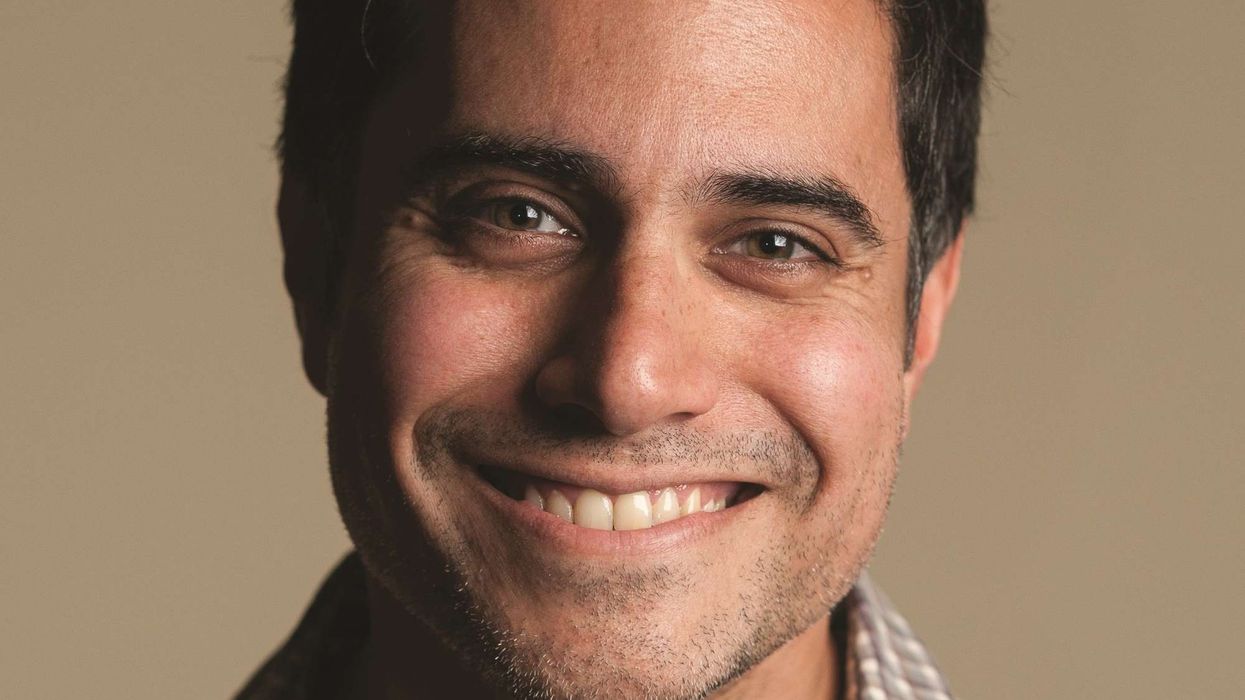
New York-based Rajiv Jospeh, a Pulitzer Prize-nominated writer, told Eastern Eye that freedom of expression is increasingly under threat, not only in the US, but across the globe.
“People are finding it increasingly difficult to express themselves openly,” he said. “Tolerance levels are worryingly low across many spheres of life. In the US, under president Trump, this has become even more apparent.
“It’s not a good time to be a playwright anywhere in the world. But I believe the core values of this country will endure, and ultimately, those values will prevail.”
Joseph’s most celebrated work, Bengal Tiger at the Baghdad Zoo, is currently having its European premiere at the Young Vic in London.
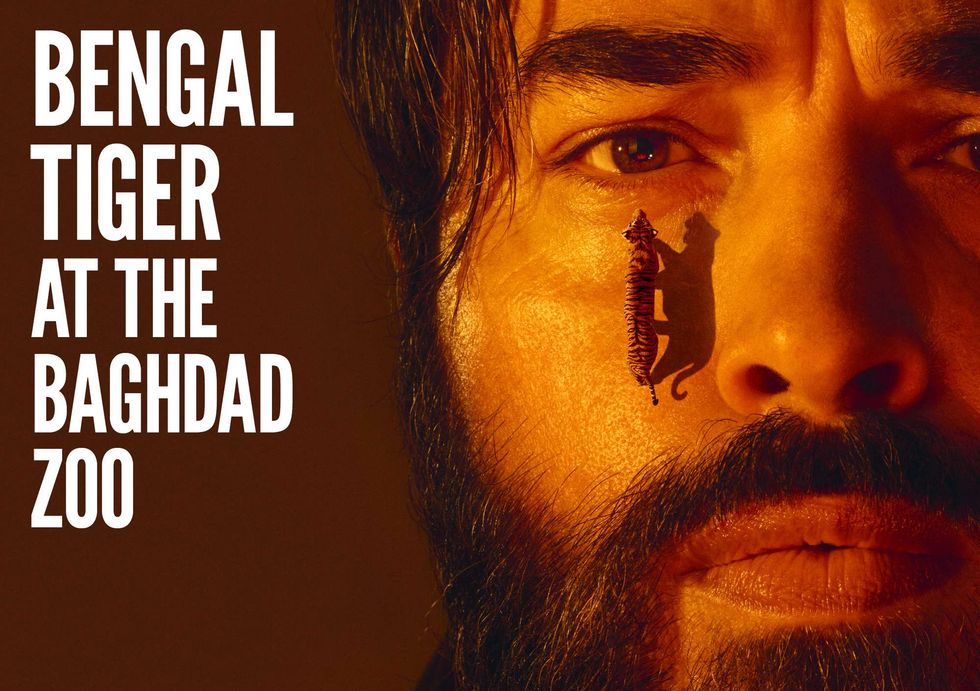 Ammar Haj Ahmad in a poster for Joseph’s play
It is a drama featuring a talking tiger prowling the bombed-out streets of Baghdad during the Iraq war.
Joseph conceived the idea after reading a 2003 news report.
He said, “I read a story that detailed how US bombs had blown open part of Baghdad zoo. The Bengal tiger remained in its pen. All the zookeepers fled, so this poor tiger was sitting there, starving. One of the soldiers, who tried to feed it out of compassion, got his hand mauled. Another soldier shot and killed it.”
For Joseph, then a graduate student at New York University, that grim episode became the seed of a play that combined magical realism with moral inquiry.
“It began as this short scene about the tiger talking… it grew into a story about war, loss and the search for meaning in chaos,” he said.
After its 2009 premiere in Los Angeles and its acclaimed Broadway run starring Robin Williams, Bengal Tiger at the Baghdad Zoo earned multiple Tony nominations and became a Pulitzer Prize finalist.
Now, 14 years later, the play has arrived in London, directed by Omar Elerian.
David Threlfall, best known for Shameless, leads the cast as the Tiger, with Arinzé Kene as the marine Kev and Ammar Haj Ahmad as the Iraqi translator Musa. Hala Omran plays multiple roles including a haunting Iraqi woman.
Elerian’s staging embraces the play’s mixture of dark humour, philosophical reflection and surreal fantasy. The story – with two bewildered marines and an Iraqi translator who encounter the ghost of the tiger – dwells on faith, morality and humanity amid devastation.
Joseph said, “It’s a story about confusion, destruction, and the human will to make sense of it all.”
While illuminating blurred boundaries between predator and prey, soldier and civilian, life and death, Joseph said his focus remained on empathy.
According to him, the play’s characters reflect the “bewilderment and loneliness” he encountered during his time in the Peace Corps in Senegal.
Joseph raised in Cleveland, Ohio, with a mother of French and German ancestry and an Indian father, who he said shaped his view on history.
“As a writer you are required to take on the perspectives of different kinds of people. This helped me to create characters with varied backgrounds. I like history and to make stories engaging the surreal type of storytelling really helps,” the playwright said.
Joseph’s work often probes the psychology of young men caught in systems of violence. He said he wanted, in the future, to create a play based on Indian history as he “can very much relate to it as many of his relatives are in the country”.
As a child of mixed heritage, the writer said he never fully identified as either white or Indian.
That sense of being in between, Joseph added, proved invaluable as a playwright, allowing him to imagine the inner lives of people whose experiences differed from his own.
Themes of restless and disillusioned young men run through much of Joseph’s writing, from his award-winning Guards at the Taj to Archduke — his play about the 1914 assassination of Archduke Franz Ferdinand, which is set to open at London’s Royal Court in 2026 under director Lyndsey Turner, with design by Es Devlin.
These characters, often caught in moments of crisis and defined by low social status, reflect what Joseph sees as casualties of rigid patriarchal systems and the pressures of modern masculinity.
“I’m drawn to the difficult place of male friendship over time. The young men in that story are like precursors to what we now call incels – lost souls searching, desperately, for the meaning of life before it ends. That feels, depressingly, even more relevant now. Especially with the assassination of activist Charlie Kirk, and the attempted assassination of Trump.”
Joseph said he is drawn to the fragile bonds of male friendship under strain, adding that Archduke, first written during the First World War centenary, feels strikingly relevant today amid rising political violence. For the playwright, the young men in that story are early versions of today’s disaffected figures – seeking meaning in a world that seems to be closing in on them.
Bengal Tiger at the Baghdad Zoo is at the Young Vic, London, until January 31