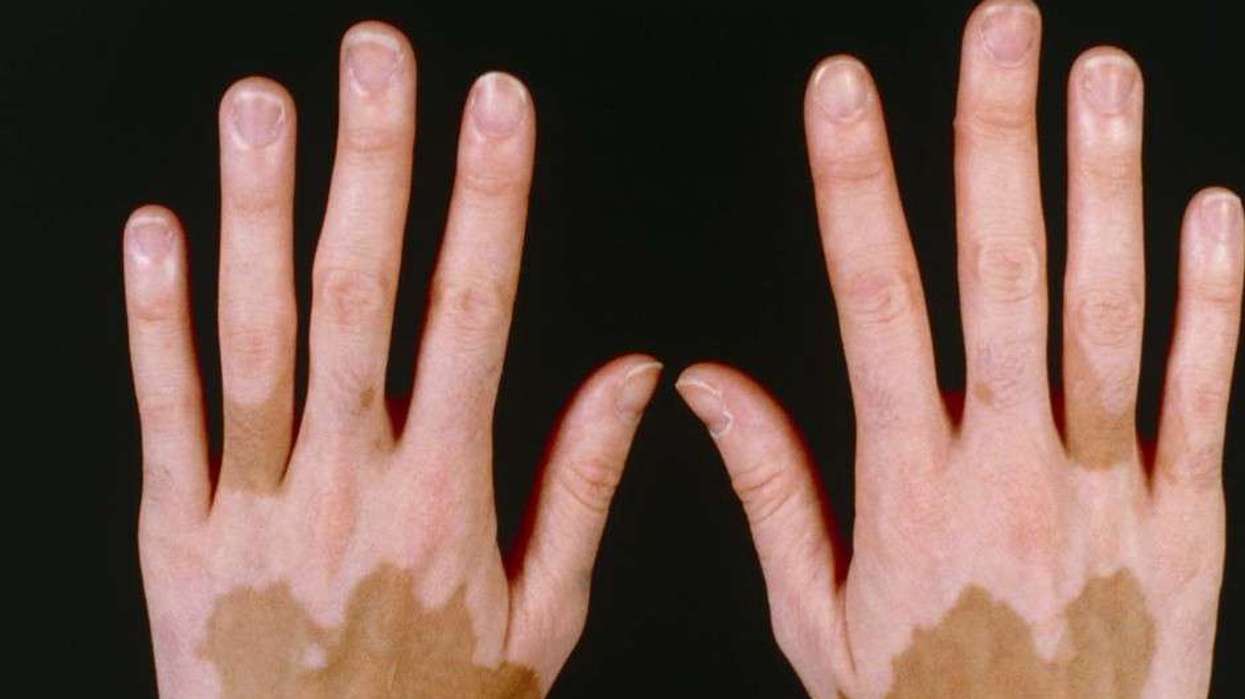

THE NHS will offer a new cream to tens of thousands of people with vitiligo affecting their face, after it was approved for use.
The treatment, ruxolitinib, will be available to nearly 100,000 people aged 12 and over with non-segmental vitiligo, where white patches appear symmetrically on both sides of the face and body.
It will be offered where standard steroid creams have not worked or are not suitable, following a deal agreed by NHS England with manufacturer Incyte and approval by the National Institute for Health and Care Excellence.
The cream is applied twice daily to affected areas, with results usually assessed after about six months. Clinical trials found it significantly improved facial repigmentation compared with a placebo, with many patients seeing at least a 75 per cent return of skin colour in treated areas.
Vitiligo affects around 1 in 100 people in the UK. It is an autoimmune disease in which the immune system attacks melanocytes, the cells that produce melanin. The condition often affects the face, neck and hands.
Professor Meghana Pandit, National Medical Director at NHS England, said: “For many people, vitiligo isn’t just a change in skin colour - it can affect how they see themselves and how they feel every day, particularly when it involves the face.
“For the first time, we now have an approved treatment available on the NHS that can significantly restore skin colour rather than simply covering the condition up. While it won’t be right for everyone, for some people this could make a profound difference to how they feel about themselves.”
The cream was previously rejected for NHS use in August 2025, but was approved following a rapid review and negotiations.
Callum Pickering, 41, from Ipswich, said: “I’ve learned to live with it and accept it more. I’m confident talking about it, but that doesn’t mean I’m not self-conscious. People double-take. Some try not to look, others just stare.
“A treatment that really works and is available to everyone who wants it would make such a difference. Some people are happy to embrace it, and that’s great. But for me, if something could help, it would be life-changing”.
The most common side effects are mild reactions at the site where the cream is applied, including redness or irritation.