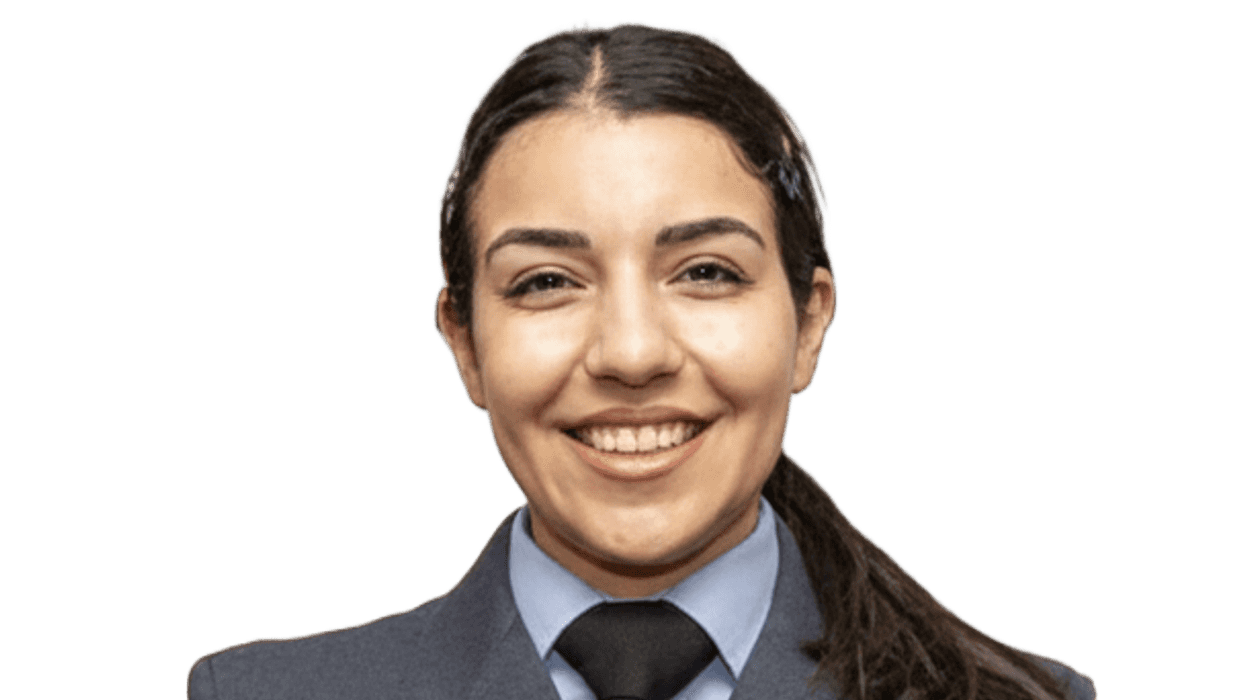

IT IS hard to ignore how enthusiastic Cpl Mikaella Theodoulou is either when she is describing her job in the Royal Air Force or the various opportunities she’s pursued since joining the service.
Originally from Cyprus, Theodoulou’s employment in the RAF falls under a provision where foreign nationals from the Commonwealth can serve in the service.
“I always loved working with maps, so I applied to be an air cartographer,” she told Eastern Eye.
“I saw the job description, and thought, ‘Wow, that job looks great. It looks too good to be true’. And, actually, when I completed my training, it exceeded my expectations. So I feel very lucky, very grateful, that I ended up making that choice.”
Six years in, her passion for the job has not diminished, rather she’s reeling off reasons why everyone should consider a career in the RAF, or the Royal Navy or Army.
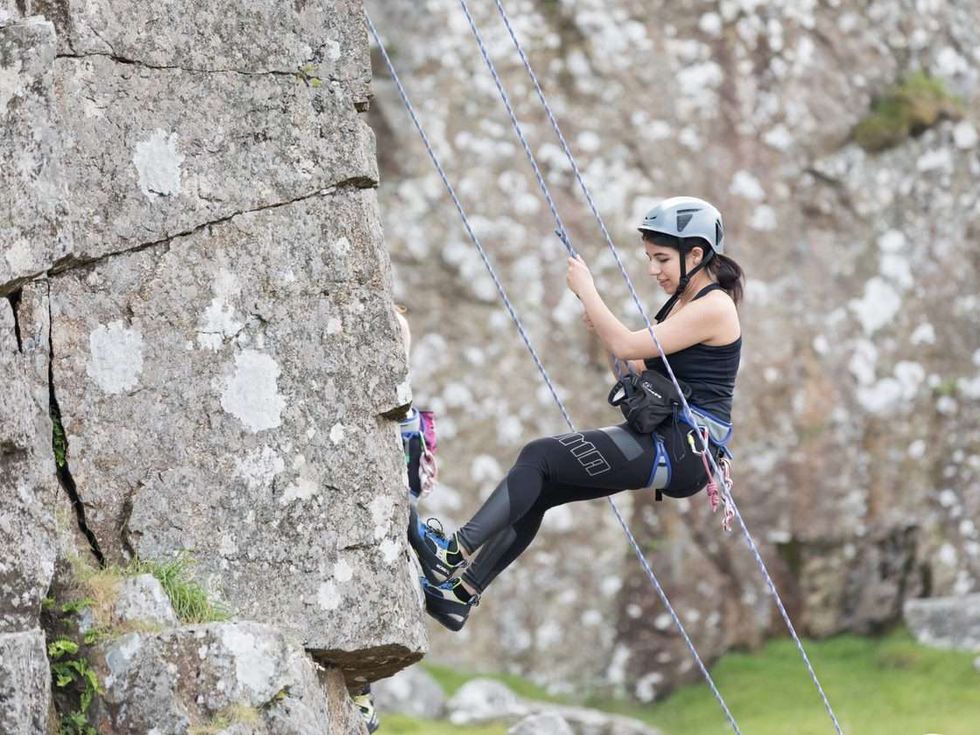 She has travelled to several countries through her work.
“There is a job for everyone, no matter what your interests are. We have chefs, drivers, lawyers, doctors, nurses, mental health experts, radiographers, any kind of job, there are hundreds of roles for everyone to do,” Theodoulou said.
As an air cartographer, based at RAF Northolt, Middlesex, Theodoulou works with air terminal charts that the pilots use while flying.
“Specifically in my section, (we design) terminal approach procedures when the plane is flying – taking off and landing.
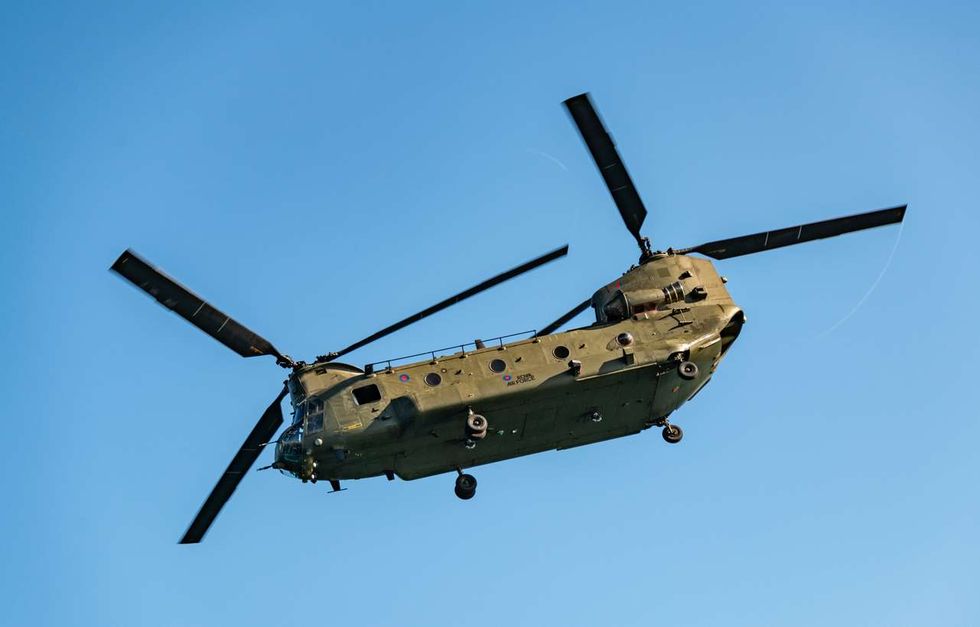 A Chinook helicopter.
“And my section covers 30 countries, about 100 airports, both military and civilians, all the military aerodromes in the UK,” and then added with a smile, “yeah, my unit covers the whole world in general.”
She quickly added, “Okay, it’s really not as complicated as it sounds. It’s just a great job to be in. And the one of the good aspects is, if you’ve got a family, we don’t get deployed, unless you really want to, and you find an opportunity.
“We don’t get posted. We are always based at Ruislip, RAF Northolt.
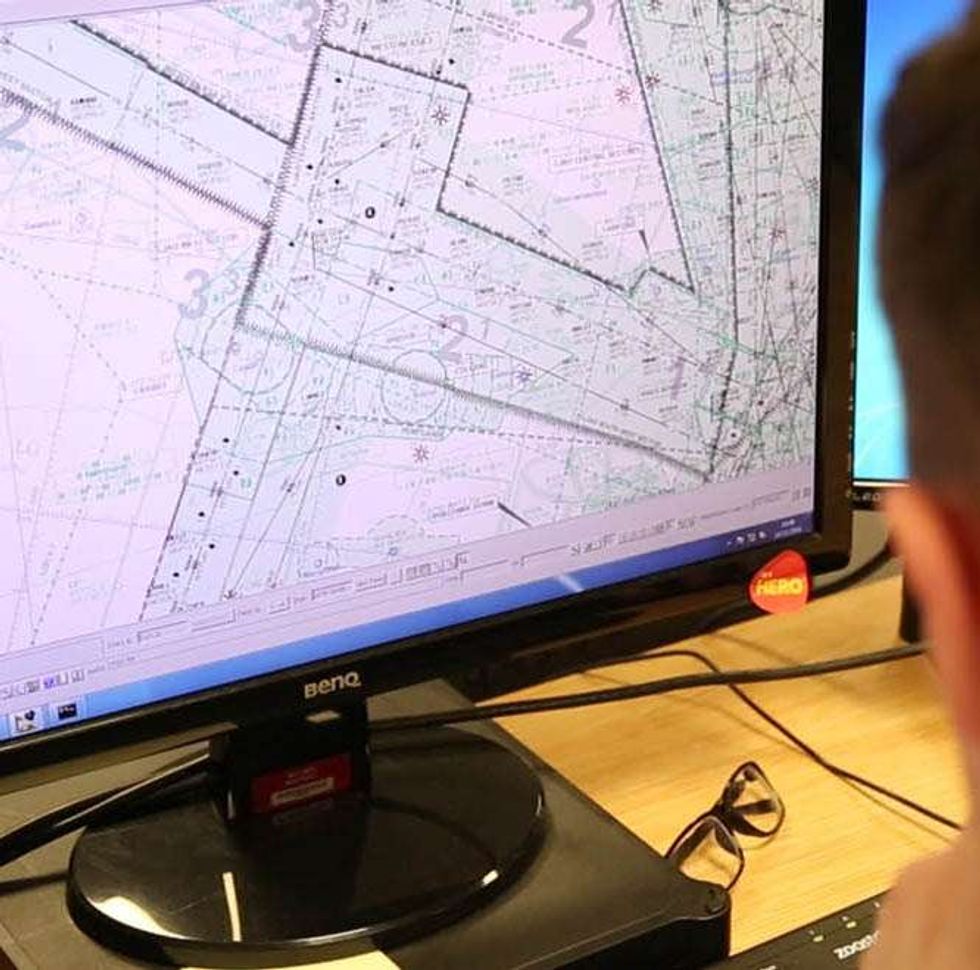 RAF air cartographers design flight charts used by pilots worldwide.
“So, if you have family, you don’t have that stress of moving around.”
What does a week in the office look like?
“We work Monday to Friday. We get all bank holidays off, we have many deadlines and almost daily, we make contact with pilots, air traffic controllers and airfields, and we update all the charts from all over the world.”
Being an air cartographer has its perks, and Theodoulou recalled one cool encounter.
“Last September (in 2024), my warrant officer arranged a visit to RAF Benson (in south Oxfordshire), just to see how the pilots use our products.
“And the pilots were like, yeah, just get on the Chinook and we’ll go for a ride.” While she was not afraid of heights, and described the ride as “amazing”, what Theodoulou did not anticipate was that the back of the aircraft is open, so passengers are also secured with a rope.
“I thought I wouldn’t be scared at all, but we had a rope at the back, it was scarier than in the pictures. It was an amazing, incredible experience,” she said.
During her phase two training, too, Theodoulou flew with the pilots, “just to see how they use everything that we make at work”.
Her immediate team has about 12 people, but the whole unit strength is about 100, “so it’s very small, when compared to other units in the RAF – 70 are regulars and 30 are civilians”.
There are also opportunities that take her outside the office, “I just grab them immediately,” she said.
“You get to grow. And all my line managers have been so supportive, guiding me all the way along.
“Everyone I have met is open to improving and growing and listening to your opinion, no matter what your rank is, and it do-esn’t happen in other militaries.”
Theodoulou also reverse mentored an air commodore who was keen for her feedback.
“He wanted to listen to my journey… because people who have that high a rank, sometimes people are not very honest with them, and they tell them what they want to hear.
“But me, they were actually paying for the truth, like you tell me, what is your opinion?”
She later reels off names of countries she has visited in one year, like a well-heeled traveller, except it is all on work - Poland, Greece and Luxembourg, where she attended courses related to her job.
“The RAF will support that, and not just me personally, but these courses are also open to dependents and spouses, as well,” Theodoulou said.
“If, for example, my husband wanted to become a bricklayer, the RAF will support that and pay part of that course fees. So for people who get deployed and posted, you can imagine how difficult it is for the spouse as well, because they need to change jobs, the children who need to change school.
“The RAF don’t just think about us, they think about our families as well.”
Theodoulou is married, and a mother of two children and narrated an anecdote from her early years in the RAF.
“When I joined, my corporal, he didn’t have any children. Before I even met him, he tried to find nurseries for my baby, and then he gave me options. They were truly a family.”
Theodoulou’s parents brought her to the UK for her first holiday, and her father encouraged her to study in this country.
“When I was 17, I finished school and I got a scholarship to study economics at the University of Surrey. I graduated, but I didn’t really love my degree. I knew it wasn’t for me. “I saw it as my way out of Cyprus. I did a few jobs that weren’t very fulfilling.”
In 2018, owing to a family matter, Theodoulou went back to Cyprus for a year and a half.
There, her mum pointed out how for the first time ever, they were hiring female soldiers in the Cypriot army. “I thought, okay, I’m here for a year. I’ll give that a go, why not?
“By that time, I had given birth to my daughter. I joined the Cypriot army for a year. It was a crazy experience. But I learned so much, I decided that’s what I wanted to do when I came back in the UK. So I applied for the RAF and I joined.”
Theodoulou also has a secondary responsibility as a recruitment ambassador. “We go out with the recruitment team, and we promote the RAF to increase its visibility. We attend school and university fairs for potential future students.
“What I found is many younger girls think the Royal Air Force is what they see on TV. They would be sent to the frontline or that they would be a pilot. This is not the case – I work in an office. We do have the element of fitness, and you still have to go through the training, but it is not what you think it is.
“My best advice is to go into a careers office and try to explore every role.”
She added, “I wish I did it sooner, but then again, I wanted to have the journey that I have.
“I am grateful that I joined a bit of a more mature age of 26 and not younger, because I get to appreciate the job, having worked in a different country and having worked in the private sector in the UK. This is, I think it’s one of the main reasons I appreciate this job so much, like every day, I am so grateful, and think this is, like, the best life I could have.”