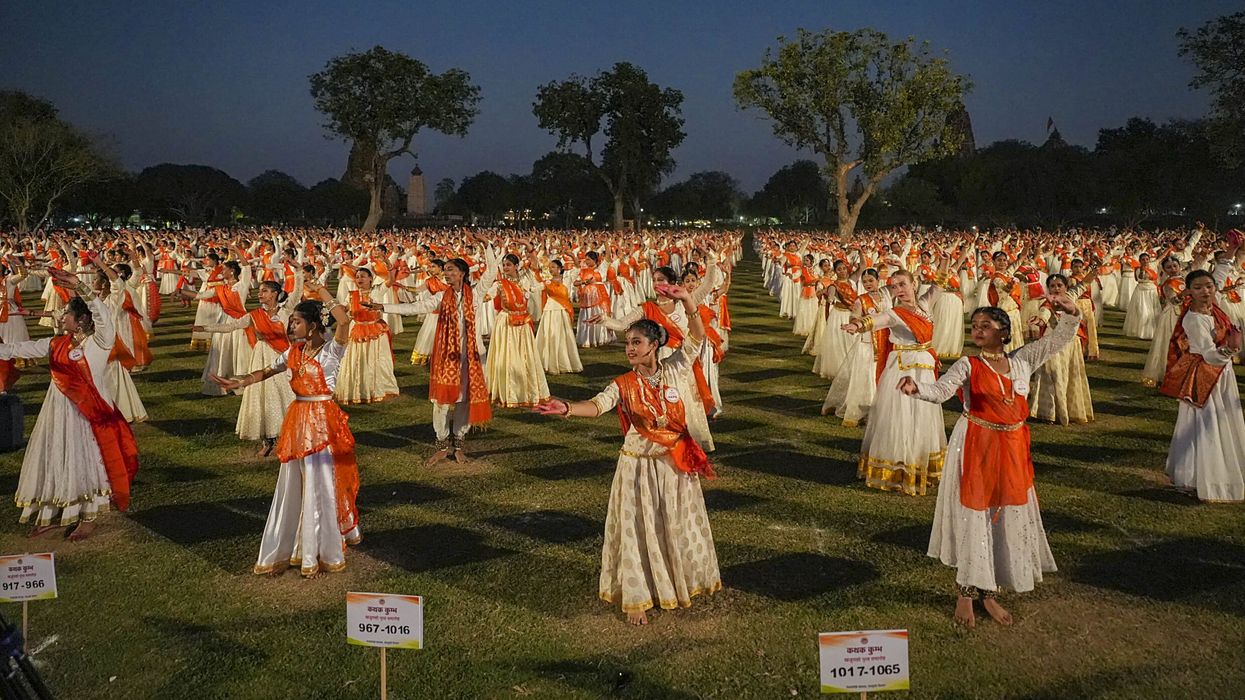

Khajuraho, situated in the central state of Madhya Pradesh, India, stands as a testament to cultural richness with its UNESCO World Heritage Site.
Recently, the historic town witnessed an extraordinary spectacle during the 50th Khajuraho Dance Festival, as 1,484 Kathak dancers gracefully moved to the rhythm of ‘Raag Basant’, etching their names in both the Guinness World Records and the annals of Kathak history for the largest-ever Kathak dance.
"The largest Kathak dance was achieved by the Department of Culture, Government of Madhya Pradesh, during the 50th Khajuraho Dance Festival on February 20," declared the official Guinness World Records Certificate.
Chief minister Mohan Yadav, in a celebratory announcement, revealed plans to establish country’s first gurukul (teaching institute) dedicated to training in tribal and folk arts in Khajuraho. This pioneering initiative aims to preserve and nurture India’s rich cultural heritage for future generations, both domestically and internationally.
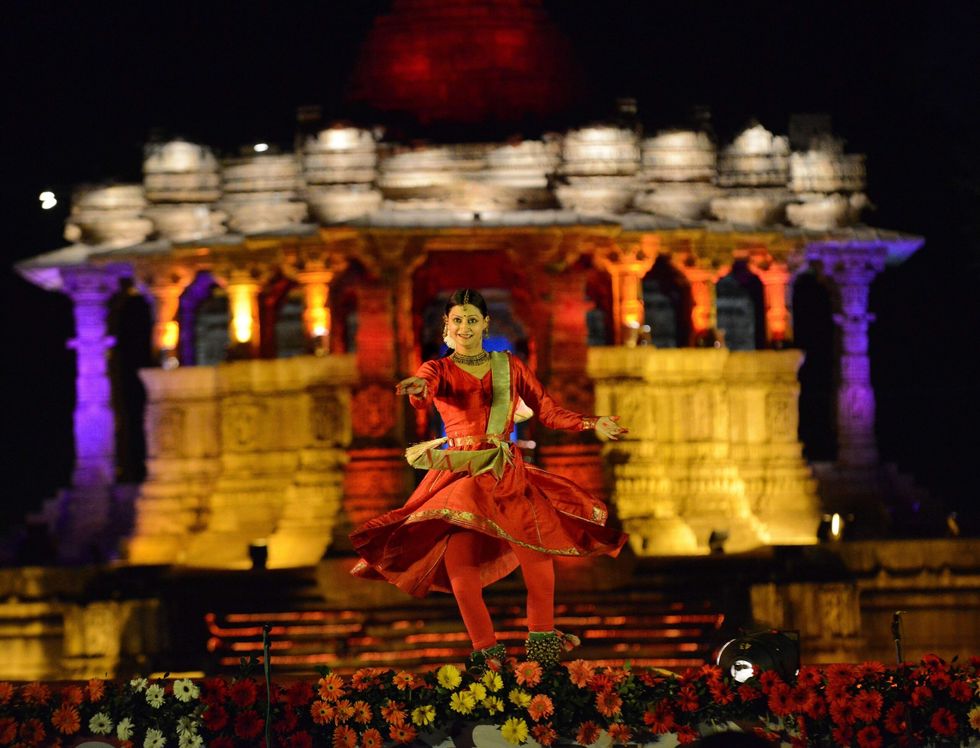 Kathak dancer (Representative image: Getty Images)
Yadav expressed gratitude to Indian prime minister Narendra Modi for his support in this cultural revival, being celebrated nationwide. He commended the dedication and talent of dancers and dance gurus (teachers) from across the state, which culminated in this historic achievement.
Rajendra Gangani, a veteran choreographer, led this diverse group of dancers from Madhya Pradesh in a captivating 20-minute performance which was recorded in the Guinness World Records. The synchronized movements and expressions enthralled the audience.
“The proposed gurukul will be envisioned in such a way that traditional skills and indigenous knowledge systems will be protected along with their holistic development in rural life. Along with this, the legacy of ancestors will also get expanded,” Yadav said.
This historic event in Khajuraho follows another impressive feat last month, where 1,282 tabla (percussion musical instrument) performers simultaneously participated in the Tal Darbar program during the Tansen Samaroh in Gwalior, securing a place in the Guinness World Records.
These remarkable achievements showcase the vibrant cultural landscape of India and the dedication of its artists to preserving and celebrating their heritage. The establishment of the new gurukul in Khajuraho promises to further bolster this mission, nurturing cultural ambassadors for generations to come.